



Taiyo Kogyo and Toa Construction Introduce Innovative Floating Caisson Stabilization Technology
Introduction
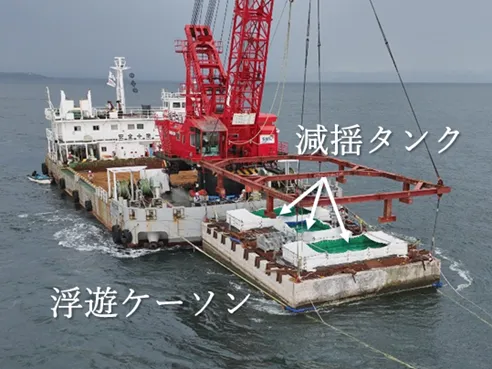
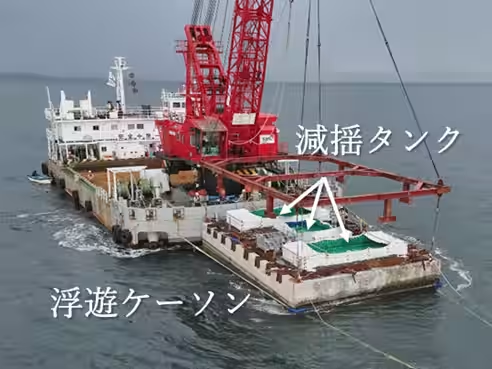
In an innovative collaboration, Taiyo Kogyo Co., Ltd., a notable player in the large membrane structure and civil engineering domain, has partnered with Toa Construction Co., Ltd. to introduce an advanced technology known as the 'Sheet-Type Stabilization Tank.' This groundbreaking technology was first implemented in a construction project at Toyama Port, managed by the Hokuriku Regional Development Bureau of the Ministry of Land, Infrastructure, Transport and Tourism, in October 2025.
Technology Overview
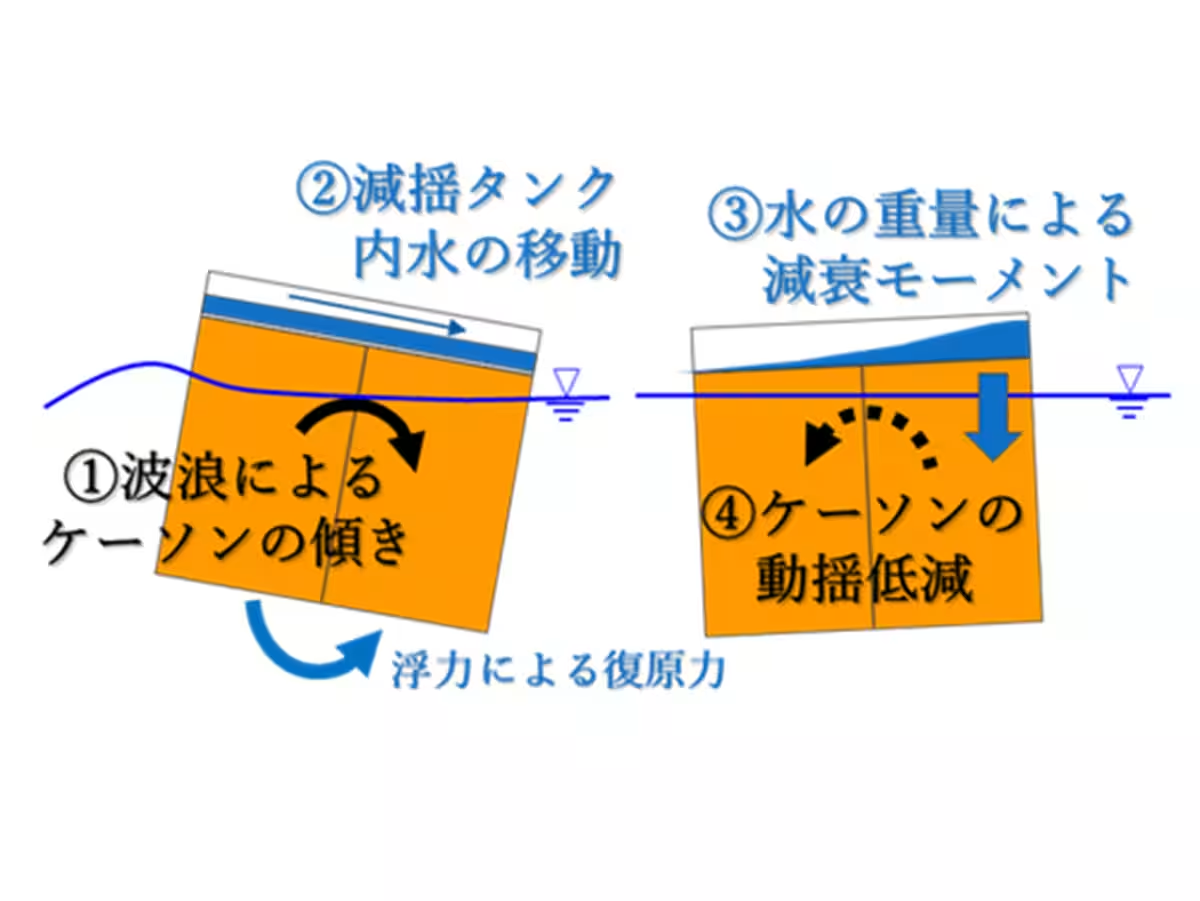
The Sheet-Type Stabilization Tank is designed specifically to diminish the swaying of floating caissons during towing operations. Utilizing Taiyo Kogyo’s expertise in membrane structure technology, this innovative solution signifies a substantial improvement in construction efficiency when compared to traditional steel tanks. Armed with the insights gained from this project, Taiyo Kogyo aims to accelerate its provision of solutions in the marine civil engineering sector.
Implementation at Toyama Port
The floating caisson stabilization technology was developed in response to the increasing demand for international logistics terminals and tsunami prevention measures within Japan's port facilities. Recent enhancements in the infrastructure have led to larger caissons being used in pier and quay construction. Traditionally, these caissons were transported using large crane ships; however, due to the dynamic wave conditions, concerns arose over the safety of workers on the caissons and the potential delays in installation processes. To address these challenges, Toa Construction turned to the innovative capabilities of the National Research Institute of Maritime, Port and Airport Technology.
Development and Results
Originally leveraging steel tanks, this partnership introduced a novel design - the Sheet-Type Stabilization Tank, which capitalizes on Taiyo Kogyo's long-established expertise in membrane structure design and fabrication. In the construction phase of the project at Toyama Port (Phase 2 of the quay construction at -10m depth), this technology produced several noteworthy results:
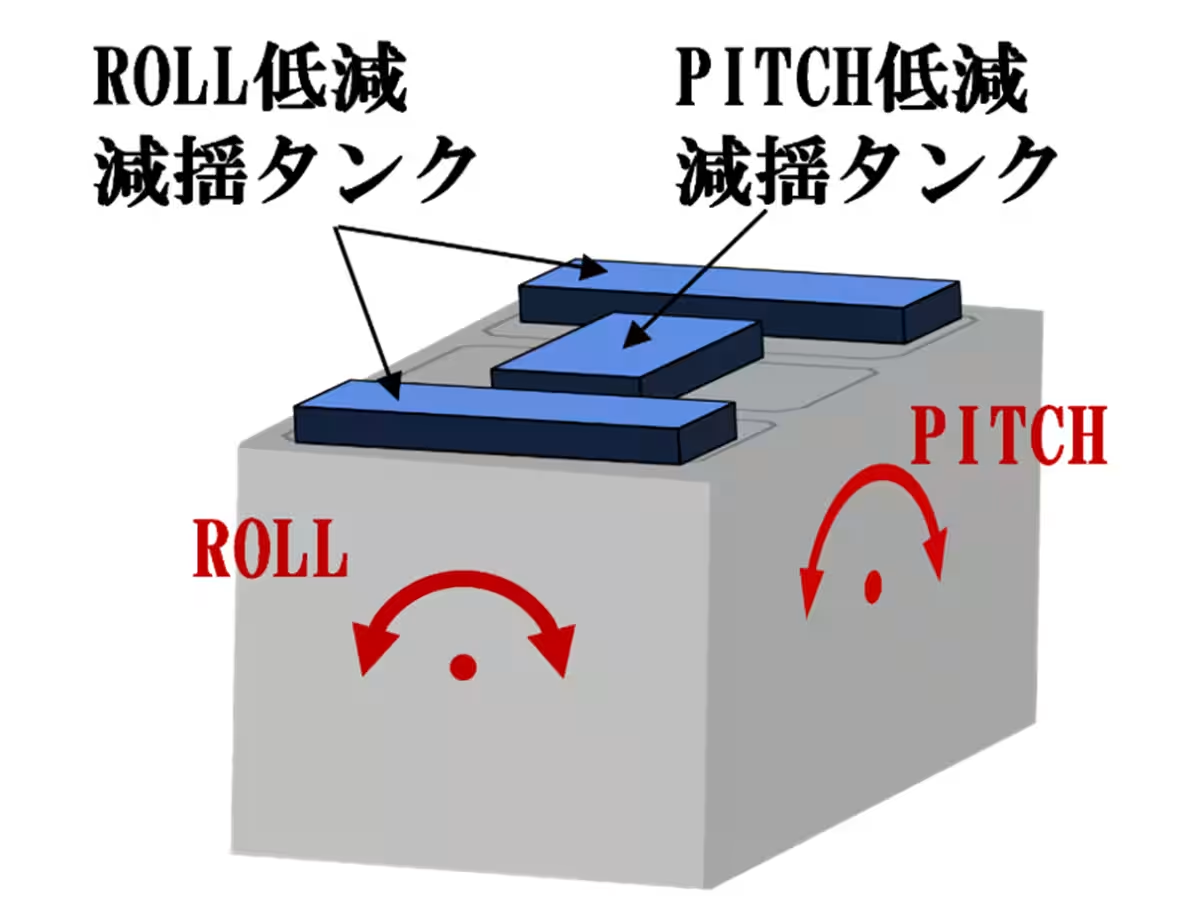
1. Reduction of Swaying: The use of the stabilization tank led to approximately a 20% reduction in both lateral (ROLL) and vertical (PITCH) movements, enhancing the overall stability during the caisson towing process.
2. Efficiency in Construction: The properties of the sheet material allowed for greatly improved efficiency in the placement and removal of the tanks, streamlining the construction workflow.
3. Enhanced Safety: The suppression of swaying enabled a smoother operation from towing to installation, ensuring worker safety throughout the entire process.
Future Outlook
Building on the knowledge acquired from this venture, Taiyo Kogyo is poised to accelerate its application of membrane technology in marine civil engineering solutions. The focus will particularly be on projects that demand extensive towing operations or large caisson installations, partnering with Toa Construction and other collaborators to enhance safety, shorten construction periods, and improve the productivity of infrastructural developments.
About Taiyo Kogyo Co., Ltd.
With over a century of experience, Taiyo Kogyo is recognized as a leader in large membrane structures. Their innovation was first showcased during the 1970 World Expo in Japan, where they successfully implemented an air-supported low-rise membrane structure for the American Pavilion. Notable projects include the installation of the membrane roof for the Tokyo Dome and participation in the Millennium Dome in London (now The O2 Arena). As they prepare for the 2025 Osaka/Kansai Expo, Taiyo Kogyo continues to support the construction of over 20 pavilions and facilities. The company’s expertise in membrane technology helps deliver secure and aesthetically pleasing public structures while collaborating with group companies such as TSP Taiyo Co. and Actio Co. to bring new value to society under the vision of 'Softening the World, Warming the Future.'
For more information, visit Taiyo Kogyo.
Topics Consumer Products & Retail)

【About Using Articles】
You can freely use the title and article content by linking to the page where the article is posted.
※ Images cannot be used.
【About Links】
Links are free to use.