



Kurita Corporation Completes Analysis of Water Recycling System Post-ISS Mission
Kurita Corporation Completes Analysis of Water Recycling System Post-ISS Mission
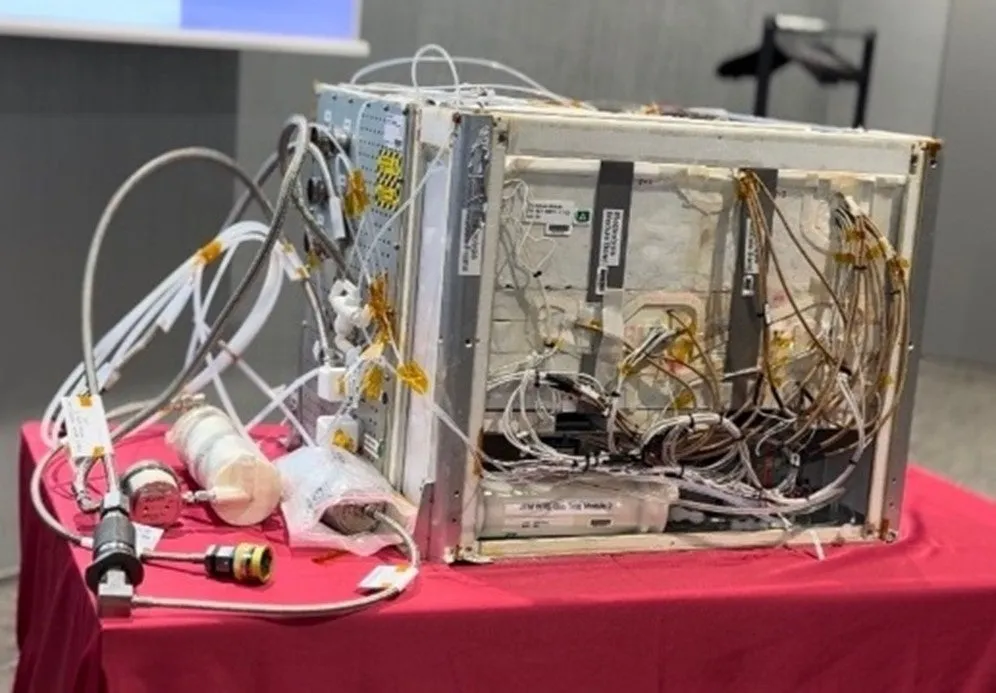
In recent developments, Kurita Corporation, headquartered in Nakano, Tokyo, finalized the disassembly and analysis of their Water Recycling Technology Demonstration System. This project followed its successful operation aboard the International Space Station (ISS) facilitated by the Japan Aerospace Exploration Agency (JAXA). The primary objective of this analysis was to investigate the degradation and alterations in system characteristics due to microgravity conditions.
The collaboration between Kurita and JAXA began in 2011, culminating in the development of a technology designed to recover moisture—specifically urine—present on spacecraft and convert it into water suitable for consumption. By 2019, the system was delivered to JAXA and subsequently launched to the ISS's Kibo laboratory. For approximately four years, while under technical support from Kurita, JAXA oversaw the operation of the system in orbit, yielding beneficial insights regarding water treatment in a microgravity environment.
Following the conclusion of the demonstration, the equipment was returned to Earth in May 2025. Notably, it surpassed 100 kg in total weight and marked a milestone as the first large device from JAXA to return to Earth. Upon its return, detailed disassembly and investigations took place at the Kurita Innovation Hub located in Akishima, Tokyo.
The findings of the study illustrated that under microgravity, water and bubbles within the system exhibited unique behaviors distinct from those observed on Earth. Moreover, the prolonged operation of over four years prompted insights about part degradation and the effects on surrounding equipment, suggesting areas for further consideration in both design and operational contexts.
Moving forward, Kurita intends to leverage the knowledge gained from this demonstration to enhance technological advancements related to water recovery and recycling in space. By collaborating with various stakeholders from public, private, and academic sectors in the field of space development, the Kurita Group aims to contribute significantly to the creation of sustainable water infrastructure in space, thereby expanding human activity realms.
Furthermore, they anticipate that the insights acquired from space research and development will inform solutions applicable to the challenges faced in terrestrial society and industry, working towards the realization of a sustainable society.
This initiative underscores Kurita's commitment to fostering new value in space and addressing pertinent global issues, allowing for the harmonious advancement of both terrestrial and extraterrestrial initiatives.
In conclusion, Kurita Corporation's successful completion of the analysis of their water recycling system not only enhances our understanding of water management in space but also positions the company as a critical player in the convergence of space technology and earthly sustainability efforts. Through continued innovation and collaboration, the future of water in space and its Earthly applications are poised for remarkable advancements.
Topics Consumer Technology)
【About Using Articles】
You can freely use the title and article content by linking to the page where the article is posted.
※ Images cannot be used.
【About Links】
Links are free to use.