



Funds Conducts Research on Travel and Asset Management Correlation
Research Reveals Connection Between Travel and Asset Management
Funds Inc., based in Shibuya, Tokyo, has recently conducted an insightful survey titled "Research on Travel and Asset Management". This study is part of their collaboration with Japan Airlines (JAL), which began in July 2025, and is aimed at analyzing how asset management strategies relate to travel habits and their overall influence on life satisfaction.
Overview of the Research
The primary purpose of this research was to explore the relationship between investments for future goals and the importance of experiential value (like travel) in the present. With the rise of programs like the new NISA, there is increasing interest in building a financial foundation. This survey specifically targeted JAL Mileage Bank members and Funds users, collecting data from 3,524 respondents between August 6 and August 24, 2025.
Key Findings
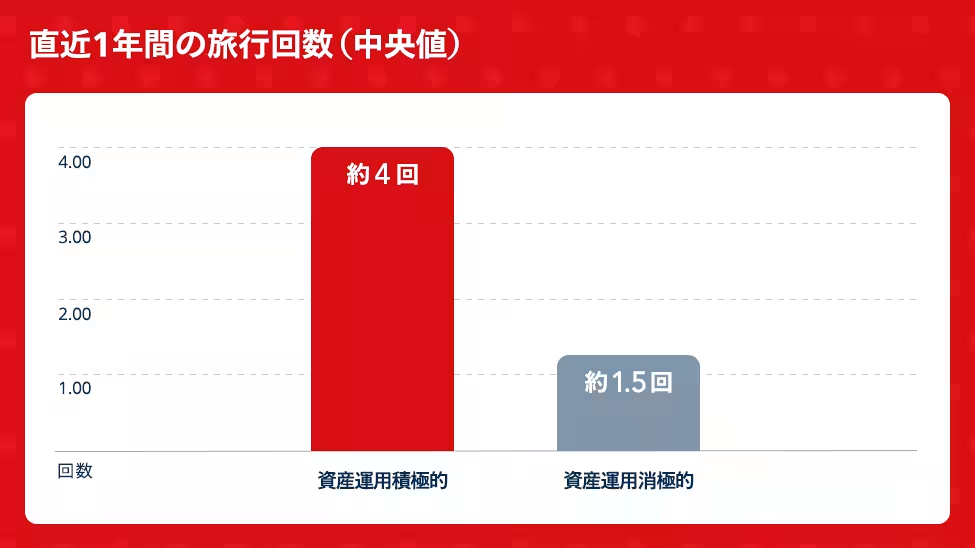
1. Higher travel frequency among active investors: Individuals who are proactive in asset management tend to travel more frequently and to more distant destinations. On average, active investors traveled 4 times a year, compared to 1.5 times for their less active counterparts—indicating a travel frequency 2.67 times greater for those engaged in asset management.
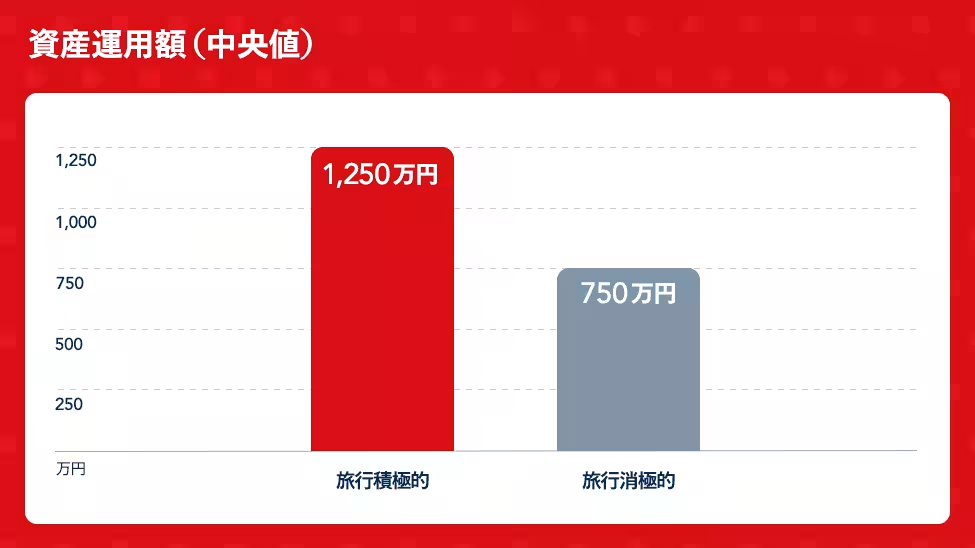
2. Active travelers invest more: On the other hand, those who travel frequently also invest significantly higher amounts. The median asset management of active travelers was 12.5 million yen, compared to 7.5 million yen for those who travel less, highlighting a 1.67 times difference.
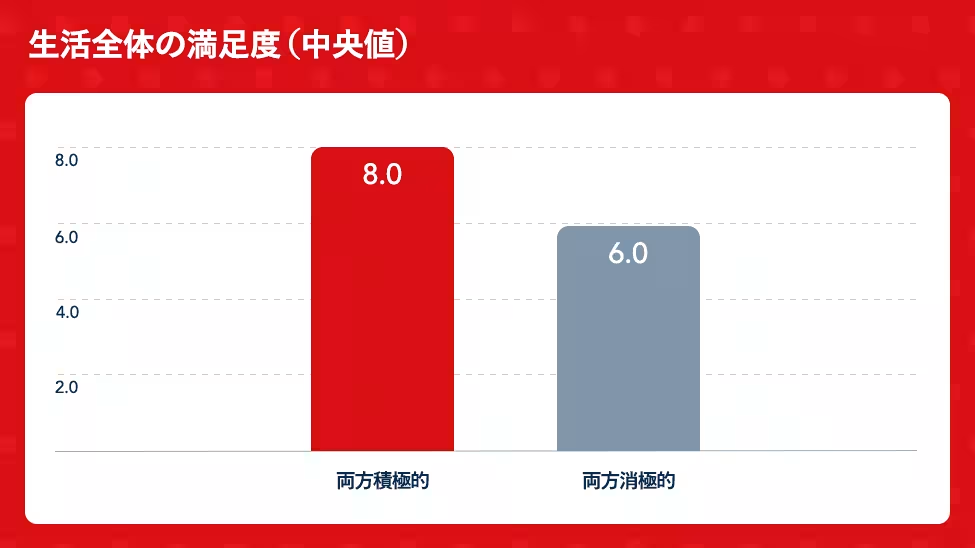
3. The impact on happiness: Respondents who actively travel and engage in asset management reported 2.0 points higher in life satisfaction scores compared to those who did neither, suggesting that both practices contribute positively to emotional well-being.
Analysis of the Relation Between Travel and Asset Management
Topic 1: More Investments Lead to More Travel
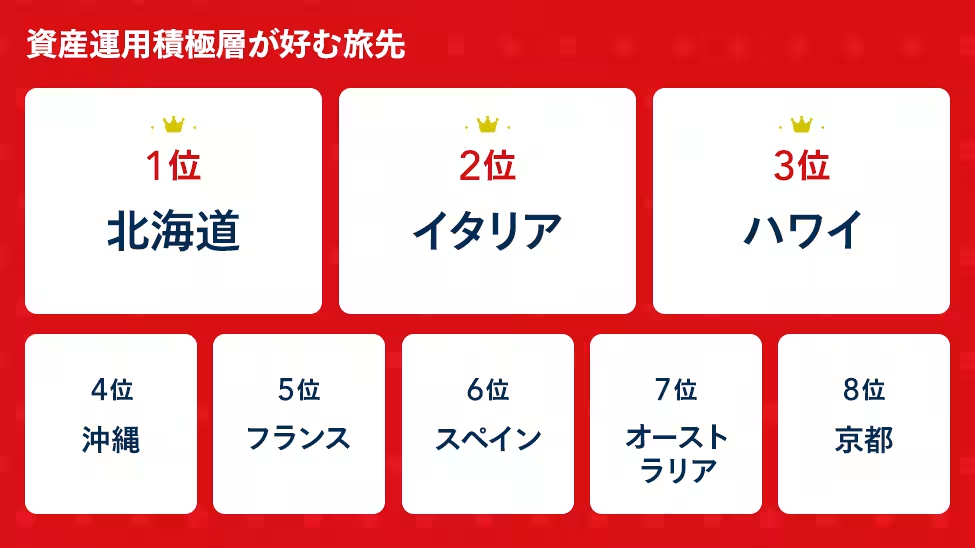
Analyzing the data revealed a clear trend: the more one invests, the more they travel. Active investors favor destinations that often require air travel, such as Hokkaido and Okinawa domestically, with Europe (Italy, France, Spain) and Hawaii prevalent among international travelers. This tendency to choose farther locations contrasts with data showing that nearby destinations dominate overall visitor numbers to Japan from East Asian countries such as Korea and Taiwan.
Topic 2: Investment Diversity Among Frequent Travelers
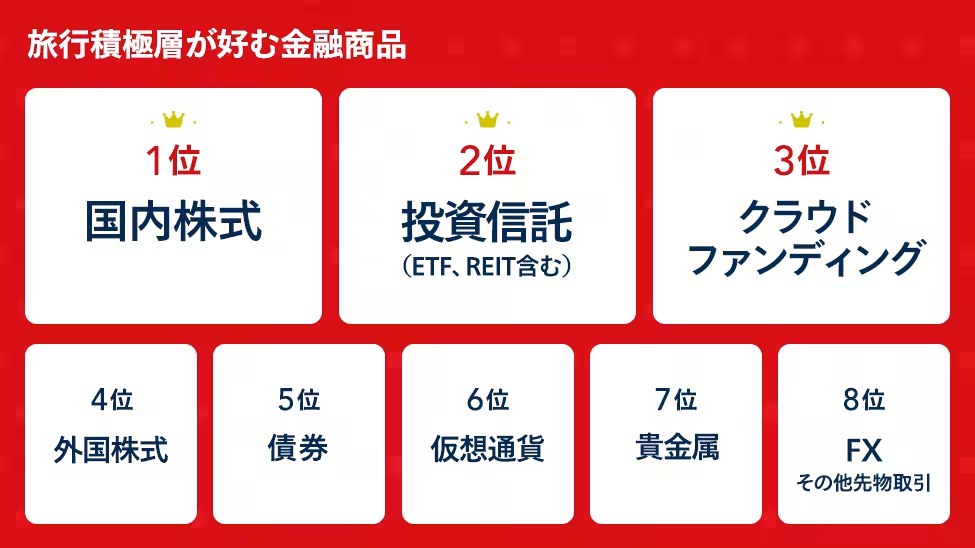
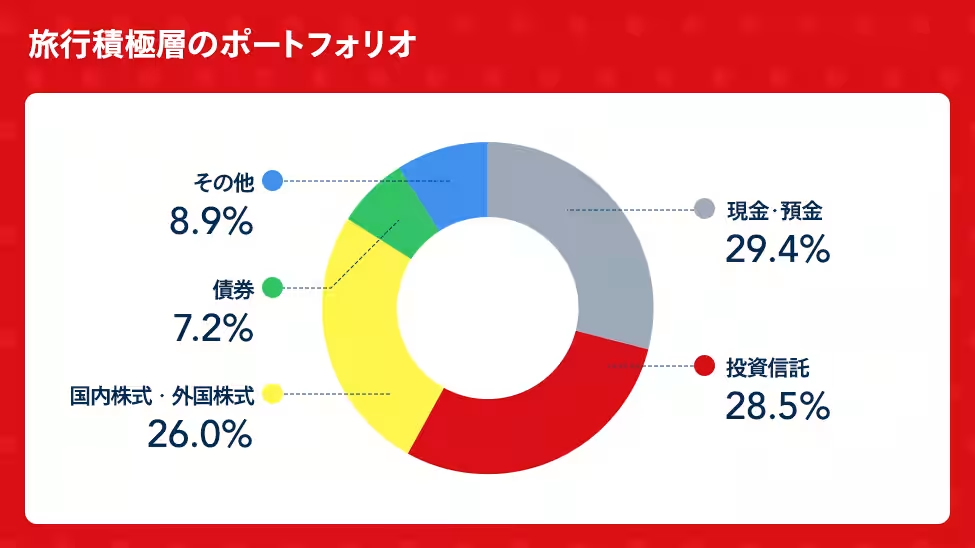
The survey also explored how investment behaviors change with travel habits. It was discovered that the active travel group diversifies their investments more, engaging not only in domestic stocks and NISA-funded mutual funds but also alternative investments like crowdfunding and foreign stocks. Interestingly, while savings accounts make up a significant portion of Japanese household assets, active travelers are more likely to incorporate a broader range of investments beyond just savings.
Topic 3: Happiness from Balanced Engagement
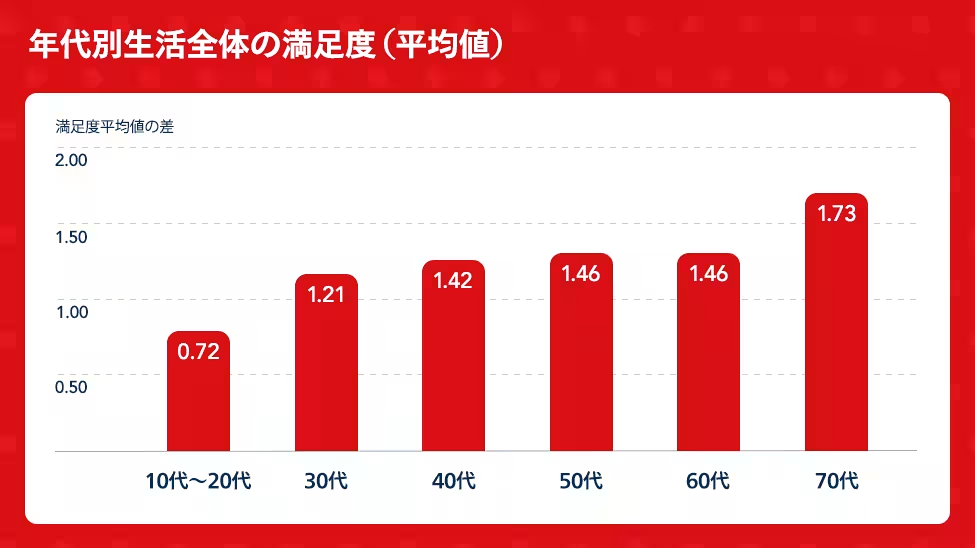
The survey indicates a strong correlation between a well-rounded approach to both travel and asset management and personal happiness. The study suggests that investing in experiences today (travel) alongside preparing for future financial security (investments) enhances life satisfaction. Moreover, as individuals age, the disparity in life satisfaction between those engaged in both practices widens, indicating that balancing both is particularly beneficial as life progresses.
Comments from Funds CEO Yuichiro Fujita
CEO Yuichiro Fujita commented on the findings, emphasizing the exciting relationship between travel and asset management. He believes that both aspects should not only be viewed separately but that their interplay can enhance overall life satisfaction. Funds aims to be a platform that empowers individuals to enrich their lives much like their travel experiences.
About Funds' Investment Services
Funds provides an accessible online investment platform where individuals can lend as little as 1 yen to publicly listed companies. Since its establishment, Funds has helped form 545 different funds with zero reported defaults up to August 2025. The platform is designed to offer fixed-rate investments, providing clarity—ideal for planning future vacations, thereby tying travel to their unique investment service.
Furthermore, Funds facilitates small-scale investments down to the yen, allowing fledgling investors to enter the market with less financial pressure, enriching the investing experience with bonus perks like hotel coupons or gourmet gifts.
Overall, the research illustrates a compelling relationship between how we manage our finances and how we choose to explore our world, paving the way for future studies and insights into the human condition both financially and experientially.
Topics Financial Services & Investing)
【About Using Articles】
You can freely use the title and article content by linking to the page where the article is posted.
※ Images cannot be used.
【About Links】
Links are free to use.