



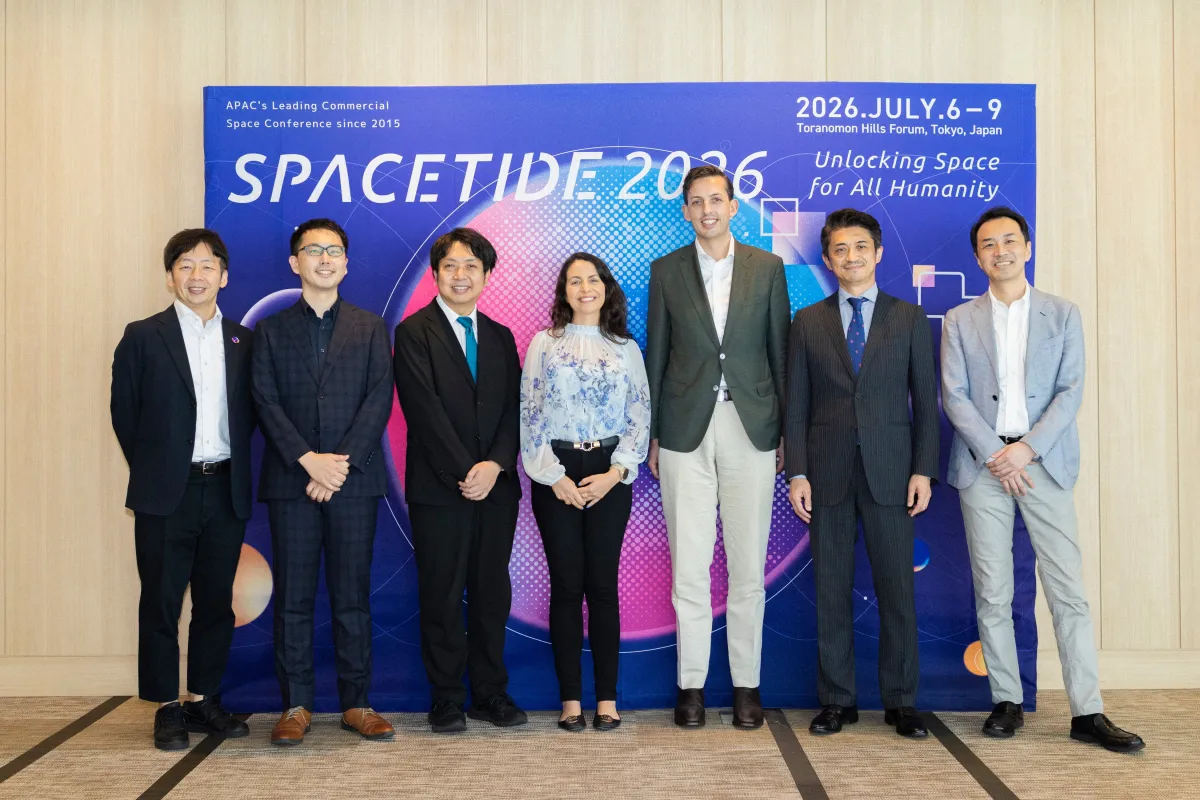
Kengo Suzuki Represents Space Seed Holdings at SPACETIDE 2026 Conference on Space Economy
Kengo Suzuki’s Presentation at SPACETIDE 2026
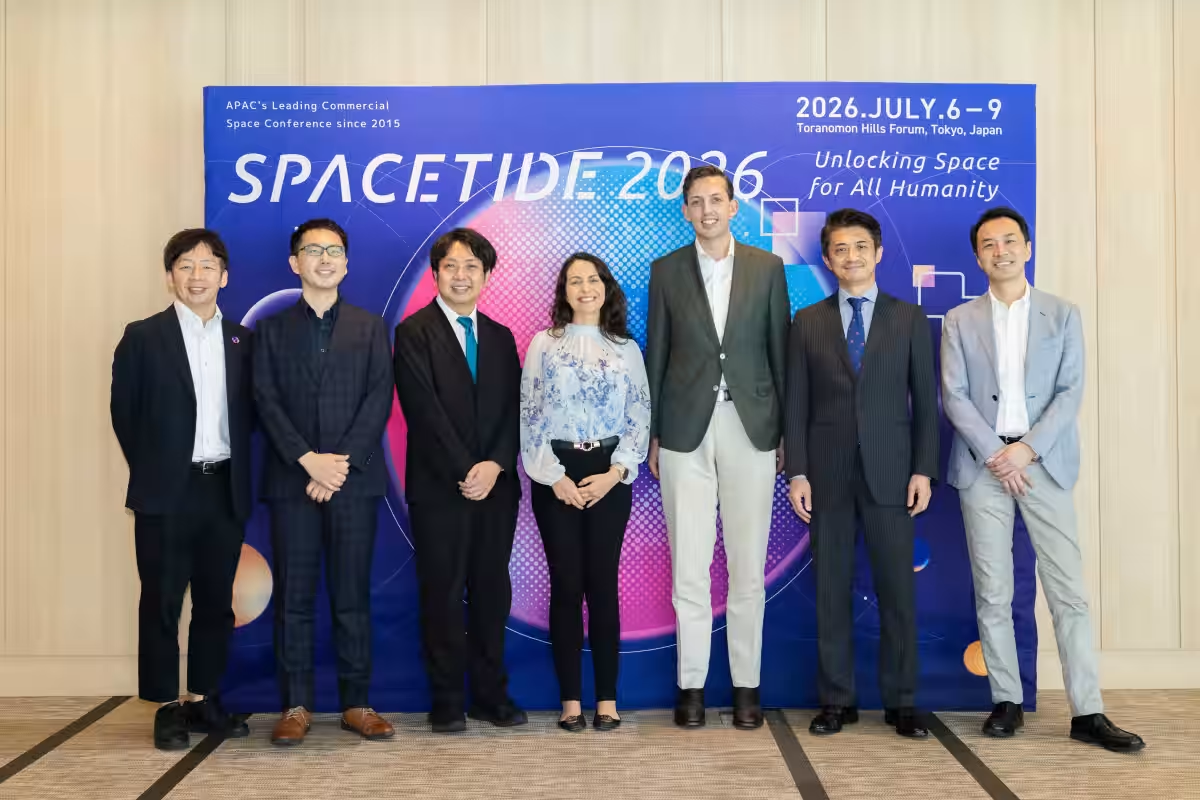
In an era where space exploration is becoming increasingly accessible, Kengo Suzuki, the CEO of Space Seed Holdings, took part in a significant event during the SPACETIDE 2026 conference. Held from July 6 to July 9, 2026, at the Toranomon Hills Forum in Tokyo, the conference focused on the theme "Unlocking Space for All Humanity." On July 9, Suzuki participated in an English panel discussion entitled "When Will Re-Entry Services Usher In a New Era of Expansion for the LEO Economy?" This session aimed to explore the crucial role of re-entry services in the expansion of the Low Earth Orbit (LEO) economy.
The panel discussed how the ability to bring materials back from space is poised to open new markets, despite the existing market's scarcity. With reusable rocket technology significantly lowering the costs of sending payloads to space, the discussion highlighted the essential need for reliable services that can ensure the safe return of experiments and samples to Earth. This capability is expected to play a pivotal role in driving the future growth of the LEO economy and was a shared concern among the panelists.
Panelists and Highlights
The session was graced by a diverse panel, including leaders from various sectors:
- - Dana Baki, Chief Commercial & MENA Officer at The Exploration Company
- - Jeremy Hallett, Executive Director of Brindabella & Company
- - Kazunari Miyamaru, COO of ElevationSpace
- - Shuji Yamazaki, Head of Business Unit at Space BD
- - Kengo Suzuki, CEO of Space Seed Holdings
Each participant brought unique perspectives from their respective domains — from developing re-entry capsules to advising on space investments, enriching the discussion with multifaceted insights. Suzuki emphasized the importance of understanding what metrics and outputs are needed after returning from space to give context to the research and its applications.
Key Points from Kengo Suzuki
Suzuki articulated three significant points during his remarks:
1. LEO Research as a Foundation for Future Space Activities
Suzuki argued that conducting research in LEO is foundational for humanity’s future endeavors in deep space. The unique environment allows for systemic investigations into the behavior of life and materials, which are crucial for developing technologies necessary for living and working further into space.
2. Significance of Sample Return for Precision Measurement
He stressed that understanding intricate biological changes, like genome epigenetic shifts, is often unattainable solely through metrics gathered in orbit. Thus, reliably returning samples to Earth for high-precision analysis is crucial for capturing these nuanced changes and insights.
3. Automation of Research via LLM like SpaceAgent
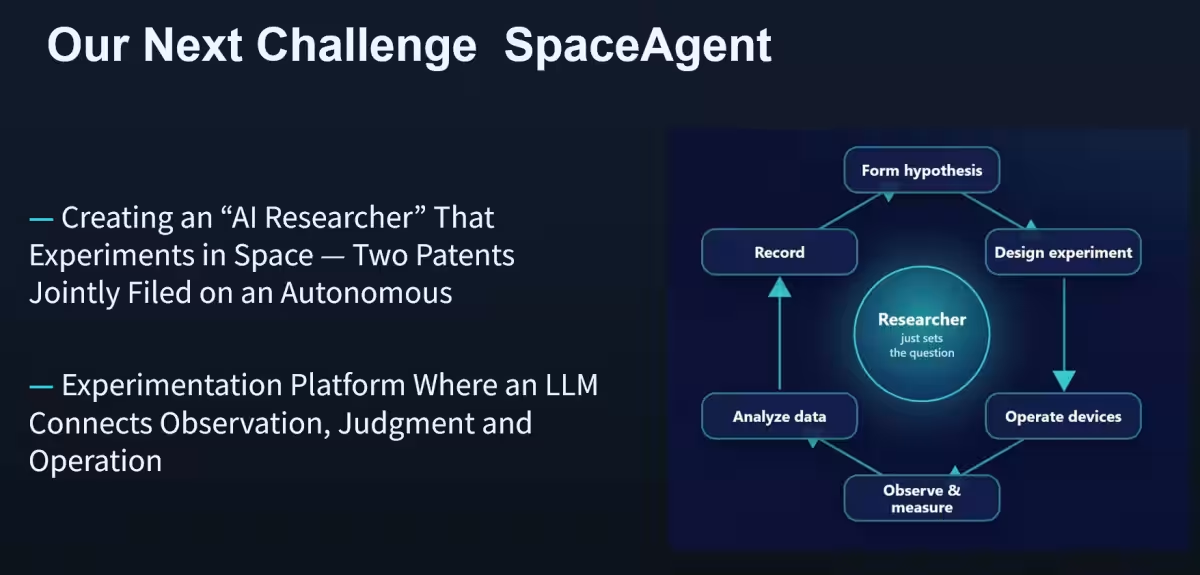
Suzuki shared insights on utilizing Large Language Models (LLMs) to automate research processes in LEO. He highlighted that his company is working on the "SpaceAgent," an autonomous experimental platform that links observation, judgment, and operation, thus paving the way for significant advancements in space research without requiring constant human intervention.
The Concept of SpaceAgent
SpaceAgent represents a groundbreaking endeavor aimed to push the boundaries of what can be achieved in space research. By reducing human presence’s necessity in experiments, Suzuki envisions creating an "AI researcher that experiments in space," which can independently conduct research and subsequently return valuable samples and findings to Earth.
In June 2026, Space Seed Holdings, alongside partners, applied for two patents concerning the frameworks supporting autonomous experimentation in space, highlighting their commitment to innovation in the field.
Final Thoughts from Kengo Suzuki
Suzuki concluded his address by reiterating that re-entry and Earth return capabilities are not merely about bringing back materials but about confirming changes observed in the unique space environment through precise research infrastructures on Earth. He emphasized the need to harness resources effectively in LEO and positioned the SpaceAgent as an essential tool for autonomous research, enhancing the value of both Earth return capabilities and ongoing research.
As he looked toward the future, Suzuki expressed a commitment to cultivating the SpaceAgent framework and advancing their research platform on a global scale to enrich society's connection to space utilization research, similar to the discussions held during the SPACETIDE 2026 event.
Topics Other)

【About Using Articles】
You can freely use the title and article content by linking to the page where the article is posted.
※ Images cannot be used.
【About Links】
Links are free to use.