



Exploring the Human Capital Management Survey 2026 and the Rise of HR Tech Applications
The Human Capital Management Survey 2026: A Look at HR Tech Adoption
On May 25, the Japan Economic Newspaper's Personnel and Education Business Unit released the findings from the latest Human Capital Management Survey, aimed at major companies. This year's report marks the third edition of the survey, with responses gathered from 560 individuals.
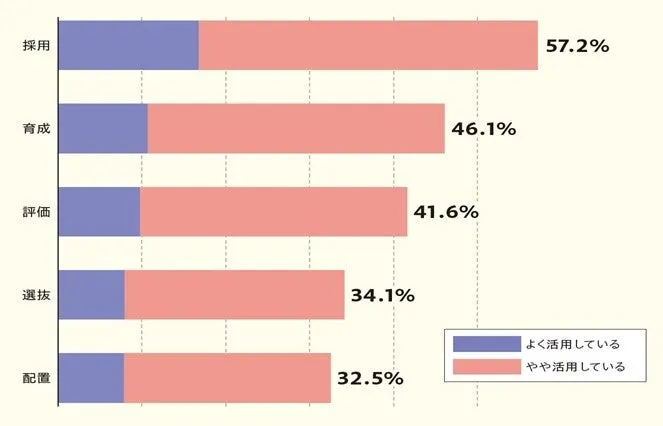
One of the significant highlights from this survey is the growing utilization of HR technology, particularly in the hiring sector. The survey found that 57% of participants reported that they frequently or somewhat utilize HR tech in their recruitment processes, making it the leading area for HR tech adoption. This increase underlines the urgency and relevance of technology integration in modern hiring practices.
HR Tech Utilization in Development and Other Areas
Following hiring, the development sector isn't lagging far behind, with 46% of respondents confirming a solid reliance on HR technology for employee training and development. Other areas explored in the survey include evaluation, selection, and assignment, which saw varying levels of adoption, though none surpassing the hiring and development sectors significantly. As organizations advance their human capital strategies, productivity enhancement remains a primary challenge, with over 40% of companies identifying it as a key issue. These findings reveal that the evolving landscape of HR tech is crucial for boosting the productivity of HR departments across the board.
Closing the Gap: Current and Target Human Resource Data
The survey also delved into how companies are addressing the gap between their current and targeted human resource data management. The most common response remained that both current status and desired outcomes are untracked at 37%. Nonetheless, it's noteworthy that this figure has steadily decreased from previous surveys, dropping below 40% for the first time. Such trends suggest that companies are increasingly taking steps to align their human resource goals with actual practices.
When asked to select three challenges relating to employee transfer and assignment, participants highlighted the importance of mid- to long-term perspectives in personnel assignments, the visibility of employee skill sets, and the development of talent portfolios. These results paint a picture of organizations striving to elevate their HR operations through enhanced evaluation and strategic personnel placement.
Visualization of Skills and Qualities: A Growing Focus
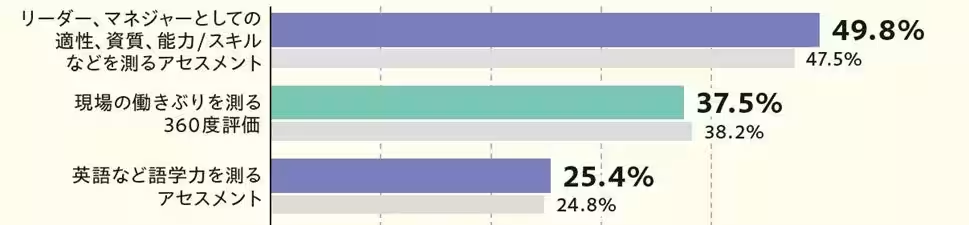
Moreover, when asked about the tools and assessments employed to visualize employee skills and attributes, nearly half (49%) indicated using assessments to measure leadership and managerial competencies. This marks an increase from the past, indicating a growing trend among companies to adopt tools for better clarity on workforce skills and qualifications.
An analysis of companies implementing these assessments showed that while larger enterprises (over 10,000 employees) maintained a steady response rate, medium-sized companies (3,000 to under 10,000 employees and under 3,000 employees) demonstrated a noteworthy rise in the adoption of objective, data-driven employee evaluations. This highlights that even smaller firms are dedicating resources to accurately gauge employee qualities, underscoring a collective shift in how organizations approach talent management.
Survey Overview
- - Survey Name: Human Capital Management Survey (Edition 2026)
- - Target Audience: HR leaders in companies listed on the TSE Prime Index or with 1,000 or more employees.
- - Survey Period: February 2 to February 13, 2026
- - Method: Online survey
- - Number of Respondents: 560
- - Conducted by: Japan Economic Newspaper's Personnel and Education Business Unit
- - Conducting Organization: Nikkei Research
This comprehensive look into the 2026 Human Capital Management Survey highlights not just the initiatives and implementations regarding HR tech, but also the scope of challenges that businesses face as they navigate the future of human capital management.

Topics People & Culture)




【About Using Articles】
You can freely use the title and article content by linking to the page where the article is posted.
※ Images cannot be used.
【About Links】
Links are free to use.