




Unlocking the Future of Biopharmaceuticals with Gel Coat™ Technology
The Future of Biopharmaceuticals: Gel Coat™ Technology
In the rapidly evolving landscape of biopharmaceuticals, Gel Coat Biomaterials, a startup originating from the University of Tokyo, is making waves with its groundbreaking storage stabilization platform, Gel Coat™. This innovative technology utilizes a unique nanoparticle hydrogel approach that aims to improve the preservation stability of biological molecules without altering their chemical structure. The simplicity of the method, which involves merely mixing the components, could pioneer a new standard in the field of biomedicine.
The Challenge of Biopharmaceutical Stability
Biopharmaceuticals, including antibodies, vaccines, enzymatic products, and regenerative medicine-related items, come with immense therapeutic benefits but face significant challenges regarding stability. These products are sensitive to temperature variations and environmental conditions, necessitating stringent temperature management during manufacturing, storage, and transportation. This dependence on cold-chain logistics presents obstacles such as increased logistics costs, geographical supply limitations, and the difficulty of maintaining quality during power outages or natural disasters.
Historically, biopharmaceutical developers have employed methods that involve altering active components chemically or using freeze-drying techniques. However, these approaches introduce risks of reduced efficacy, increased complexity in manufacturing processes, and escalating costs. Gel Coat™ offers a solution that circumvents these issues by ensuring biological activities remain intact while significantly improving stability.
How Gel Coat™ Works
At its core, Gel Coat™ harnesses the power of nanoparticles to create a hydrogel that encompasses the active biological molecules without chemically modifying them. This intuitive approach not only preserves the integrity and activity of the biological components but also enhances their longevity during storage. The platform's ability to easily integrate into existing manufacturing processes without requiring extensive modifications or large capital investments makes it an attractive option for manufacturers across several sectors.
Proven Efficacy
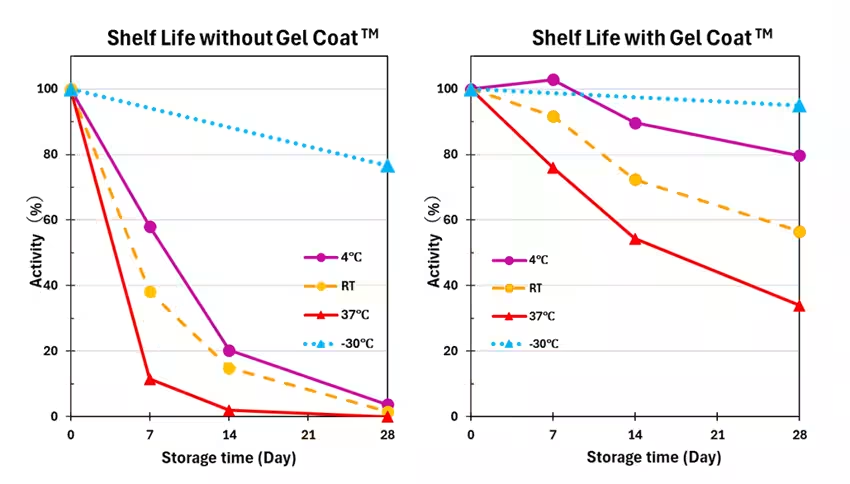
In laboratory tests with enzymes, Gel Coat™ demonstrated remarkable effectiveness. Traditionally requiring extreme cold storage at -30°C, certain enzymes retained over 80% activity even after 28 days at just 4°C while maintaining more than 60% activity at room temperature and showing resilience at physiological temperatures of 37°C. This performance reveals a significant advancement in preserving the efficacy and functionality of biopharmaceuticals, thus presenting new possibilities for the storage and transport of these sensitive products.
Transforming the Industry Landscape
The implications of Gel Coat™ extend beyond merely enhancing product formulation; it could transform the cost structure surrounding development, manufacturing, and transportation in the biopharmaceutical sector. By focusing on stabilization without modification, risks associated with molecular changes and complex additional processes can be mitigated. This efficiency may lead to lowered costs in production, storage, and transport while broadening the accessibility of these vital products, particularly in low- and middle-income countries.
Potential Applications Across Various Markets
Gel Coat™ is not limited to a singular application; it is a versatile platform that can be applied across diverse areas such as:
- - Antibody-based drugs and biopharmaceuticals
- - Vaccines and enzyme formulations
- - Regenerative medicine products and cellular therapies
- - Advanced cosmetics and exosome formulations
- - Industrial enzymes and biocatalysts
- - Research reagents and biomaterials
This platform technology positions itself as a leader in addressing storage stability challenges across various markets, fundamentally changing how biopharmaceuticals are developed, manufactured, and distributed.
Gel Coat™'s Commitment to Innovation
As Gel Coat Biomaterials continues to innovate, their commitment to discovering new applications of Gel Coat™ technology spans both the life sciences and industrial fields. Additionally, the company aims to facilitate regulatory evaluations and align with partners for collaborative research and licensing opportunities, all geared towards ensuring safer and more effective biopharmaceutical solutions.
Conclusion
Gel Coat™ represents a significant stride towards enhancing the viability and accessibility of biopharmaceuticals. By simplifying the stabilization process and supporting the natural activity of crucial biological components, Gel Coat Biomaterials is positioned to redefine industry standards and significantly contribute to the future of healthcare and therapeutics. As this company advances its technology and partnerships, the potential benefits could reverberate through the healthcare ecosystem, paving the way for broader access to critical biopharmaceuticals worldwide.

Topics Health)
【About Using Articles】
You can freely use the title and article content by linking to the page where the article is posted.
※ Images cannot be used.
【About Links】
Links are free to use.