



Huawei Proposes an AI-Centric All-Optical Network to Enhance Service Experience
Huawei's Vision for an AI-Centric All-Optical Network in 2026
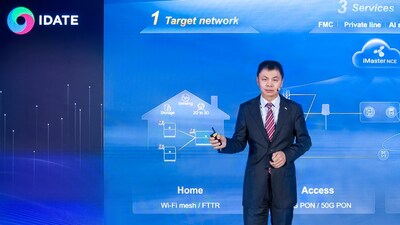
At the MWC Barcelona 2026, Huawei presented a groundbreaking vision for a fully optical network powered by artificial intelligence during the Green All-Optical Network Forum organized by IDATE. This initiative aims to significantly improve the performance metrics of bandwidth, reliability, coverage, and latency, ultimately enhancing user experience and operational efficiency.
A Gathering of Industry Leaders
Over 200 industry leaders, including European telecommunications regulators, the FTTH Council, operators, and vendors, converged to discuss the opportunities and challenges of all-optical networks in the AI era. Prominent global operators like Bouygues Telecom and China Unicom shared their successful applications, focusing on developing smart home services and enabling AI innovation through efficient computing.
AI-Centric Innovations
Kim Jin, Huawei's Vice President of the Optical Business Product Line, elaborated on several key initiatives designed to harness the power of AI within optical networks:
1. Enhanced Home Wi-Fi Coverage: Huawei introduces its Wi-Fi 7 three-band FTTR solution, providing reliable speeds of 4 Gbps across every room with seamless connectivity throughout the home. When combined with AI anti-interference technology, the network can penetrate walls more effectively and increase speeds by 20% in challenging conditions.
2. Lower Latency and Higher Bandwidth: Innovative applications of PON slicing and Wi-Fi air interface planning are employed to establish dedicated guaranteed channels for VIP applications. This technology enhances the network experience, offering progressive and deterministic performance.
3. End-to-End OXC Metro Network: The new OXC solution extends fully optical switching capabilities into metro networks, reducing end-to-end network latency and enabling millisecond-level computing for AI services through a mesh network architecture.
4. Evolution Towards 400G/800G: With a 3D mesh backbone architecture combined with 400G/800G and fully formatted submarine cable transmission, Huawei addresses bandwidth shortages at high-traffic points efficiently, facilitating DCI and cross-border traffic.
5. Zero Interruptions for AI Services: Coordinated hardware-software upgrades, algorithms, and eOTDR technology empower operators to precisely identify and mitigate network risks. Innovative materials allow for ultra-reliable wavelength switched optical networks (WSON) with rapid switching times of 50 ms.
Additionally, Huawei's FANSpirit agent in the optical access domain aims to reduce complaints from residential broadband users, while the OTNSpirit agent recommends differentiated paths based on bandwidth, latency, and reliability, driving advancements in intelligent operation and maintenance.
The Future of AI in Telecommunications
Kim Jin emphasizes the transformative potential of AI, stating, "The AI era presents operators with a once-in-a-decade opportunity. Huawei is committed to collaborating with industry partners to build an AI-centric all-optical target network that will continuously enhance user experience, elevate network value, and ensure win-win growth in the age of artificial intelligence."
As we look ahead, Huawei's vision for a future enriched by cutting-edge optical technologies reaffirms its dedication to leading the telecommunications sector into the next generation, setting the foundation for innovative services and robust connectivity.
In conclusion, as Huawei embraces this technological revolution, it not only positions itself at the forefront of telecommunications innovation but also paves the way for improved service delivery and enhanced customer satisfaction across the globe.
Topics Telecommunications)
【About Using Articles】
You can freely use the title and article content by linking to the page where the article is posted.
※ Images cannot be used.
【About Links】
Links are free to use.