



Exploring New Urban Visions for a Declining Population Society: Post Growth City Lab Report
New Urban Visions: Post Growth City Lab in Kumamoto
In a significant effort to explore sustainable urban development amid declining populations, Japan's Steel and Kowa Real Estate Company, alongside Zebras and Company, has released their comprehensive report on the second field research conducted in Kumamoto. This initiative, titled 'Post Growth City Lab' (PGCL), aims to investigate the possibilities of urban resilience and sustainability. The full research report, titled 'How Blocks Generate Value: Insights on Regional Asset Utilization,' has been made public following research conducted from January 20 to 22, 2026.
Understanding PGCL
The PGCL initiative was conceived in response to the pressing challenges of population decline, climate change, and the rapid evolution of global economic conditions. The objective is to interrogate how future cities and real estate sectors can adapt and engage with the evolving reality of urban life. To achieve this, PGCL collaborates with innovative partners like NEWLOCAL and Re;public, harnessing both qualitative field research insights and quantitative macro-level analyses powered by AI.
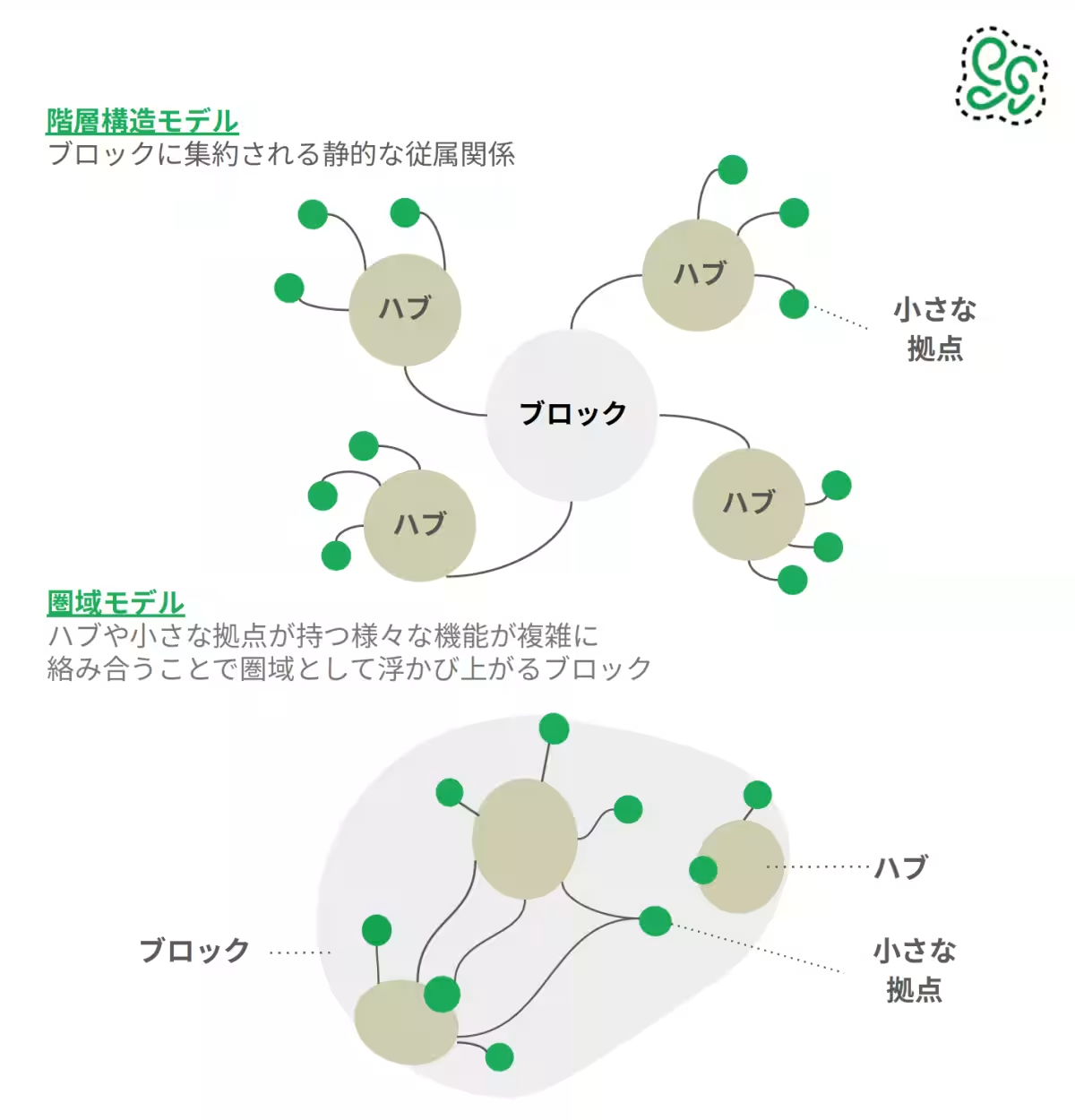
As part of PGCL’s structured investigation, they have defined urban regions not solely as independent municipalities but as ‘blocks.’ These blocks consist of various hubs driven by political, economic, cultural, and social dynamics, leading to a holistic understanding of urban systems.
Highlights from the Kumamoto Research
Conducted in Kumamoto, the report distilled two pivotal principles or 'Key Learnings' regarding urban sustainability:
Key Learning 1: Strategic Utilization of Regional Assets
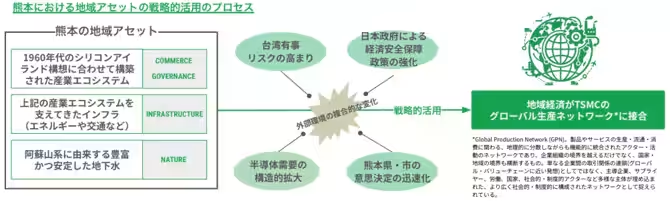
One of the key insights was how local assets—such as Kumamoto’s abundant underground water—transition from being everyday resources into strategic value through external changes, including geopolitical dynamics influencing semiconductor investments. The advancement of TSMC’s operations in Kumamoto exemplifies this transformation.
Key Learning 2: The Concept of Blocks
The research also revised the understanding of regional identity by proposing that areas should be viewed as a cohesive block of interconnected resources and opportunities, rather than isolated cities. This conceptual shift emphasizes the importance of shared resources—like water in Kumamoto—across different hubs, illustrating the complex interpersonal relationship between economic activities and environmental assets.
Implications and Future Directions
The findings in Kumamoto lead to considering how regional values can be internally circulated, strengthening local economies against external uncertainties. PGCL intends to expand its research to other regions, focusing on how different local economies can integrate and thrive in the face of change. Future studies will analyze urban dynamics that cross prefectural borders and explore the cyclical nature of industry density within these blocks.
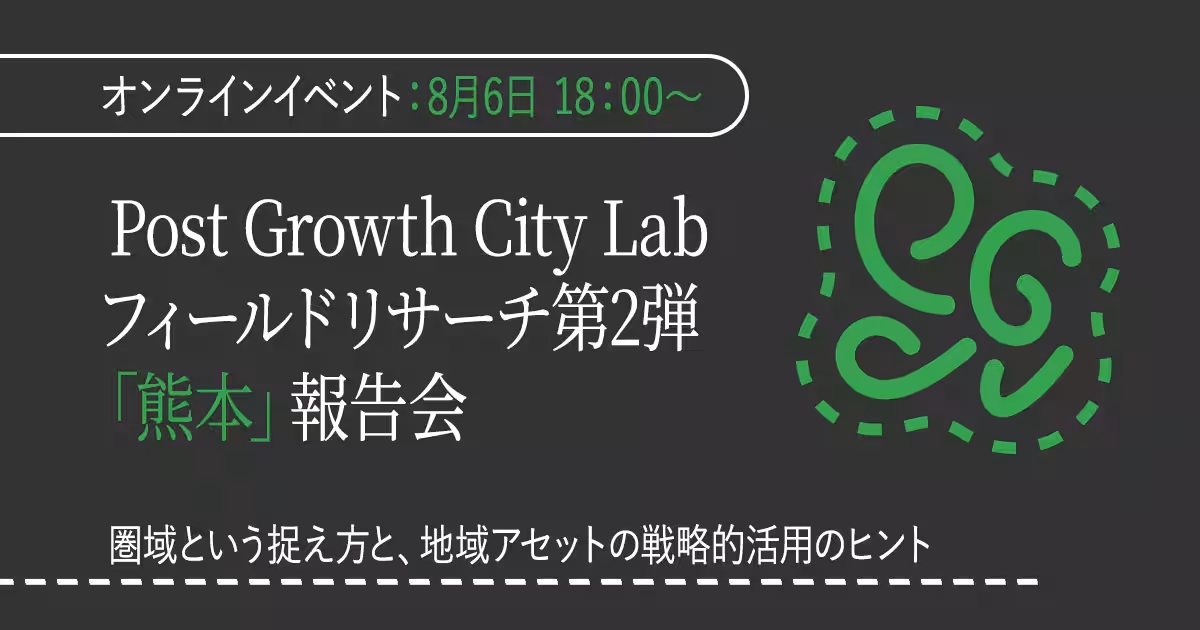
An online report session about these findings is also scheduled for August 6, 2026, allowing stakeholders to engage with the insights developed through the research.
Conclusion
PGCL propels a critical dialogue on urban living in an era of unprecedented demographic changes. By drawing on Kumamoto's unique regional characteristics, the initiative seeks to foster sustainable practices that align with both local identity and global trends. As this research continues, it aims to redefine the landscape of urban sustainability, establishing vital models for future urban developments across Japan. Potential investments and developments that emerge from these insights could reshape how communities function and interact in today’s complex world.
To access the full report, visit Post Growth City Lab's research site.

Topics Other)
【About Using Articles】
You can freely use the title and article content by linking to the page where the article is posted.
※ Images cannot be used.
【About Links】
Links are free to use.