



Spectee Analyzes the Impact of the Hormuz Strait Blockade on Japan's Manufacturing Supply Chain
Spectee's Insightful Analysis on Supply Chain Risks
As geopolitical tensions flare up, the Hormuz Strait has found itself in unprecedented turmoil. Spectee, a prominent technology firm based in Tokyo, has recently made headlines by publishing a comprehensive white paper diving deep into the multi-faceted consequences that the blockade of this critical waterway has had on Japan's manufacturing supply chain.
Background of the White Paper
The analysis came on the heels of the military actions involving the United States and Israel against Iran, initiated on February 28, 2026. This led to the Iranian Revolutionary Guard effectively blocking the Hormuz Strait, a vital route for global energy supplies. At its peak, maritime traffic in this area dwindled from around 100 vessels a day to just a handful, triggering chaos across global markets.
Despite a temporary ceasefire between the U.S. and Iran agreed upon on April 8, which suggested a possible resumption of navigation through the Strait, the damage was done. Supply chains were disrupted, energy prices surged, and chemical raw material stocks were strained in Japan. These structural scars will not heal overnight, and Japan's manufacturing sector now faces pressing challenges despite the diplomatic reprieve.
Overview of the White Paper
The white paper, titled "The Impact of the Hormuz Strait Blockade on Japan's Manufacturing Industry—Resilience Strategies Read from Geopolitical Risks," showcases in-depth analyses conducted by Spectee's Supply Chain Risk Analysis Team. This team drew upon a plethora of reports, articles, and publicly available data to form unique insights into the current state of the supply chain in Japan.
Key Highlights
1. Direct Hit on Energy Costs
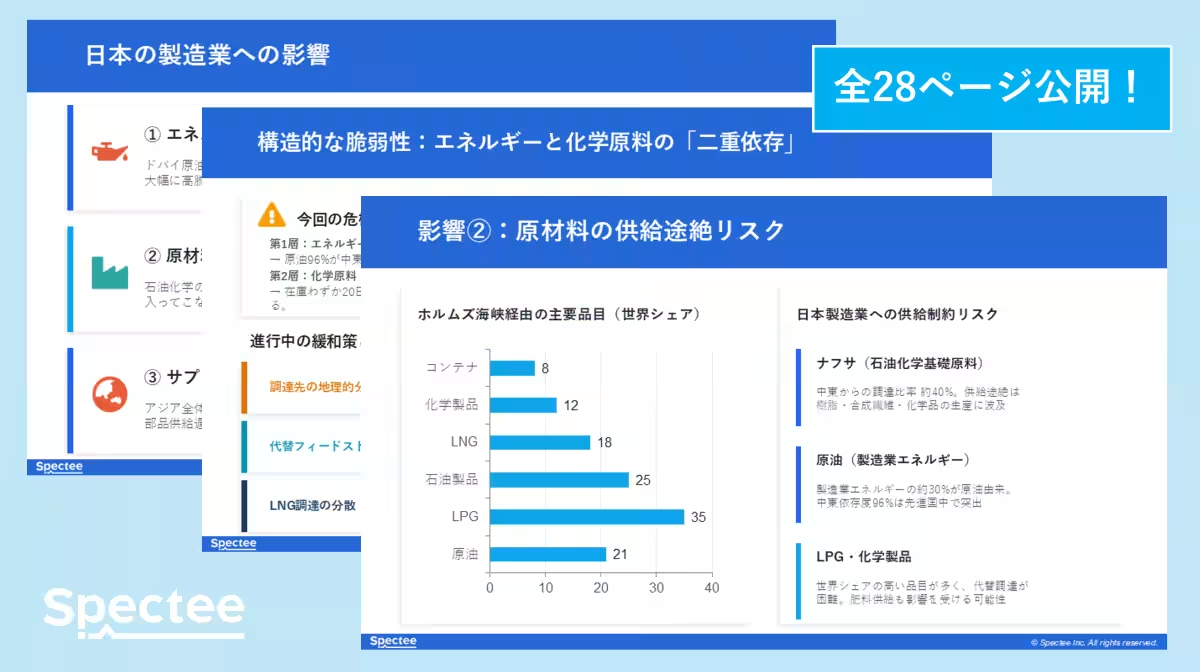
- A detailed quantitative analysis sheds light on Japan's underlying structural issues, primarily driven by rising energy costs exacerbated by the blockade.
2. Naphtha Crisis: A Hidden Vulnerability in Petrochemicals
- This section uncovers the supply risks associated with naphtha and explains how the integrated production structure of naphtha cracking units affects essential products like ethylene, propylene, butadiene, and BTX.
3. Ripple Effects on Asia's Supply Chains
- With 80% of the crude oil passing through Hormuz intended for Asian markets, this part discusses how vulnerabilities in ASEAN and Indian supply chains indirectly impact Japan's manufacturing sector.
4. Current International Political Dynamics
- An overview of the rapidly changing diplomatic landscape is provided, including a recap of the UK-hosted foreign ministers' meeting and the 35-nation coalition's joint statements leading up to the ceasefire agreement.
5. Spectee's Recommendations: Three Structural Reforms
- The paper outlines three pivotal reforms: expanding strategic reserves of naphtha and chemicals, designing supply chain redundancy that goes beyond Just-in-Time (JIT) practices, and transforming geopolitical risks from exceptions to regular variables in risk management frameworks.
Comments from CEO Kenjiro Murakami
"As of April 11, the initiation of ceasefire talks between the U.S. and Iran marks a first step towards stabilizing the situation. However, the crisis is far from over. This blockade starkly highlights Japan's dual dependence on the Middle East for both energy and chemical raw materials, exposing significant vulnerabilities. I hope this report acts as a catalyst for the reevaluation and reinforcement of supply chain resilience within Japan’s manufacturing sector," says Kenjiro Murakami, CEO of Spectee.
Availability of the White Paper
The white paper is available for free download on Spectee's official website: Download here
Upcoming Event: SFX’26 Conference
Join us on April 24 for one of Japan's largest supply chain conferences, SFX’26, held in a hybrid format (online and physical venue). Experts will gather to discuss the future of supply chains in an era of uncertainty, highlighting strategic resilience in supply chain management, AI-driven insights, and beyond.
- - Sessions Highlight:
2. AI & Data-Driven Supply Chain Management by Keigo Murakami from Toshiba
3. The Future of Supply Chain Strengthening from a Management Perspective by former JTEKT CEO Takumi Matsumoto
4. Understanding the Essence of Supply Chain Resilience by Seiji Onoduka from Roland Berger
For those who cannot attend live, register to access the recordings:
Register here
About Spectee
Spectee operates under the mission of "visualizing crises." As a technology company utilizing AI, they provide supply chain risk management solutions. Their services involve real-time analysis of diverse data sources, including social media, news, and satellite imagery, effectively visualizing unseen supply chains and promptly detecting the impacts of natural disasters and geopolitical risks. Various sectors, including manufacturing, logistics, and finance, rely on Spectee for their strategic needs.
Company Overview
- - Headquarters: 12-3 Gobancho, Chiyoda-ku, Tokyo 102-0076, Japan
- - CEO: Kenjiro Murakami
- - Official Website: Spectee
Topics Business Technology)
【About Using Articles】
You can freely use the title and article content by linking to the page where the article is posted.
※ Images cannot be used.
【About Links】
Links are free to use.