



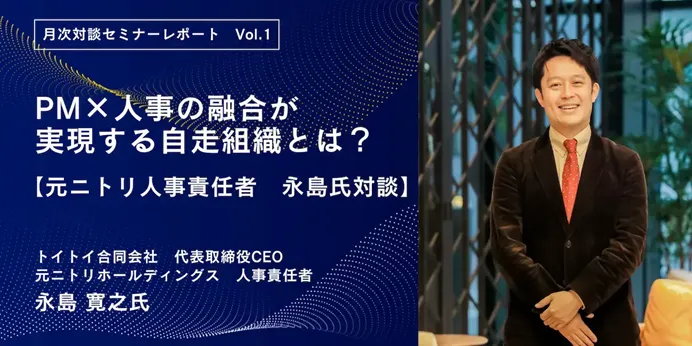
Breaking the Barrier of Job Offer Declines: Insights from Management Experts
Breaking the Barrier of Job Offer Declines
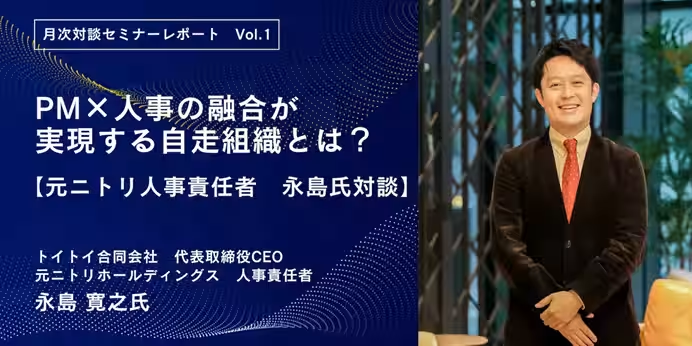
In an enlightening dialogue led by Hiroyuki Nagashima, former HR head at Nitori and current CEO of Toitoi LLC, strategies to cultivate self-motivated organizations to address the alarming rate of job offer declines were unveiled. This event, hosted by Management Solutions (MSOL) on December 10, 2025, aimed at executives and HR leaders grappling with organizational transformation and recruitment challenges, provided profound insights into creating environments where employees willingly engage and contribute to their organization’s success.
The Context of the Discussion
Many organizations strive for self-driven team dynamics but often encounter barriers such as dependence on explicit instructions and high rates of job offer declines. The statistics reveal that up to 70% of job offers are rejected, indicating a significant disconnect between organizational expectations and the prospective employee experience. In this dialogue, Nagashima and MSOL’s project management expert, Tomohiro Nishida, delved into a multifaceted approach to tackle these challenges by blending human resources (HR) and project management (PM) insights.
Nagashima emphasized the necessity of moving away from baseless HR policies and highlighted the importance of relationship building throughout the recruitment process. They discussed how to ensure that recruitment efforts do not end in theoretical discussions but lead to practical applications that spark genuine interest and commitment from candidates.
Key Topics Discussed
1. ### Shifting Focus from Selection to Relationship Building
Nagashima proposed a transformative shift in the recruitment mindset - transitioning from viewing interviews merely as a selection process to utilizing them as opportunities for relationship building. By creating an environment where future visions can be shared and mutual understanding is cultivated early on, organizations can ensure candidates feel a personal connection to the company, significantly increasing acceptance rates.
Practical methods for achieving this included transforming interviews into more conversational interactions rather than rigid assessments, thus enhancing candidate engagement and deeper understanding of organizational culture.
2. ### The Importance of Data-Driven Decision Making in HR
The dialogue underscored a critical perspective: HR departments often lag in implementing data-driven decision-making processes which are commonplace in marketing and PM sectors. Recognizing and leveraging data pertaining to employee capabilities and potential ensures that talent management decisions are not only justified but also serve to enhance organizational credibility and efficiency.
By employing a data-backed approach to talent management, organizations can generate a more informed understanding of their human capital, facilitating better matches between individual strengths and organizational needs, ultimately driving performance.
3. ### Bridging Project Management and Human Resources
The discussion unveiled the parallels between project management and HR initiatives, asserting that motivating and mobilizing an organization is akin to steering a project towards completion. Aligning the objectives of HR and PM departments creates a cohesive strategy that utilizes insights from both fields to foster environments of cooperation and initiative.
Both Nagashima and Nishida debated and explored how to bridge these two worlds, ensuring that HR practitioners adopt PM principles and vice versa. Understanding structural knowledge from PM can enhance HR practices, ultimately leading to the establishment of organizations where individuals are motivated to take initiative and contribute meaningfully.
About the Speaker
Hiroyuki Nagashima's experience as the former HR head at Nitori and his executive roles at Renova and other organizations positioned him perfectly to lead this insightful discussion. Known for his data-driven approach, he ingeniously utilized market data and analytics to revolutionize recruitment and employee engagement strategies. Now, as the CEO of Toitoi LLC, he continues to support organizational development, emphasizing the power of inquiry and dialogue to bring forth effective solutions in complex organizational settings.
Conclusion
The insights shared during this session highlight the urgent need for organizations to reevaluate their recruitment and internal engagement strategies. As companies aim to build self-driven and motivated environments, incorporating methods of relationship building, data-driven decision-making, and cross-disciplinary collaboration will be essential. The full transcript of the dialogue is available on Logmi, providing additional resources and a deeper understanding of the subjects discussed.
For more information on the seminar details, please visit Logmi Seminar Articles.

Topics Business Technology)
【About Using Articles】
You can freely use the title and article content by linking to the page where the article is posted.
※ Images cannot be used.
【About Links】
Links are free to use.