




Pocket Queries Makes Breakthrough in Sewer Inspection with Four-Legged Robot Technology
Revolutionizing Sewer Inspections with Advanced Robotics
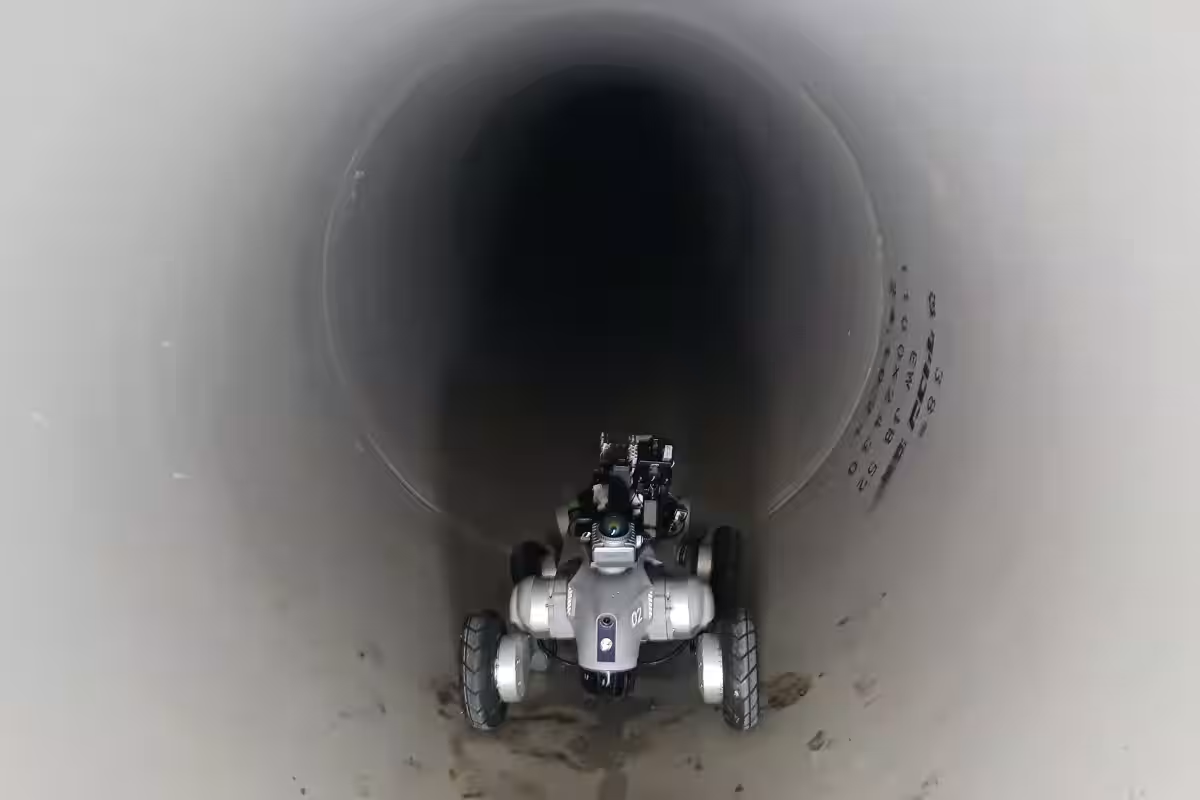
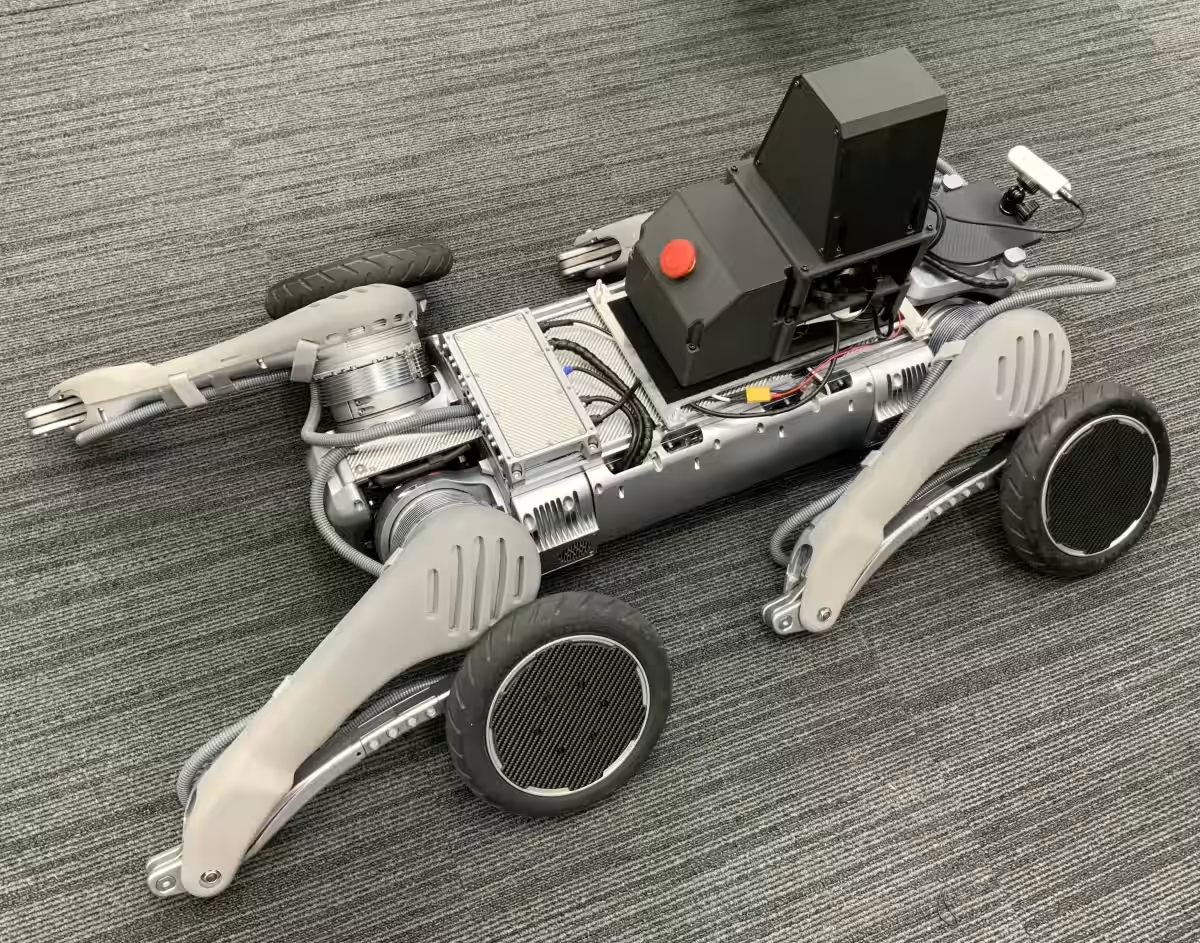
In an ambitious move to tackle the challenges of aging infrastructure, Pocket Queries, headquartered in Shinjuku, Tokyo, has achieved a significant milestone in the field of robotics. On April 28, 2025, they partnered with Sun Shield, based in Anjo, Aichi, to test their innovative four-legged robot, the Go2-W developed by Unitree Robotics. The trial took place in a rainwater drainage project in Seto City, Aichi Prefecture, showcasing the effectiveness of remote-controlled inspections through the company's proprietary control system, the iVoRi Box.
This initiative aims to improve the maintenance of aging infrastructure by implementing remote technology that reduces the need for human intervention in dangerous or difficult environments. During the demonstration, the Go2-W robot maneuvered through a sewer pipe with a diameter of 1,100mm, traveling approximately 140 meters under remote operation. The process included video capture, which is typically challenging due to the confined spaces where proper ventilation and protective gear are necessary for workers.
Key Demonstration Outcomes
1. Reliable Communication Environment:
The experimental setup included only one Wi-Fi Access Point, proving sufficient for stable remote control even from 7 meters underground, where communication can often falter.
2. Robot Mobility Verification:
Amidst uneven terrain and curved pipes, the robot demonstrated impressive adaptability, maintaining a neutral posture naturally without extensive lateral adjustments, which speaks to its autonomous stability and performance.
Introduction to the iVoRi Box
The iVoRi Box is designed to optimize field operations and drive digital transformation (DX) by seamlessly integrating with the four-legged robot. Equipped with a 4K PTZ camera and a LiDAR system, it can autonomously navigate through spaces using SLAM (Simultaneous Localization and Mapping) technology. This purpose-built system allows for real-time video acquisition and precise remote operation, enabling operators to monitor the robot’s position accurately.
Future Prospects
Looking ahead, Pocket Queries aims to advance this technology further by ensuring stable wireless control in poorly connected environments, enhancing waterproof and heat-resistant capabilities, and incorporating AI for anomaly detection. These developments will push the boundaries of robot applications in inspection scenarios, creating safer and more efficient practices.
Pocket Queries is committed to addressing the labor shortages faced by companies on the front lines, focusing on skills transfer, labor saving, and multi-role capabilities through the development of practical DX tools. Their innovation reflects a broader trend in which robotics and artificial intelligence converge to meet industry demands for efficiency and safety.
As they move forward, Pocket Queries is not just enhancing operational capabilities but also setting a new standard in infrastructure maintenance practices, potentially reshaping how we tackle the challenges of urban aging infrastructure in the years to come.


Topics Consumer Technology)
【About Using Articles】
You can freely use the title and article content by linking to the page where the article is posted.
※ Images cannot be used.
【About Links】
Links are free to use.