



IEEE Milestone Recognition Ceremony for Groundbreaking Railway Reservation System MARS-1
IEEE Milestone Recognition Ceremony for MARS-1
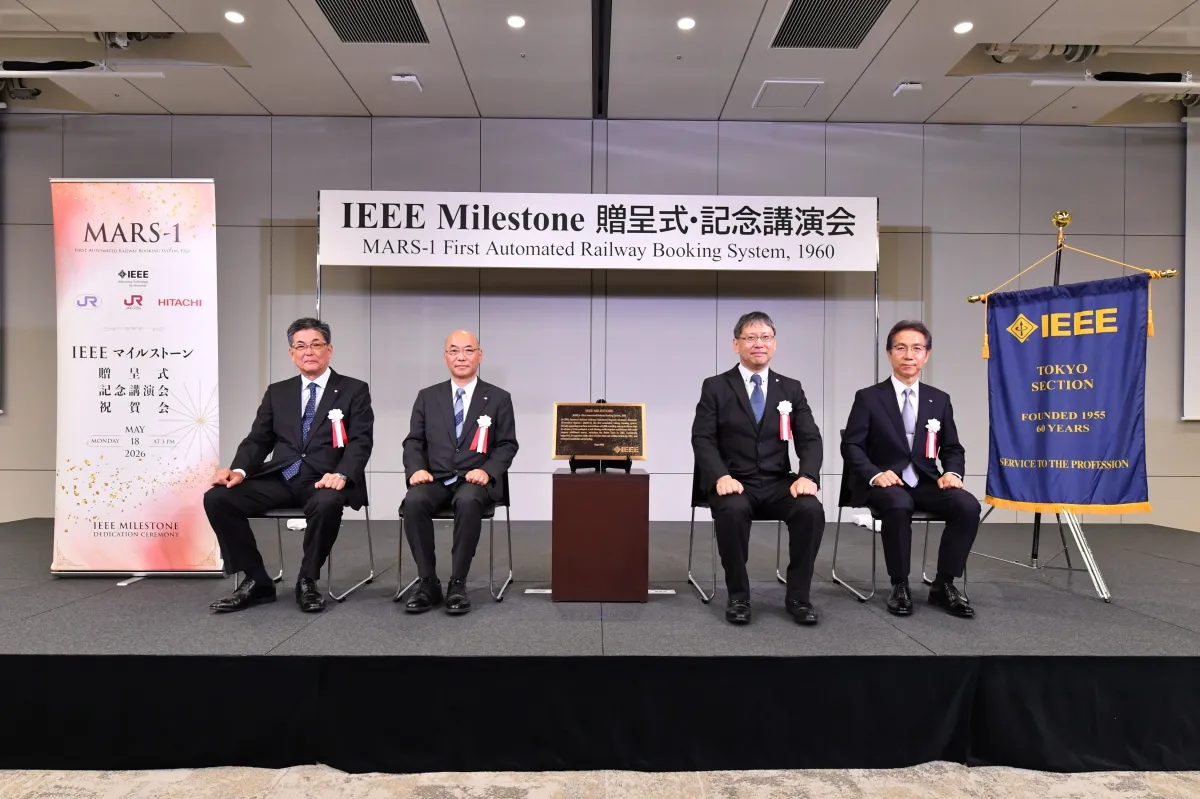
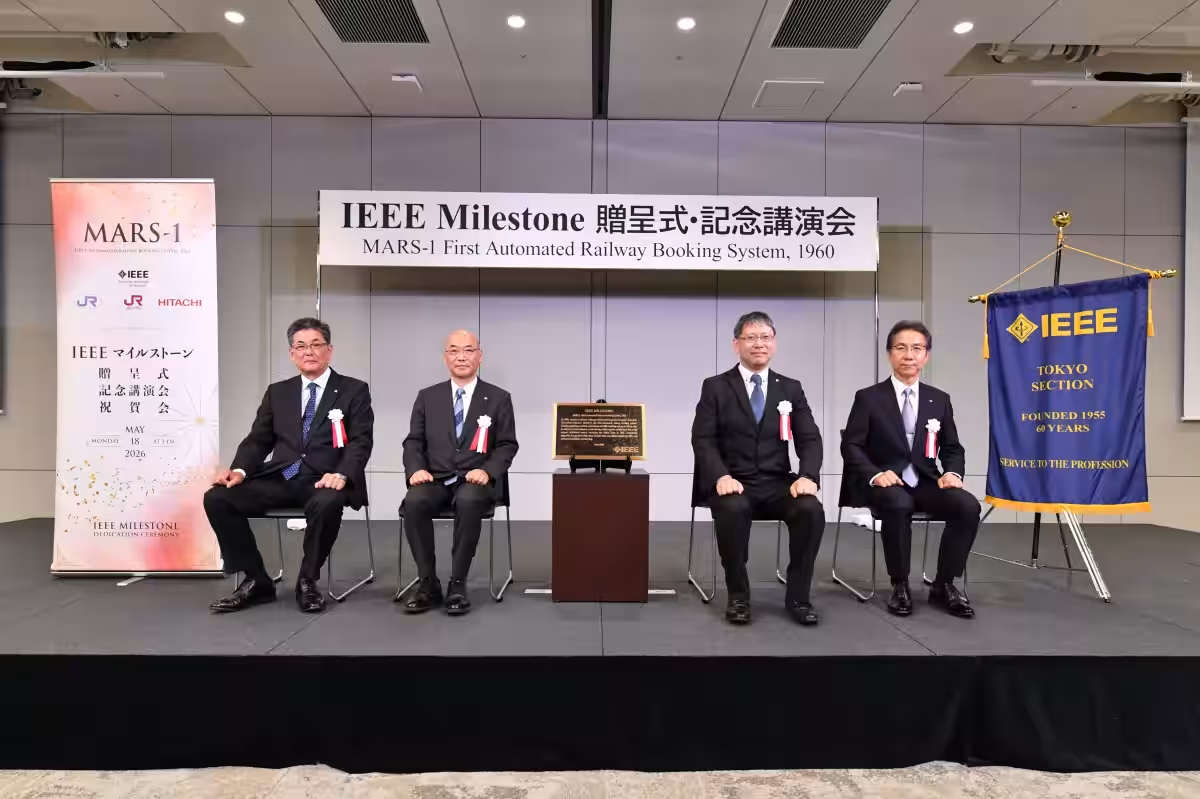
On May 18, 2026, an extraordinary event took place at the Takanawa Gateway Convention Center, where the world's first railway seat reservation system, MARS-1, was officially recognized as an IEEE Milestone. Sponsored by three key organizations, namely the Railway Technical Research Institute, Railway Information Systems Inc., and Hitachi, Ltd., the ceremony marked a significant achievement in the automation of railway seat reservations in Japan.
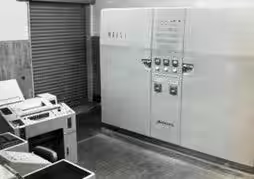
MARS-1 was developed by Dr. Eisei Hosaka of the then Japan National Railways’ Railway Technical Research Institute. The prototype system was engineered by Hitachi and completed in July 1959, first entering service in 1960. Recognizing the historical and technical significance of MARS-1, this ceremony celebrated the high regard in which the system is held throughout the international community.
During the ceremony, commemorative plaques were presented to the representatives of the three organizations, followed by addresses from each. Throughout the speeches, pride in the achievement and acknowledgment of the vital collaborative efforts that made MARS-1 a reality were emphasized.
Highlights from the Ceremony
1. Address from the President of the Railway Technical Research Institute, Ikufumi Watanabe
Watanabe expressed immense pride in the recognition of MARS-1, highlighting it as a testament not only to the technology itself but also to the vision and collaboration of those who came before. He noted that railways are foundational to society, intricately connected to various domains and people's daily lives. He reinforced the commitment to further enhancing safety, reliability, and comfort in railway technology through continued collaboration with diverse sectors.
2. Address from Takaaki Ikeda, President of Railway Information Systems
Ikeda honored the opportunity to speak at such a significant event, noting that MARS-1 represented a breakthrough during an era when computer technology was just beginning to flourish. He affirmed the system's significant role in online processing technology and its lasting impact on efficiency and reliability in railway operations. Ikeda assured a continued commitment to uphold the high standards established by predecessors while supporting the growth of Japan's railway services.
3. Address from Katsuya Nagano, Senior Executive Officer of Hitachi
Nagano expressed pride in Hitachi's involvement with MARS-1 and the recognition it received from IEEE. He underscored the system's contributions to the history of electrical engineering and social progress. He noted that the significance of MARS-1 lay not just in seat reservation automation but also in pioneering online processing applications that opened up new horizons for computer utilization in infrastructure. Nagano emphasized the ongoing commitment to safe and reliable social infrastructure development through collaboration with all stakeholders involved.
The Importance of MARS-1
MARS (Multi-Access Reservation System), as it was originally conceived, has undergone continuous improvements over more than 60 years. It has become a vital online system for managing and issuing tickets for Japan Railway Group, reflecting its adaptive evolution. The recognition of MARS-1 as an IEEE Milestone serves not only to commemorate its historical importance but also to inspire future advancements in technology within the railway sector.
IEEE and IEEE Milestones
The Institute of Electrical and Electronics Engineers (IEEE) is the world's largest professional association dedicated to advancing technological innovation and excellence. With over 530,000 members in more than 190 countries, the IEEE Milestone program was established in 1983 to honor notable technological achievements that have significantly impacted society and industry while enhancing public understanding and appreciation of these advancements. As of April 2026, 66 milestones have been recognized in Japan, ranging from cutting-edge antennas to the iconic Shinkansen (bullet train).
In conclusion, the MARS-1 IEEE Milestone recognition symbolizes a remarkable moment in railway history and affirms Japan's leadership in technological innovation. As we look to the future, it will undoubtedly encourage continued collaboration and development within the railway sector, ensuring that technology continues to meet the needs of society.



Topics Other)



【About Using Articles】
You can freely use the title and article content by linking to the page where the article is posted.
※ Images cannot be used.
【About Links】
Links are free to use.