




Understanding Workplace Rules and Labor Standards: Insights From Recent Survey
Insights into Workplace Regulations and Labor Standards
In recent times, the demand for proper labor management by companies and a deeper understanding of employee rights has surged, primarily due to labor shortages and diversified working styles. A recent survey, conducted by tax accountant Yuichi Sugawara, reached over 480 full-time employees aged between 20 and 60 across Japan to shed light on the nuances of workplace rules and labor standards.
Survey Overview
The survey, titled "Actual Survey of Workplace Rules and Labor Standards Law," took place in 2026 and drew responses through online platforms. The sample comprised equal distribution among genders and age groups, which provided a comprehensive overview of varying perspectives among employees.
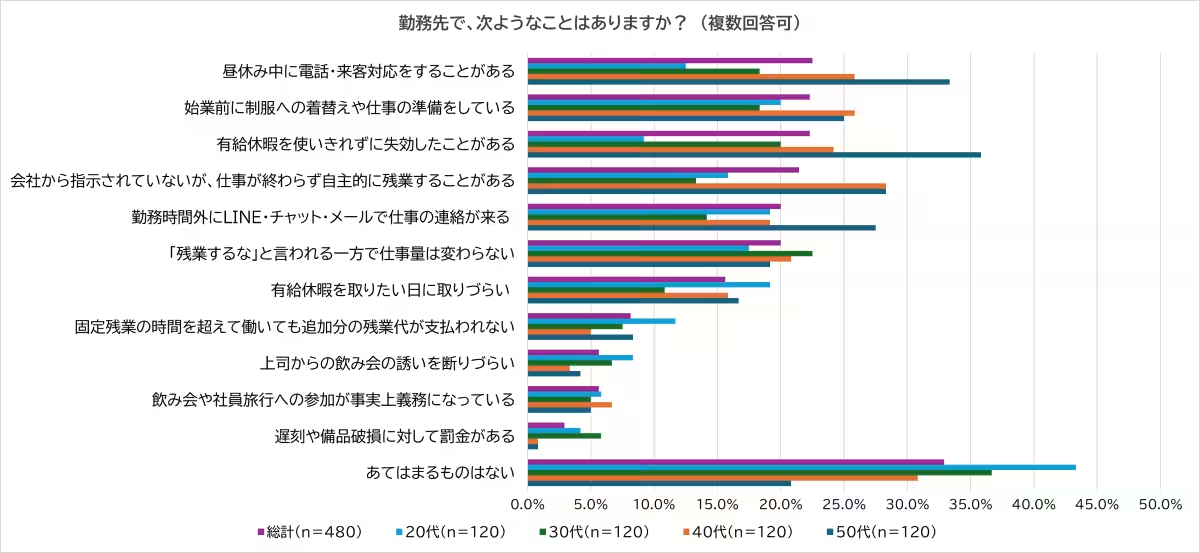
According to the survey, almost 70% of respondents experienced some form of workplace rule, illustrating a pressing concern regarding compliance with labor laws. Notably, almost a third of participants indicated a lack of awareness regarding potential violations of labor standards, highlighting an educational gap that exists in many organizations.
Key Findings
- - An impressive 70% of employees admitted to encountering unfamiliar workplace rules, including issues like having to respond to calls during lunch breaks or losing vacation days.
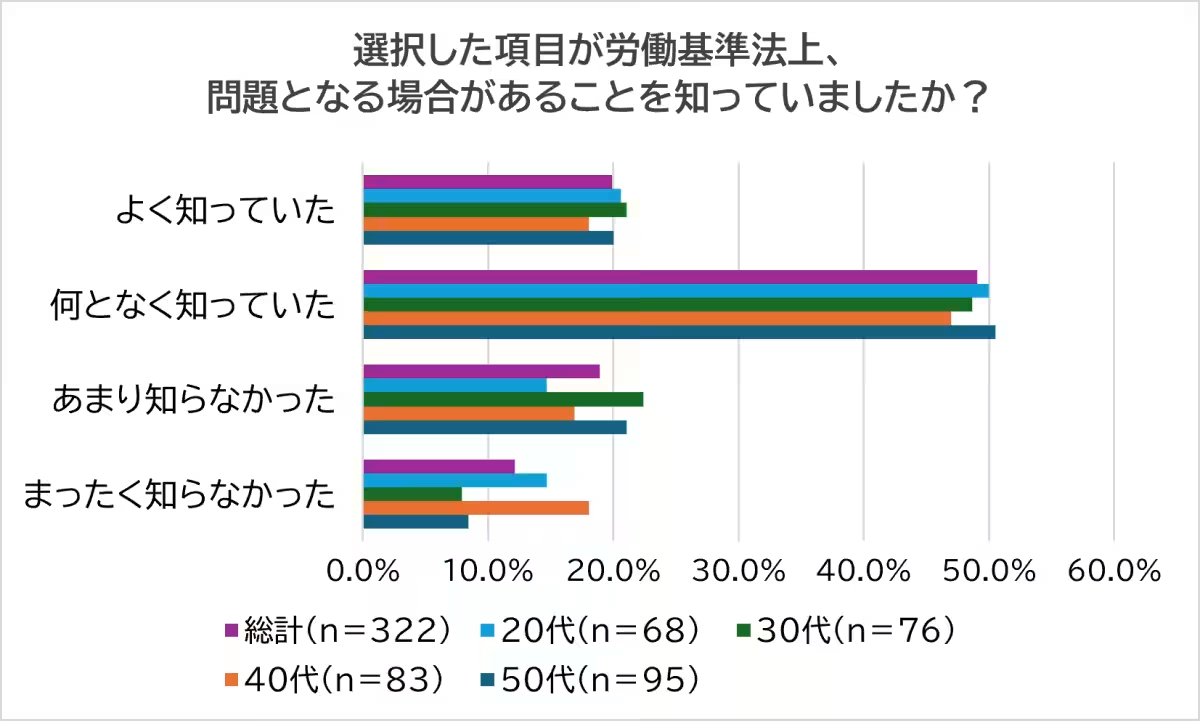
- - Around one-third of respondents confessed that they were unaware that their practices could conflict with labor laws, revealing a crucial area that requires further education.
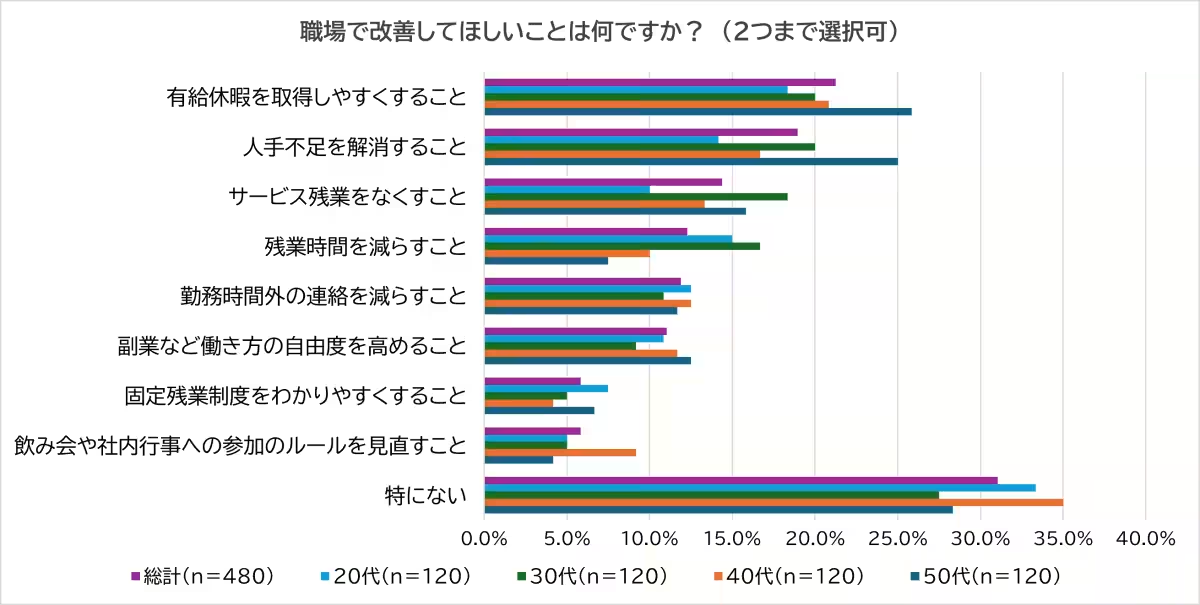
- - The most requested workplace improvement revolved around the simplification and promotion of paid leave acquisition, showcasing a collective yearning for better support on this front.
Experience and Awareness
Of those who reported experiencing workplace rules, nearly half showed a superficial understanding of the implications related to labor laws. Only about 20% could confidently assert they fully understood their legal standing. Alarmingly, this means that about one in three employees were unaware that their working conditions might pose legal risks. Age demographics displayed that older participants often had deeper insights, whereas younger employees frequently expressed ignorance regarding potential issues.
Improvement Demands
The predominant call for workplace transformation was focused on enhancing the accessibility of paid leave. Unresolved issues around staffing shortages and excessive unpaid overtime also stood out in requests for changes, alongside calls to lessen after-hour messages from management. The survey underlined a widespread desire to redefine workplace environments, revealing that employees, regardless of age, are eager for improvements across several fundamental working conditions.
Know Your Rights
Understanding your rights as an employee is paramount. Labor standards are designed to protect worker rights, yet many employees and employers lack proper knowledge and awareness. Failure to recognize labor laws can inadvertently lead to violations, as employees might find themselves engaged in practices that are, unknowingly, against the law.
Key Areas of Focus:
1. Work Hours Regulations: Employers must clarify what constitutes working hours versus personal time. For instance, if employees are expected to change before clocking in, that time may count as working hours, necessitating compensation.
2. Overtime Management: If employees work past their scheduled hours voluntarily, this may not automatically qualify as overtime unless explicitly recognized by the company. Effective monitoring and clarity around overtime policies can prevent misunderstandings.
3. Paid Leave Rights: It's critical for employees to grasp that paid leave is a right, not just a privilege. Employers cannot impose conditions that violate this right unless truly necessary for business operation.
4. Communication Expectations: The increase in remote work has blurred the lines regarding acceptable communication outside office hours. Clear policies need to be established to manage this facet of work culture.
5. Employer-Focused Consequences: Companies that enforce penalties for tardiness or other minor infractions must abide by regulations that dictate salary deductions legally. Understanding these subtleties can spare both employees and employers from potential disputes.
Concluding Thoughts
This survey underscores the pressing need for both employers and employees to grasp their respective rights and obligations regarding workplace laws. Given the complex landscape of labor management today, it’s vital for organizations to foster environments that promote awareness and responsible practices. By cultivating this knowledge, both sides can work towards creating fairer, more understanding workplaces.
Yuichi Sugawara’s insights not only demonstrate the fundamental issues at play but also serve as a catalyst for change in organizational policies related to labor management. The goal is clear: enhance communication, streamline understanding, and create a fair work atmosphere for all.


Topics People & Culture)
【About Using Articles】
You can freely use the title and article content by linking to the page where the article is posted.
※ Images cannot be used.
【About Links】
Links are free to use.