



Exploring Two Decades of Self-Care Evolution: From Illness Prevention to Proactive Well-Being
Exploring Two Decades of Self-Care Evolution
In recent years, self-care has transformed from a reactive measure focused on illness prevention to a proactive approach aimed at enhancing overall mental and physical well-being. This evolution reflects broader societal changes and emerging health insights, rooted in a recent survey conducted by Daiichi Sankyo Healthcare to commemorate its 20th anniversary.
Background of the Study
Between June 18 and 22 in 2026, Daiichi Sankyo Healthcare surveyed 600 individuals aged 20 to 70 across Japan to understand shifts in self-care attitudes and behaviors over the past two decades. The survey revealed significant insights about how our understanding of self-care has evolved, particularly in response to the fast-paced, information-rich society we navigate today.
Prof. Koichi Murashita, Vice President of Hirosaki University, contributed his expertise to this study, drawing from over 20 years of health research focusing on community well-being. His input highlights crucial changes in societal norms and individual health practices.
The Changing Landscape of Work and Life
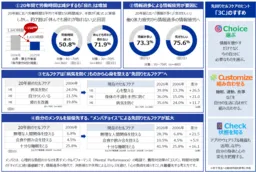
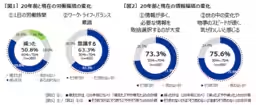
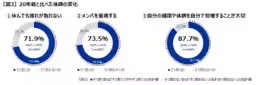
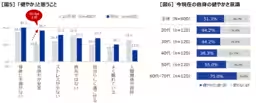
One notable shift seen in the study is the general improvement in work-life balance. According to data from the Ministry of Health, Labor and Welfare, the average annual working hours have drastically decreased by about 150 hours compared to 20 years ago. Despite this reduction, many respondents expressed chronic fatigue, with nearly 72% stating that they find it difficult to recover from tiredness even after a break. This phenomenon, termed the ‘information fatigue society’, has pressed individuals to seek healthier ways to manage their mental load.
Health Awareness Themes in Contemporary Society
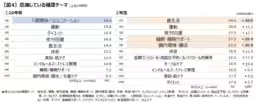
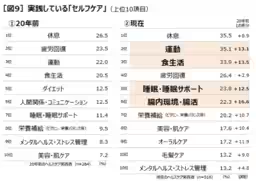
Interestingly, while two decades ago, the emphasis on health was prominently on social relationships, today’s primary focus has shifted to dietary habits. The survey presented 24 health-related themes, and the findings revealed an increased consciousness towards nutrition, gut health, sleep quality, and fatigue recovery. For instance, concern for ‘gut health’ has surged from just 6.5% in 2006 to an impressive 27.3% in 2026.
Self-Care Practices: A Shift towards Proactivity
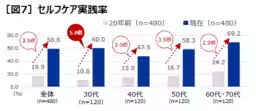
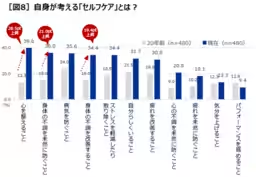
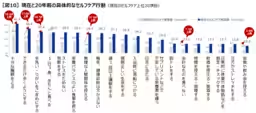
The study observes a remarkable increase in the practice of self-care over the last two decades, with current engagement rates soaring to 58.8%, up from a mere 16.9%. This shift covers various aspects of self-care, including mental health awareness and preventative measures. The emphasis has now transitioned from merely preventing illness to fostering emotional balance and preemptive health management, dubbed 'Proactive Self-Care.'
The Role of Mental Performance
In the midst of this transition, there has been a noteworthy rise in the prioritization of mental performance, termed 'Menpa'—which encapsulates the psychological aspects of personal health. In the recent survey, 73.5% of individuals emphasized the management of their mental load over physical ailments, a stark contrast to the previous decades’ mindset.
Societal Influences and Future Directions
In Professor Murashita’s analysis, the implications of this transition are profound. The findings indicate that individuals are not only more aware of health and wellness but are actively seeking tailored approaches that suit their personal needs. The integration of AI and wearable technology is expected to further advance self-care practices, enabling predictive measures for health, paving the way for even more refined health strategies soon.
As we move forward, our understanding of health will continue to evolve. By focusing on proactive wellness that integrates both mental and physical health, the future of self-care looks promising. This holistic approach will redefine how society perceives health and wellness, facilitating a culture of well-being that prioritizes individuals’ needs holistically.
Conclusion
The past two decades have seen a transformative journey in self-care. As society continues to adapt to rapid changes, the emphasis on holistic health becomes paramount. The proactive measures promoted within this evolving narrative are not merely beneficial but essential, bridging the gap between illness prevention and the aspiration of living a fulfilled, healthy life. The evolution of self-care represents an empowering shift towards a community that values wellness in its entirety, heralding a new era of health consciousness.



Topics Health)

【About Using Articles】
You can freely use the title and article content by linking to the page where the article is posted.
※ Images cannot be used.
【About Links】
Links are free to use.