



GlobalData Unveils a Comprehensive White Paper on Voice Evolution at MWC 2026
Exploring the Future of Voice Technology: Insights from GlobalData
At the illustrious Mobile World Congress (MWC) 2026 held in Barcelona, GlobalData's esteemed Senior Analyst, Andy Hicks, shared groundbreaking insights in his latest technical examination titled "Reinventing Voice: A Converged, AI-Enabled, and Multi-Modal Voice Core". This white paper delves into how the telecommunications landscape is poised for a radical transformation by leveraging artificial intelligence (AI) in voice services.
The Need for Transformation
The telecommunications industry is at a pivotal moment. With the evolution from 2G to 5G networks, operators are facing numerous operational challenges as they balance legacy services with new technology. Hicks emphasizes the importance of a fully converged voice network that can manage multiple generations of services, addressing lifecycle issues and enabling a seamless transition for future innovations. This shift is essential, especially as the demand for innovative communication solutions rises in the AI era.
As global network standards continue to evolve, operators find themselves in a race to harness the full potential of their services. Hicks's report underscores a proactive approach toward transitioning from conventional systems to a fully integrated voice architecture that supports agility, enhances service offerings, and reduces overall costs.
Embracing AI in Voice Services
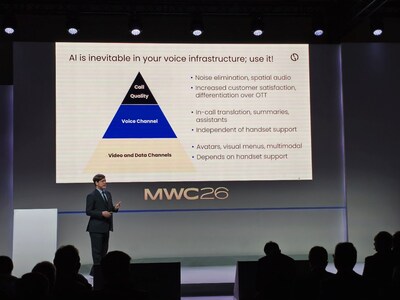
One of the significant revelations in Hicks's paper is the three-phase transformation process through which AI can metamorphose the voice service landscape. The initial phase focuses on utilizing AI to enhance basic calling experiences, thereby providing operators with a competitive edge over Over-The-Top (OTT) applications. This includes innovations like advanced noise cancellation and immersive spatial audio technologies, which elevate call quality to unprecedented levels.
The second phase integrates AI features such as real-time translation and intelligent call summaries, offering sophisticated functionalities for users without imposing additional hardware requirements. This agility allows operators to swiftly deploy AI-driven innovations, capitalizing on early mover advantages in the rapidly evolving tech environment.
Finally, the final phase transitions voice innovation from a unidimensional service to a multi-modal one, where AI integrates seamlessly with video and data channels. This transformation facilitates interactive services such as customer support systems and health assistants, paving the way for the conceptualization of Voice as a Service.
Hicks strongly advocates for operators to embrace the myriad opportunities presented by AI, positing that leveraging a fully integrated voice network is pivotal for motivating innovation in service delivery. By intertwining their voice services with advancements in AI and the ongoing rollout of 5G technologies, operators can redefine the core value of their voice services.
Conclusion
The exploration of voice services amidst the strides in AI technology lays the foundation for a more responsive, interconnected, and efficient telecommunication ecosystem. As outlined in Andy Hicks's insightful white paper, the amalgamation of AI and voice services not only resurrects traditional offerings but also carves pathways for novel features and enhanced user engagement.
For those interested in the detailed narratives and empirical data driving these insights, a link to the complete technical report is available. This pivotal examination sheds light on the essential strategies operators must adopt to thrive in an increasingly digital and AI-centric world of telecommunications.
Click here to read the full report!
Topics Telecommunications)
【About Using Articles】
You can freely use the title and article content by linking to the page where the article is posted.
※ Images cannot be used.
【About Links】
Links are free to use.