



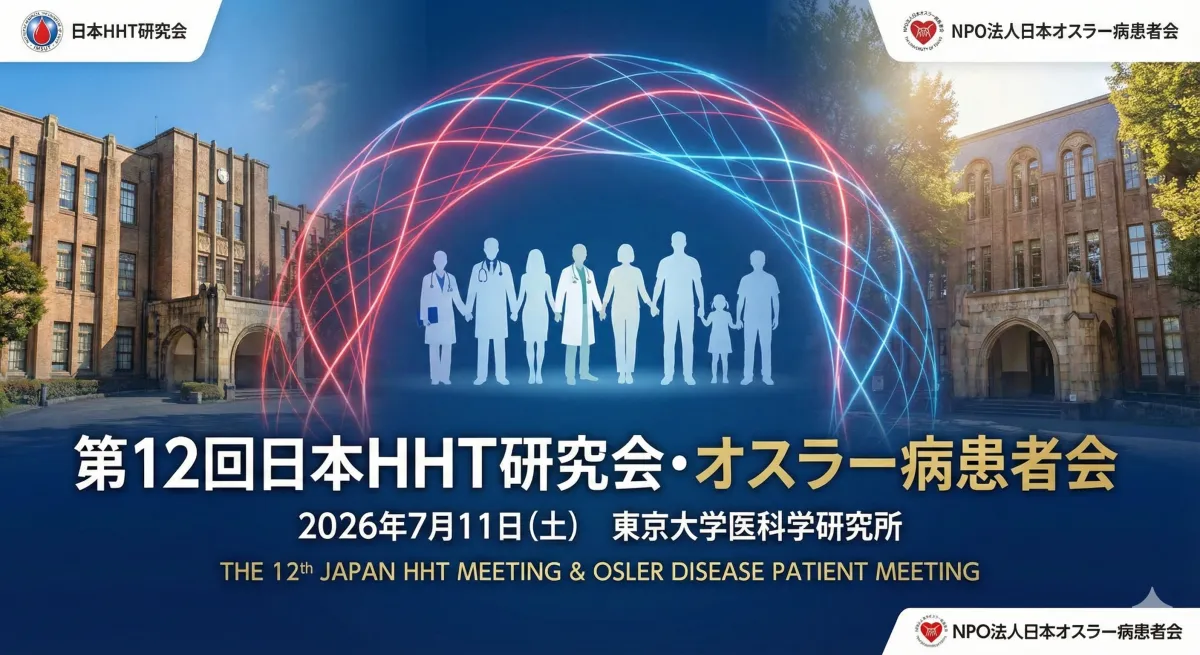
Understanding Osler's Disease: Collaborative Event Tokyo2026 to Bridge Healthcare, Research, and Patients
Understanding Osler's Disease and the Upcoming Tokyo2026 Event
Osler's disease, clinically known as Hereditary Hemorrhagic Telangiectasia (HHT), is a rare hereditary disorder characterized by abnormal blood vessels throughout the body. This condition often leads to recurrent nosebleeds and can cause serious complications such as brain abscesses, septicemia, severe anemia, and pulmonary hypertension if not diagnosed and treated appropriately.
In light of the challenges associated with HHT, the Japanese Osler Disease Patient Association and the Japan HHT Research Society are convening a collaborative event titled "Tokyo2026" to take place on July 11, 2026, at the Institute of Medical Science, University of Tokyo. The event is designed to raise awareness about HHT, which currently boasts a diagnostic rate of only 10%.
The Significance of Tokyo2026
The Tokyo2026 event plays a critical role in bridging the gap between patients, healthcare professionals, and researchers. With the objective of improving early detection and ensuring that patients do not feel isolated within their medical journey, this conference will emphasize early diagnosis, accurate information sharing, and the integration of patient perspectives into medical practices and research protocols. The central theme revolves around the patient and public involvement (PPI) perspective, which aims to discern practical solutions to existing challenges in HHT care.
Event Structure
- - Event Name: Collaborative Event of the Japanese Osler Disease Patient Association & Japan HHT Research Society (Tokyo2026)
- - Date: July 11, 2026
- - Venue: Institute of Medical Science, University of Tokyo
- - Organizers:
- President: Dr. Takemori Akiyama
- Japanese Osler Disease Patient Association
- Chairman: Masahiro Murakami
Agenda Overview
The Tokyo2026 event features two core components that focus on scientific perspectives and practical support:
1. Scientific Perspectives from Japan HHT Research Society
This session will address the contemporary challenges and research trends surrounding Osler's disease, discussing how collaborative efforts across various medical disciplines can enhance support for patients. This will serve as a forum to explore new strategies in managing rare diseases through shared responsibilities among medical professionals and patient advocates.
2. Practical Support and Interaction from the Japanese Osler Disease Patient Association
This segment centers around improving the quality of life for patients and their families. Experienced members of the patient association will share practical insights on managing the condition, particularly focusing on techniques for stopping nosebleeds and other vital lifestyle tips. Networking opportunities will also be provided in the form of patient exchange sessions, enabling individuals and families to share their own experiences and concerns.
Osler's Disease (HHT) Features
Osler's disease involves:
- - Familial (Hereditary) Transmission
- - Recurrent Nosebleeds
- - Ablation of Small Blood Vessels in Skin and Mucous Membranes
- - Arteriovenous Malformations in Lungs, Brain, and Liver
Failure to manage this disease properly can lead to dire consequences, including chronic complications. Fortunately, with timely diagnosis and adequate management, many of these complications can be significantly mitigated.
Continued Support for Patients by the Japanese Osler Disease Patient Association
With over 15 years of advocacy, the Japanese Osler Disease Patient Association aims to provide ongoing support through various channels, including:
- - Information Dissemination via an official website that offers resources on self-care, symptom management, and professional updates.
- - Online Community which allows members to connect, share experiences, and provide mutual support across different regions.
- - Regular Workshops and Q&A Sessions foster regional engagement in cities such as Sapporo, Tokyo, Osaka, Hiroshima, and Fukuoka.
- - Consultation Helpline for patients and families needing immediate assistance.
Conclusion
The Tokyo2026 event represents a crucial step towards fostering a society where patients aren't isolated, and their voices can positively influence healthcare and research. We cordially invite all patients and their families to join us in this important dialogue.
Topics Health)
【About Using Articles】
You can freely use the title and article content by linking to the page where the article is posted.
※ Images cannot be used.
【About Links】
Links are free to use.