



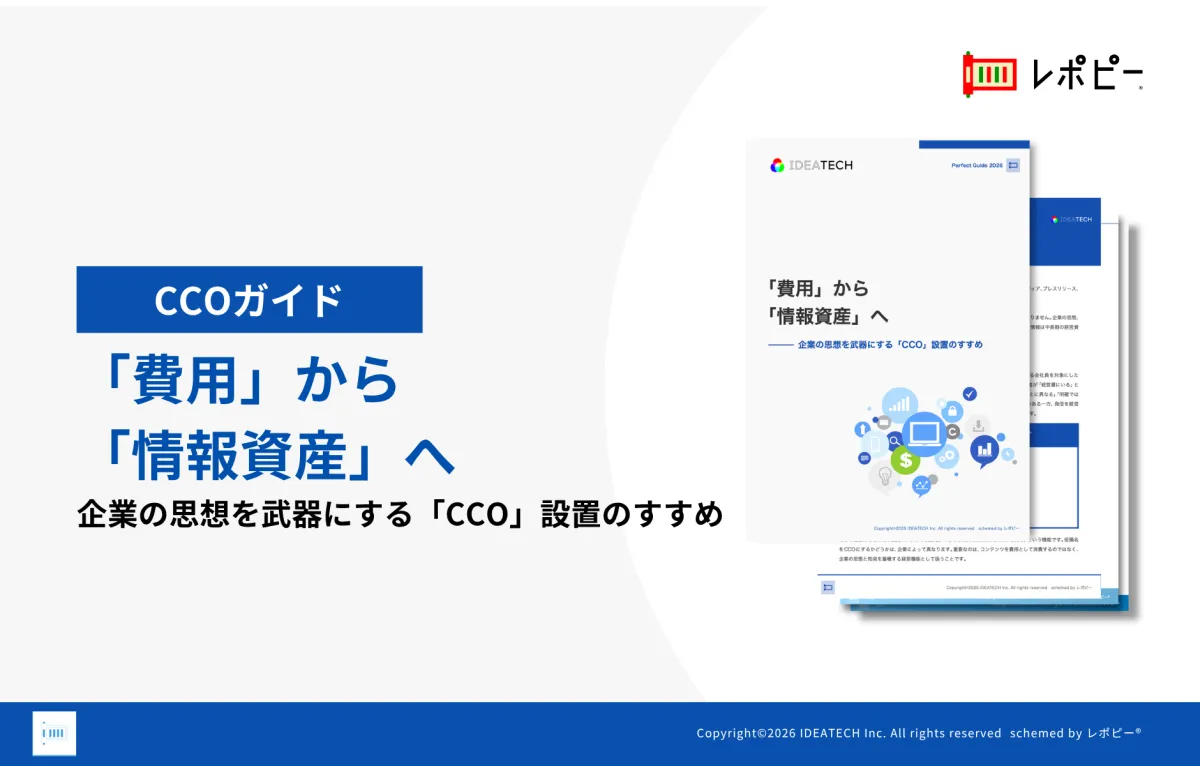
Transforming Cost into Information Assets: The Case for Chief Content Officers
Transforming Cost into Information Assets: The Case for Chief Content Officers
In today's fast-paced business environment, the significance of communication within an organization cannot be understated. A striking statistic reveals that 94.1% of companies experience redundancy in creating similar materials. The focus should shift from viewing these communications purely as a cost to recognizing their potential as valuable information assets. IDEATECH, a Tokyo-based firm, is championing this transition through the introduction of the Chief Content Officer (CCO).
The Guideline: From Cost to Information Assets
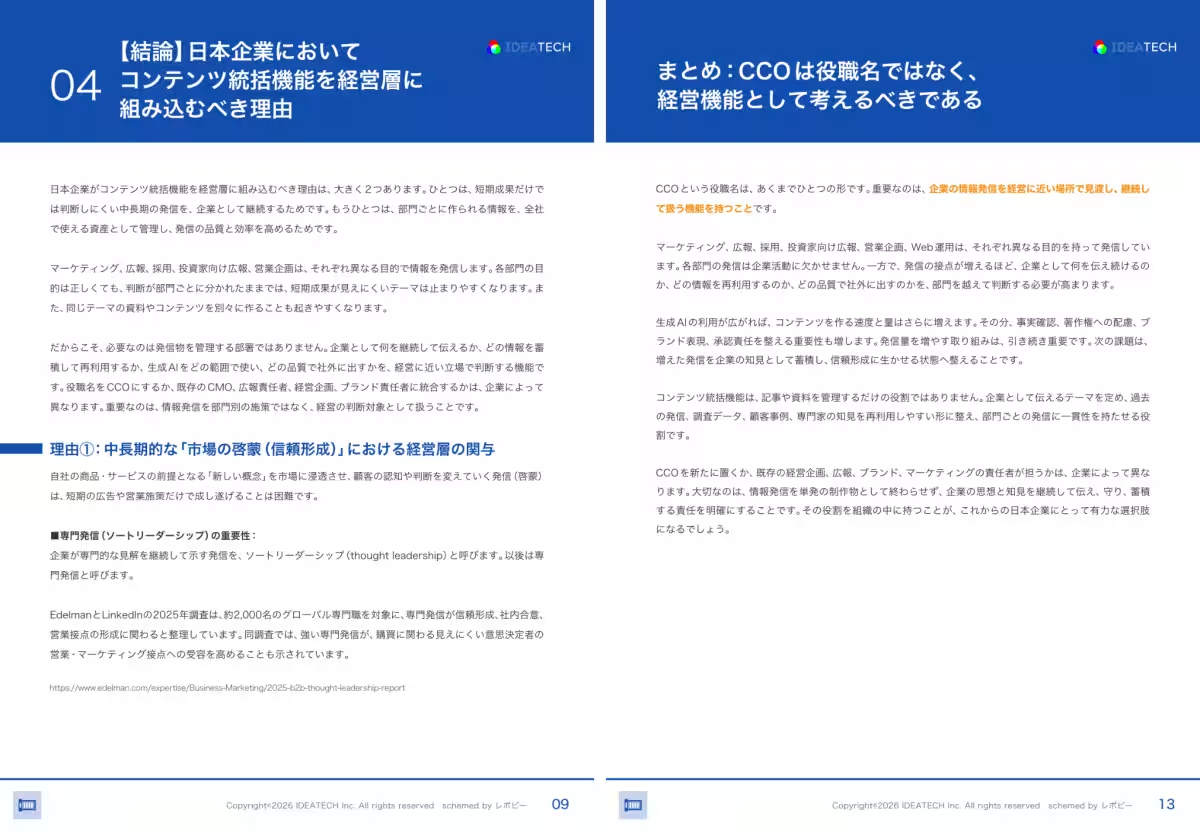
IDEATECH has released a perfect guide titled "From Cost to Information Assets" which emphasizes incorporating the CCO role into executive management. This guide underscores the necessity of treating organizational communications as long-term investments rather than one-off expenses. The report outlines the historical emergence of the CCO role in the U.S. media sector during the 2000s and how its implementation has extended to various industries globally.
Key Insights from the Guide
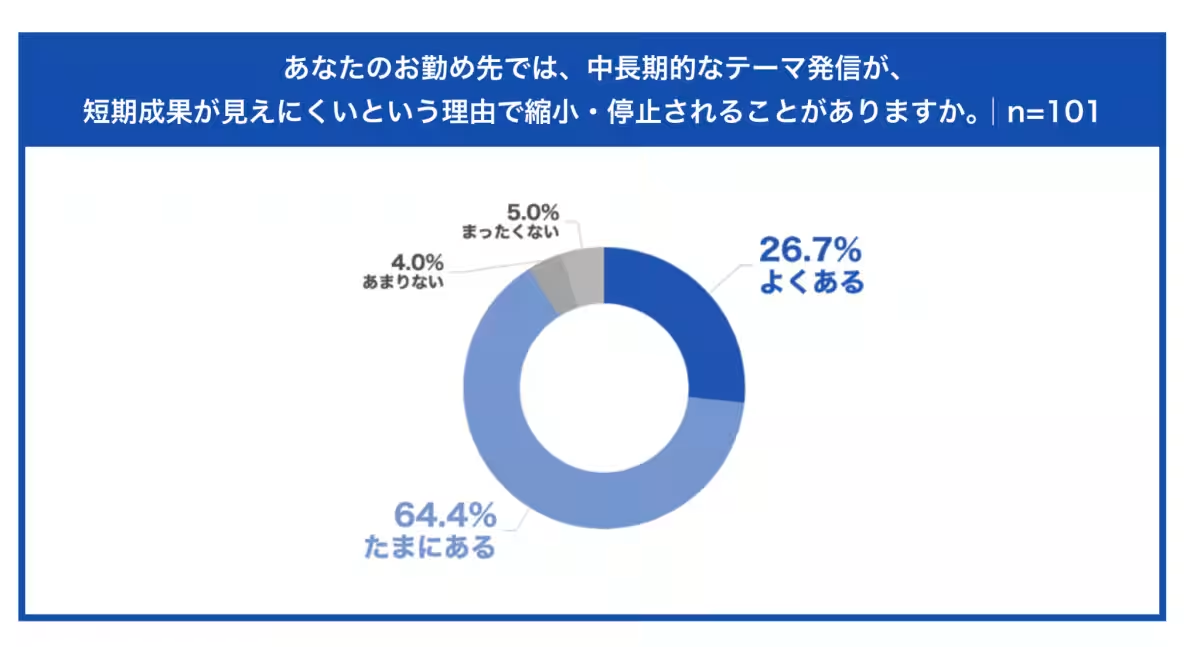
1. Common Issues in Japanese Corporations: A survey indicated that 91.1% of Japanese companies often reduce or halt long-term thematic communication due to a lack of immediate results. This underscores a critical challenge faced by businesses today—balancing short-term gains with long-term messaging strategies.
2. Evolution of the CCO Role: The advent of AI and the evolving business landscape necessitate that companies rethink their approach to content management. The guide systematically discusses the emergence and evolution of the CCO position, analyzing data from 101 respondents involved in external communications.
3. Transforming Content into Assets: The core of the guide advocates for a structural shift in how organizations view and manage their content. By integrating the CCO within the management framework, companies can ensure that communication efforts contribute to the organization's long-term narrative and growth.
Historical Context
The emergence of the CCO role in the early 2000s, particularly within the media industry, highlights a transformative approach to managing corporate communications. By 2018, this role began permeating into mainstream businesses, with companies like Airbnb and HP establishing CCOs. This evolution is now crucial as we anticipate AI integration into workflows and governance, essential for brand protection and sustenance in the current digital age.
The Case for CCOs in Japan
Japanese firms often struggle with fragmented messaging approaches. This can lead to duplications across departments, resulting in wasted resources and unclear brand narratives. A significant 94.1% of survey participants confirmed instances of multiple departments producing similar content, which impacts both costs and efficiency. Hence, a CCO can streamline content processes, ensuring consistency and enhancing the company's voice in its market.
Conclusion
The guide clearly establishes two primary arguments for the integration of CCO roles:
1. Ensuring corporate alignment towards long-term market enlightenment, which leads to trust building.
2. Streamlining the accumulation and management of information assets in an age inundated with data.
By treating content not merely as a cost but as a vital component of corporate strategy, businesses can effectively harness the potential of their communications to foster growth. This shift is about more than just the title of CCO; it’s about embedding a cultural transformation that prioritizes sustained engagement and insightful narratives.
To learn more about this transformative approach and download the guide, visit here. The future of corporate communications lies in viewing every piece of content as an opportunity for growth—a shift that organizations need to embrace now more than ever.

Topics Business Technology)
【About Using Articles】
You can freely use the title and article content by linking to the page where the article is posted.
※ Images cannot be used.
【About Links】
Links are free to use.