



The Shift in the Second-Hand Office Furniture Market as Demand Transforms in February 2026
The Changing Landscape of Second-Hand Office Furniture in February 2026
In February 2026, OfficeBusters, a Tokyo-based company, released its monthly report on the second-hand office furniture index, revealing significant trends in the office market and highlighting a shift in demand from relocation to restructuring existing spaces. This month, the vacancy rate in key urban areas rose slightly to 2.20%, while rent increased by 321 yen, indicating a tightening office market despite a slight dip in employment indicators.
Current Market Overview
Amid rising rents and vacancy rates, companies are showing caution in their investment decisions. The job openings-to-applications ratio fell to 1.18, and the unemployment rate climbed to 2.7%. These figures have led many businesses to reconsider their strategies regarding office space, leading to a notable preference for optimizing existing setups rather than seeking new locations.
A crucial interpretation of the index shows that the market is increasingly driven by practical needs such as layout adjustments and enhanced seating arrangements instead of large-scale relocations. The approaching fiscal year-end has spurred demand for essential furniture, suggesting that companies are prioritizing immediate and efficient responses to changing office environments.
Increased Demand for Specific Items
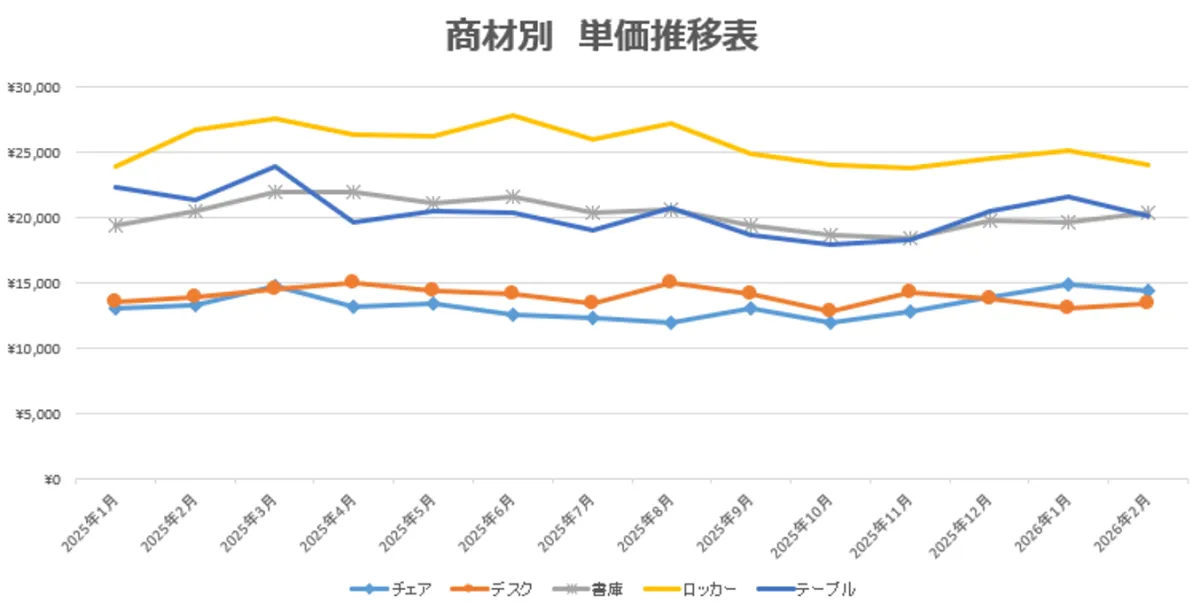
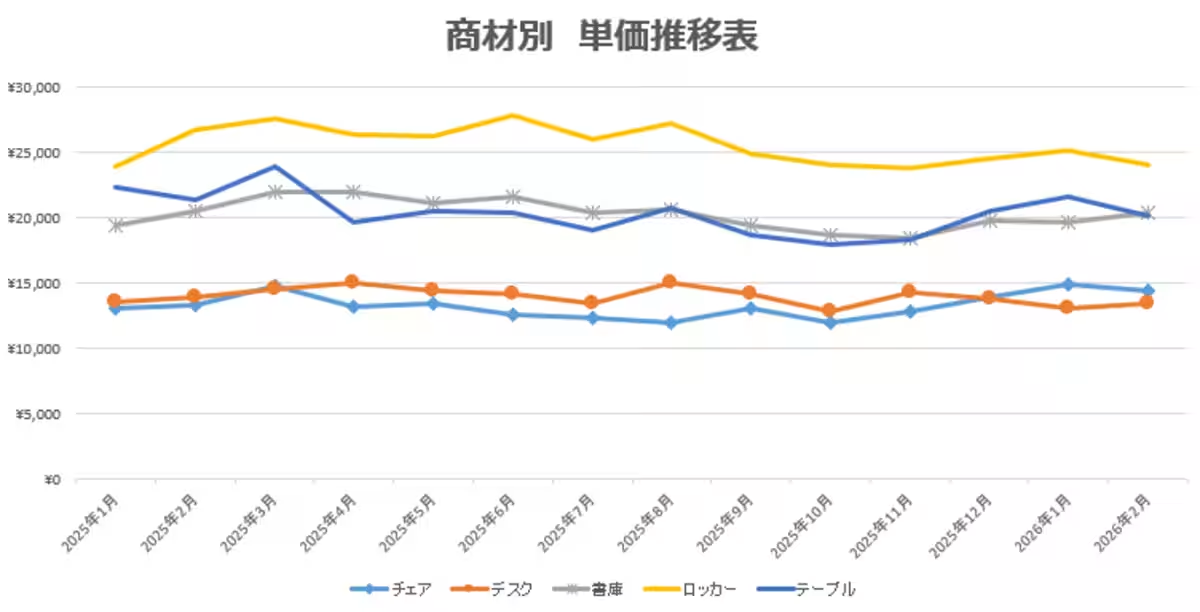
1. Chairs: Demand remains high for warm-colored chairs, with prices slightly down by 408 yen compared to the previous month but up by 1,175 yen year-on-year. As businesses prepare for the fiscal year-end, the need for increased seating has led to an uptick in sales.
2. Desks: Sales for desks have been steady, with an increase in single unit supplies. Companies are focusing on reorganizing layouts more than on relocating to new offices, demonstrating a strategic shift in office planning.
3. Storage Solutions: Bookcases and lockers are stable with minor fluctuations. Although lockers have seen a price decrease of 1,086 yen this month compared to January, the demand remains strong, particularly for personal lockers despite dwindling availability in the second-hand market.
4. Tables: Tables have experienced a price drop of 1,520 yen this month, with significant demand for side stack tables. The anticipated surge in requirements may lead to stock shortages, highlighting the importance for businesses to secure items in advance.
Conclusively Assessing the February Market
February's overall trend indicates a robust demand for second-hand office furniture driven by practical needs such as restructuring workspaces rather than moving to new offices. As company strategies adapt to the evolving employment landscape, interest in optimizing current office setups is evident.
With rising demand beginning to strain inventory – especially for fast-moving items like chairs and stackable tables – the advice for businesses is clear: prioritize securing necessary items well in advance of need. The ability to quickly adapt to changing workplace dynamics and plan accordingly will be crucial for companies looking to thrive amid evolving market conditions.
Looking Ahead to March 2026
As we approach March, traditionally a peak period for office furniture demand due to the fiscal year-end, expectations indicate a concentrated interest in acquiring necessary office equipment. Companies still apprehensive about major relocations will likely focus their efforts on sprucing up existing workplaces through effective management of increased seating, reorganizations, and renovations.
Ultimately, the second-hand office furniture market will continue to reflect the investment attitudes and strategies of businesses, presenting varied options amidst the pressures of downsizing, relocation, and space optimization.
For inquiries regarding office furniture, OfficeBusters remains receptive and well-equipped to assist clients with timely and appropriate solutions.

Topics Consumer Products & Retail)







【About Using Articles】
You can freely use the title and article content by linking to the page where the article is posted.
※ Images cannot be used.
【About Links】
Links are free to use.