



Understanding the Diversity of Tsunami Events from Ancient Mega-Earthquakes in Hokkaido's Pacific Coast
Understanding the Diversity of Tsunami Events from Ancient Mega-Earthquakes in Hokkaido's Pacific Coast
Recent investigations led by researchers from the National Institute of Advanced Industrial Science and Technology (AIST) and Hirosaki University have focused on the tsunami deposits along Hokkaido's Pacific coastline, analyzing the implications of two significant mega-earthquakes that occurred in the 17th century and during the 13-14th centuries. Tsunami deposits serve as crucial geological evidence, providing insights into the earthquake's scale, characteristics, and subsequent tsunami behavior.
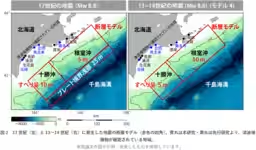
The research, spearheaded by Kei Ioki and Yuki Sawai and published in the journal Geophysical Research Letters, emphasizes that while evidence exists of recurring magnitude 8 earthquakes—categorically termed as mega-earthquakes—along the southern Kuril Trench, each quake was characterized by its unique fault lines and slip behavior. This insight highlights that the same type of mega-earthquake does not repeat, but instead, a range of events with varied impacts emerges over time.
Understanding the differences in slip patterns and earthquake behavior is pivotal for enhancing disaster prevention strategies, particularly in the context of tsunamis, which have historically posed significant risks to coastal communities in Hokkaido. The study indicates that a greater variety of tsunami events corresponds with the complex history of earthquakes in the region, confirming that the mega-earthquakes from the 17th century and the earlier 13-14th centuries exhibited distinct characteristics—both in their destructive areas and slip mechanisms.
Geological Investigations and Findings
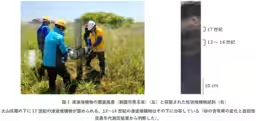
The researchers engaged in extensive field studies across the Pacific coastline of Hokkaido, focusing on areas such as the Hamanchu Town and numerous other locations. They conducted detailed excavations at 88 different sites, where they gathered sediment samples to identify and analyze tsunami deposits. Their goal was to ascertain the distribution of these deposits to clarify the relationships between historical tsunami events and mega-earthquakes.
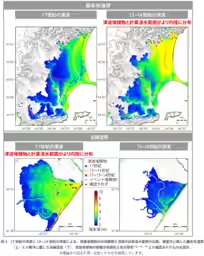
Through the analysis of volcanic ash layers, radiocarbon dating, and sediment composition, the researchers established that tsunami deposits from the 13-14th centuries differed in distribution compared to those from the 17th century, suggesting that the nature of the earlier mega-earthquakes was fundamentally different. While both tsunamis resulted from significant seismic activity, factors such as geographical variations affected the inland reach of deposits, indicating variances in tsunami wave behavior.
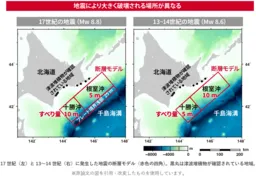
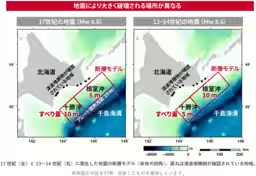
Moreover, the use of tsunami inundation simulations allowed the researchers to estimate the extent and characteristics of the waves generated by these ancient mega-earthquakes. For the earlier earthquake, simulations indicated a slip area of approximately 300 km x 100 km with a moment magnitude of 8.6, while the 17th-century event presented a broader slip zone of 300 km x 130 km with a moment magnitude of 8.8, showcasing a more considerable displacement.
Implications for Disaster Preparedness
The conclusion drawn from this research underscores the variability of tsunami events and the importance of recognizing their differences to formulate effective disaster preparedness strategies. The findings suggest that earlier models which posited a singular pattern or size for earthquake events may be inadequate to fully represent the geological phenomena at play in the Kuril Trench.
Given that historical records in eastern Hokkaido only extend back approximately 200 years, continuous geological study is necessary to build a more comprehensive understanding of the frequency and nature of these catastrophic events. This ongoing research is essential for enhancing tsunami prevention strategies and for protecting future generations from the potential dangers presented by these natural phenomena.
As this research progresses, the investigation into previously recorded mega-earthquakes and tsunamis along Hokkaido’s coastline will become increasingly important, ensuring that the region can better prepare for and understand the complexities of its seismic history.
The detailed findings of this impactful research can be found in the upcoming publication in the esteemed journal Geophysical Research Letters, set to be released on December 30, 2025, under the title "Difference in slip patterns between two prehistoric giant earthquakes along the southern Kuril Trench."
Topics Environment)
【About Using Articles】
You can freely use the title and article content by linking to the page where the article is posted.
※ Images cannot be used.
【About Links】
Links are free to use.