




The Unique Phenomena of Urban Flowering: Insights from Okayama University’s Research
Exploring Urban Flowering Patterns
A recent study conducted by Okayama University’s Graduate School of Environmental and Life Science sheds light on the complex impacts of urbanization on plant flowering phenology. This research, led by graduate students Hinata Fujiwara and Hiroto Yamaguchi under the guidance of Professor Kazuyoshi Nakata and Assistant Professor Koki Katsuhara, aimed to uncover how differences in urban and rural environments affect the timing and synchrony of flowering in the native annual herb, TMisus etc.
Research Overview
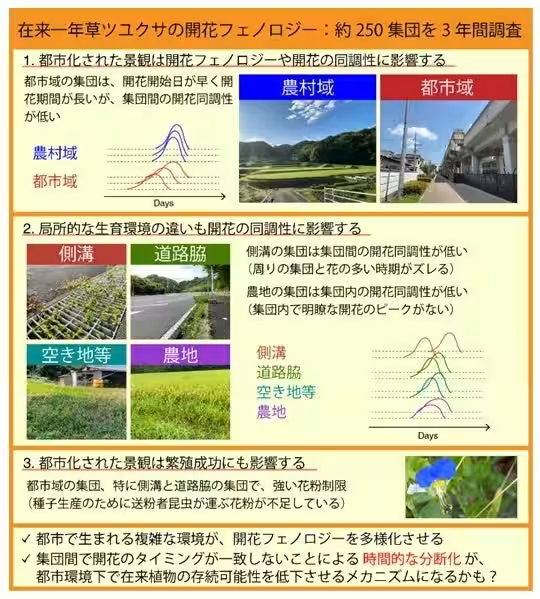
The team established four different research areas—two in rural locales and two in urban settings—to meticulously observe approximately 250 populations of TMisus etc over a three-year period, conducting weekly surveys of their flowering frequency. What they discovered was significant: urban landscapes exhibited a lower synchrony in flowering among the plant populations compared to their rural counterparts, indicating a potential decline in the viability of these plants due to the fragmented environments created by urbanization.
In urban environments, the variation in local microhabitats—such as parklands, ditches, and remaining agricultural lands—contributes to a temporal fragmentation in flowering times. This phenomenon not only poses challenges for reproduction but also affects the potential for cross-pollination due to lower insect activity in these areas. The results suggest that urban development can affect the reproductive success and sustainability of native plant populations through changes in their flowering patterns.
The key finding that 'temporal fragmentation' can serve as a new mechanism for survival decline emphasizes the urgent need to reassess urban ecological management strategies. Previous studies have mainly highlighted 'spatial fragmentation'—the physical separation between plant groups due to roads and buildings— as a major threat to plant viability. However, this research adds a new layer to our understanding of urban ecology by demonstrating that urban settings can create diverse flowering timings, complicating the interactions between various plant populations.
Contribution to Urban Ecology
This groundbreaking revelation, published in the Journal of Applied Ecology on September 22, 2025, marks a significant step forward in the field. By highlighting how urban conditions exacerbate the challenges faced by native flora, this study contributes invaluable insights towards the development of sustainable urban ecosystems that harmonize with nature. The research's implications resonate beyond local contexts and echo globally, especially as cities continue to expand.
Insights from the Researchers
Hinata Fujiwara reflected on the rigorous process, stating, "This study seeks to provide new insights into how rapid anthropogenic changes influence native plants. Walking through the research sites over the three years, collecting data, brought its own challenges, but being able to contribute to such important findings is immensely gratifying! This achievement would not have been possible without the support of my mentors and peers."
Assistant Professor Koki Katsuhara expressed his pleasure in seeing the fruits of their hard work come to fruition: "After five years at Okayama University, it feels rewarding to transform our students’ research into published findings. The path to this point was filled with intense work, especially for Hinata, who took on this challenging research early in my tenure. The amazing results achieved set a high benchmark for future students."
The research is supported by JSPS Grants 21K17914 and 25K15523, underlining the collaborative efforts behind this significant academic endeavor.
Conclusion
As the significance of biodiversity in urban settings gains recognition, findings like those from Okayama University serve as critical reminders of how careful ecological planning and management can foster healthier urban environments that support our planet's flora and fauna. With ongoing research and advancements in sustainable practices, there is hope for a future where urban landscapes and natural ecosystems coexist harmoniously.
For more details, check out the full paper: Urbanised Landscape and Microhabitat Differences Influence Flowering.
Explore more about Okayama University’s ecological initiatives here.






Topics Environment)
【About Using Articles】
You can freely use the title and article content by linking to the page where the article is posted.
※ Images cannot be used.
【About Links】
Links are free to use.