




Understanding Consumer Preferences on Google Maps for Store Selection
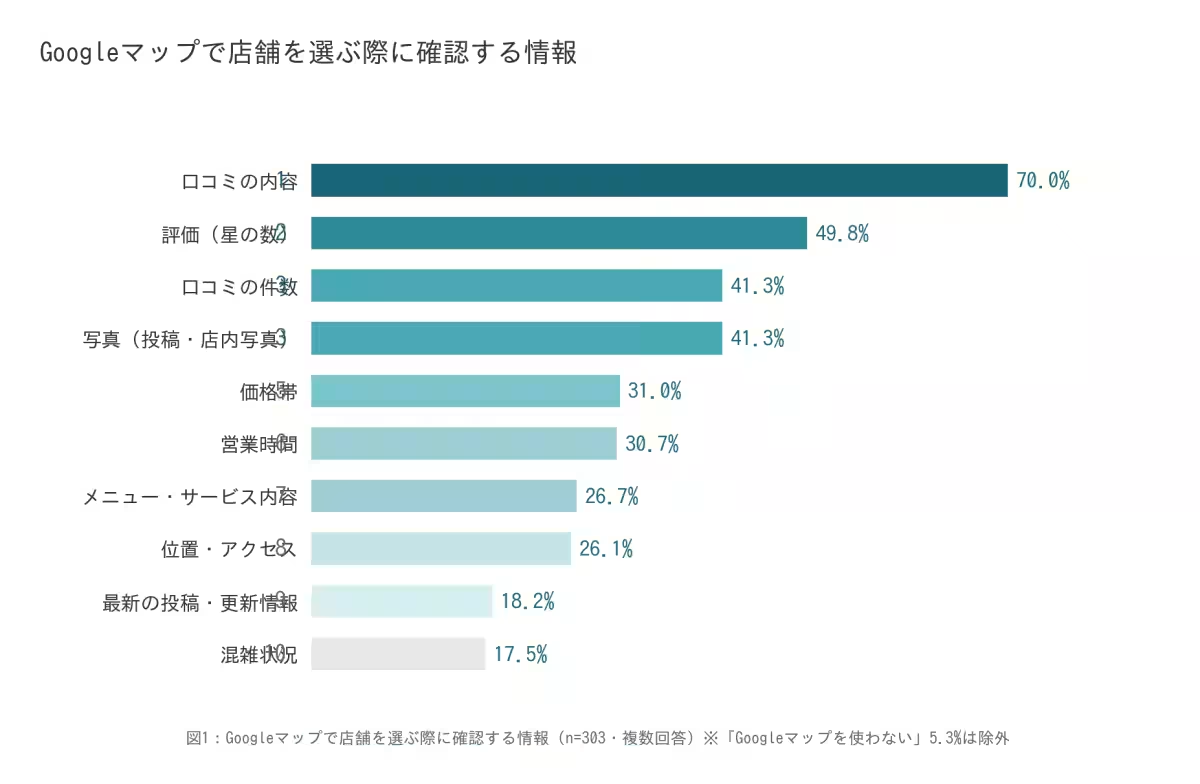
In a recent survey conducted by Knowledge Holdings Inc., a Tokyo-based company, the preferences of consumers when using Google Maps to choose stores were analyzed. The survey found that approximately 70% of participants, aged 20 to 50 from across Japan, primarily consider the content of reviews when selecting a store. This underscores the significance of what is written in these reviews over numerical ratings, which came in a distant second at 49.8%.
The research included 303 participants who were questioned online about their behaviors while using Google Maps. Key findings highlight the critical information consumers value when deciding where to shop. The data provides insightful rankings of the factors consumers check:
1. Review Content - 70.0% of respondents look at this factor first.
2. Rating (Stars) - 49.8% prioritize this.
3. Number of Reviews & Photos - Each of these received 41.3% acknowledgment.
This data indicates that consumers prioritize the qualitative aspects of reviews, probing into what others say before considering star ratings.
The results demonstrate a clear hierarchy in how consumers engage with information on Google Maps. The priorities can be broken down into three layers:
1. Review-Related Content: This is highly favored with options like review content, star ratings, and the number of reviews being central factors, with around 40%-70% of users checking these elements.
2. Basic Information: Details such as photos, pricing, store hours, and menu options are also crucial but checked by a slightly smaller group (30%-40%). Accuracy in these areas fundamentally affects trust.
3. Freshness Information: Elements like the latest posts and current occupancy status are reviewed by around 20% of participants, suggesting that actively updated information keeps a store relevant and appealing.
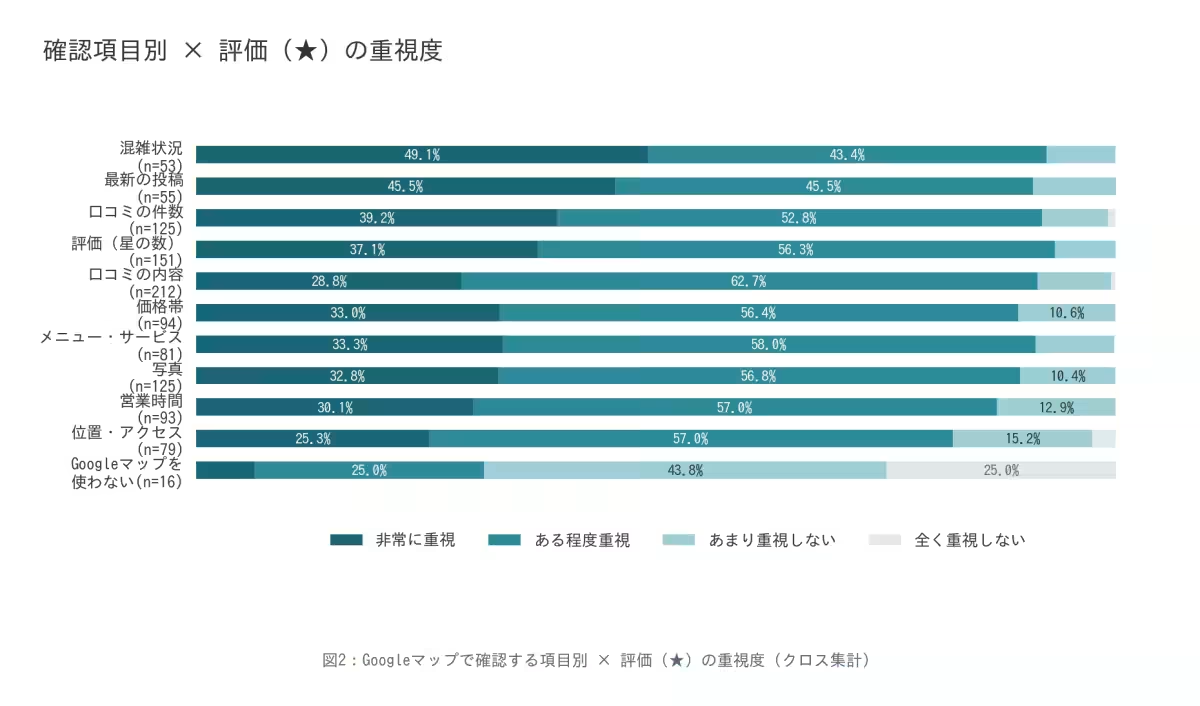
The survey revealed that the groups who check freshness data—like occupancy status and the latest posts—place significant importance on star ratings. Almost 49.1% of those checking occupancy felt ratings were essential, and 45.5% of those looking at recent posts responded with the same importance. This suggests a direct correlation between information freshness and stringent review standards among consumers.
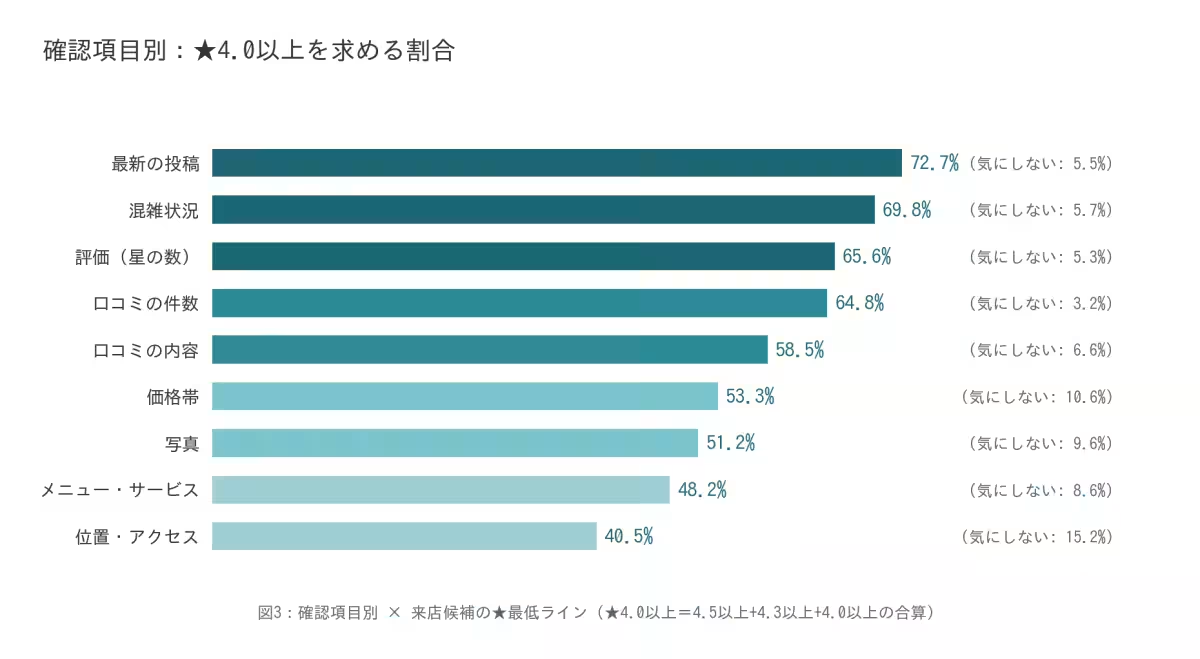
Interestingly, only 3.2% of those checking review quantities indicated that they do not care about star ratings, showing that nearly all consumers analyzing reviews are also critical of the ratings. Additionally, 72.7% of participants looking at the newest posts stated that they expect to see a minimum star rating of 4.0 to consider visiting a location.
From this research, some vital implications for businesses emerged. Entrepreneurs operating in retail should consider the following in their marketing strategy:
This survey elucidates that consumer behaviors on Google Maps are significantly influenced by the content of reviews. It shows that businesses must adapt to these insights to improve their online presence and attract customers, highlighting the importance of MEO strategies that prioritize authenticity and engagement. Knowledge Holdings Inc. continues to provide insights and strategies in search optimization while expanding its reach across various digital platforms, assuring alignment with current consumer habits.
By tailoring marketing efforts based on this data, retailers can effectively connect with consumers and enhance their overall perceived value on platforms like Google Maps.

Survey Overview
The research included 303 participants who were questioned online about their behaviors while using Google Maps. Key findings highlight the critical information consumers value when deciding where to shop. The data provides insightful rankings of the factors consumers check:
1. Review Content - 70.0% of respondents look at this factor first.
2. Rating (Stars) - 49.8% prioritize this.
3. Number of Reviews & Photos - Each of these received 41.3% acknowledgment.
This data indicates that consumers prioritize the qualitative aspects of reviews, probing into what others say before considering star ratings.
Ranking Insights
The results demonstrate a clear hierarchy in how consumers engage with information on Google Maps. The priorities can be broken down into three layers:
1. Review-Related Content: This is highly favored with options like review content, star ratings, and the number of reviews being central factors, with around 40%-70% of users checking these elements.
2. Basic Information: Details such as photos, pricing, store hours, and menu options are also crucial but checked by a slightly smaller group (30%-40%). Accuracy in these areas fundamentally affects trust.
3. Freshness Information: Elements like the latest posts and current occupancy status are reviewed by around 20% of participants, suggesting that actively updated information keeps a store relevant and appealing.
Freshness Information and Star Ratings
The survey revealed that the groups who check freshness data—like occupancy status and the latest posts—place significant importance on star ratings. Almost 49.1% of those checking occupancy felt ratings were essential, and 45.5% of those looking at recent posts responded with the same importance. This suggests a direct correlation between information freshness and stringent review standards among consumers.
Interestingly, only 3.2% of those checking review quantities indicated that they do not care about star ratings, showing that nearly all consumers analyzing reviews are also critical of the ratings. Additionally, 72.7% of participants looking at the newest posts stated that they expect to see a minimum star rating of 4.0 to consider visiting a location.
Implications for Retailers
From this research, some vital implications for businesses emerged. Entrepreneurs operating in retail should consider the following in their marketing strategy:
- - Focus on Review Content: Given that 70% of consumers check the reviews, enhancing the quality and quantity of feedback is critical.
- - Maintain a Good Star Rating: Approximately half the respondents use a star rating of 4.0 as a filtering criterion to narrow down their options.
- - Increase Review Volume: As 41.3% of respondents check the number of reviews, businesses must aim to boost how many people provide feedback while ensuring those reviews are favorable. The vast majority of those who verify review counts also closely monitor star ratings.
- - Quality Imagery Matters: High-quality photographs are essential as they supplement textual information and must give a sense of atmosphere and cleanliness.
- - Accurate Operational Details: Maintaining precise information about hours, prices, and offerings is crucial as errors can breed distrust among potential customers.
- - Regular Updates: Regularly refreshing posts will significantly impact visibility and create an impression of an active and engaging business.
Conclusion
This survey elucidates that consumer behaviors on Google Maps are significantly influenced by the content of reviews. It shows that businesses must adapt to these insights to improve their online presence and attract customers, highlighting the importance of MEO strategies that prioritize authenticity and engagement. Knowledge Holdings Inc. continues to provide insights and strategies in search optimization while expanding its reach across various digital platforms, assuring alignment with current consumer habits.
By tailoring marketing efforts based on this data, retailers can effectively connect with consumers and enhance their overall perceived value on platforms like Google Maps.
Topics Consumer Products & Retail)
【About Using Articles】
You can freely use the title and article content by linking to the page where the article is posted.
※ Images cannot be used.
【About Links】
Links are free to use.