




New Technology Develops Simple Diagnosis Method for Dementia Through Blood Marker Detection
Overview of the Research
Recent studies have highlighted an exciting advancement in the assessment of neurodegenerative diseases such as dementia. Researchers from Tokyo University of Science and Tokyo University of Agriculture and Technology have made notable strides by identifying a novel DNA aptamer that selectively binds to the Neurofilament Light Chain (NfL), a crucial biomarker found in the bloodstream that indicates neuronal damage. Traditionally, measuring NfL levels in the blood has been complex and fraught with difficulties; however, this new technique offers a promising alternative for precise and sensitive detection.
NfL is known to increase in concentration in the blood of individuals suffering from various neurodegenerative disorders, making it a significant biomarker for tracking disease progression. As early evaluation methods are crucial for managing conditions such as Alzheimer’s disease, this research addresses a vital need for accessible diagnostic tools in clinical settings.
Research Highlights
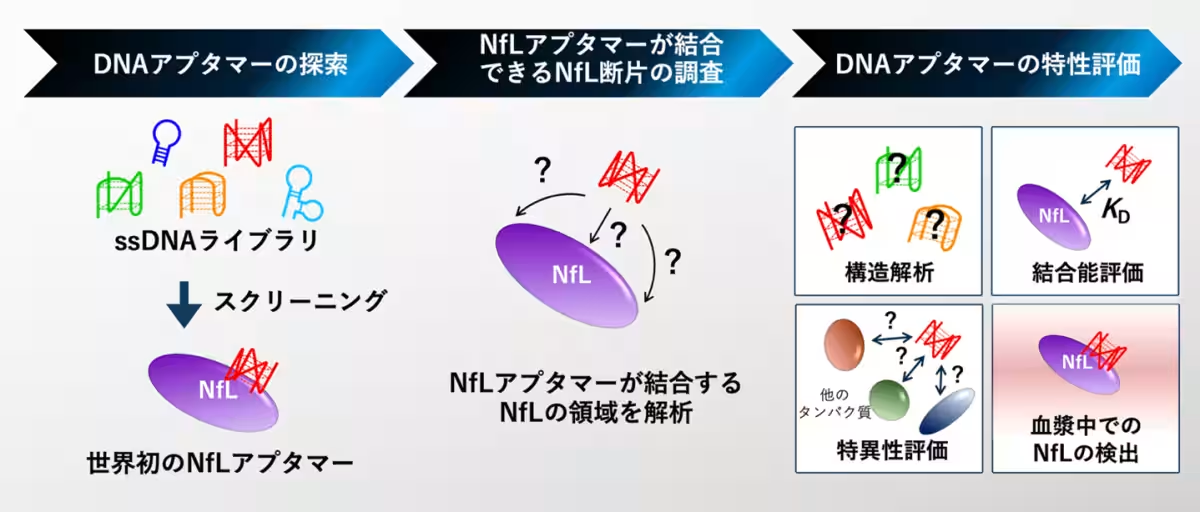
Prof. Kaori Tsukakoshi and her team conducted this pivotal research under the auspices of the Japan Agency for Medical Research and Development (AMED) as part of an international collaboration. The innovative approach involves using synthetic DNA-based aptamers, which are single-stranded oligonucleotides capable of binding to specific proteins with high specificity and affinity. This quality of DNA aptamers allows for the potential development of cost-effective and reliable diagnostic devices for measuring NfL.
By employing a method known as SELEX (Systematic Evolution of Ligands by Exponential Enrichment), the researchers screened a diverse library of DNA sequences to isolate an aptamer that binds specifically to NfL. Their findings confirmed that the selected aptamer exhibited binding affinity comparable to conventional monoclonal antibodies. This breakthrough holds great promise, as it could lead to the creation of a user-friendly NfL detection system, facilitating timely assessments of neurodegenerative disease states via simple blood tests.
Implications for Dementia Diagnosis
The accurate detection of NfL can provide critical insights into the progression of conditions like Alzheimer’s, potentially revolutionizing how these diseases are managed. With the increasing prevalence of dementia in an aging population, public health concerns demand reliable diagnostic mechanisms that can be deployed widely and swiftly. The ability to measure NfL levels accurately can aid healthcare professionals in making informed decisions regarding treatment strategies, ultimately enhancing patient outcomes.
Furthermore, the researchers foresee a future where this DNA aptamer technology can be integrated into various sensing platforms, employing electrochemical and optical methods for real-time monitoring. Such advancements could pave the way for home testing kits, making dementia screening more accessible to the general population.
Significance of the Study
The findings, published in the prestigious journal Biochemical and Biophysical Research Communications, emphasize the importance of developing innovative diagnostic tools to manage neurodegenerative diseases efficiently. This study not only highlights a significant technical achievement but also lays the groundwork for further research in the field, aiming to bridge the gap between laboratory advancements and clinical applications.
The authors, Miyu Matsumoto, Kazunori Ikebukuro, and Kaori Tsukakoshi, are optimistic that their research will lead to substantial improvements in the early detection of dementia and related disorders. The integration of this aptamer-based technology into current diagnostic practices could enhance the quality of life for countless individuals affected by these debilitating conditions.
Conclusion
In summary, this innovative approach represents a significant leap forward in dementia diagnostics. As the demand for effective management of neurodegenerative diseases continues to grow, advancements like the one demonstrated in this study will be instrumental in shaping the future of healthcare. The potential for widespread disease screening and early intervention may ultimately provide a critical advantage in the ongoing battle against dementia and other neurodegenerative disorders.
Topics Health)








【About Using Articles】
You can freely use the title and article content by linking to the page where the article is posted.
※ Images cannot be used.
【About Links】
Links are free to use.