



The Growing Adoption of No-Code AI Automation Tools in 2025: Survey Insights
Exploring No-Code AI Automation Tools
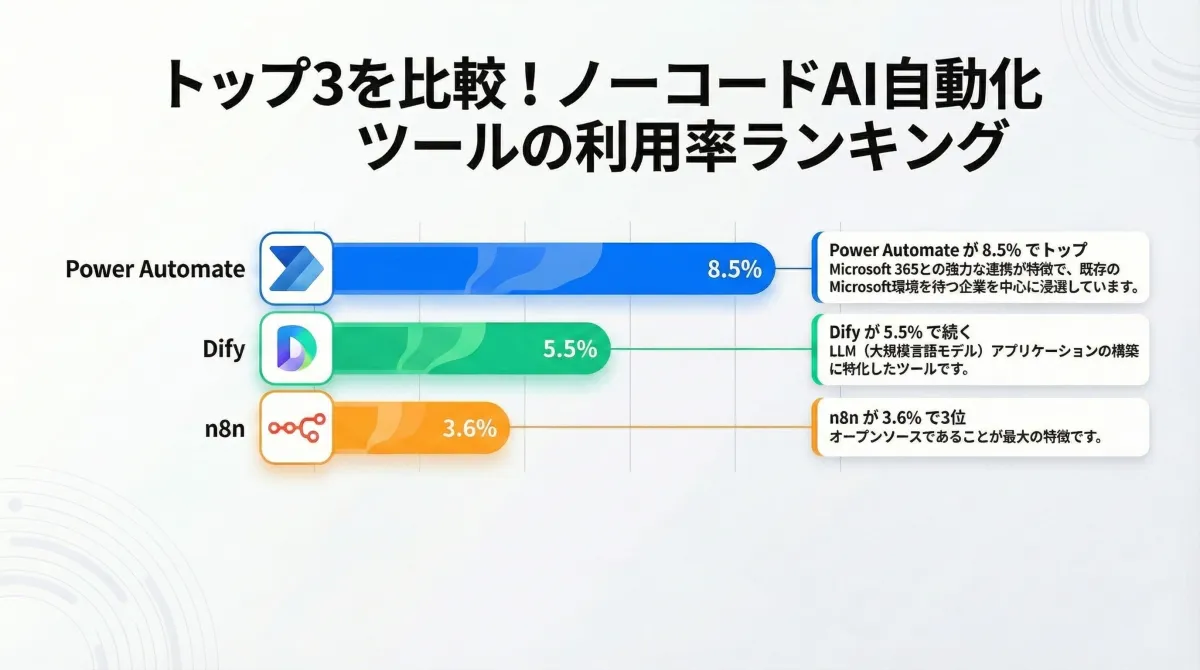
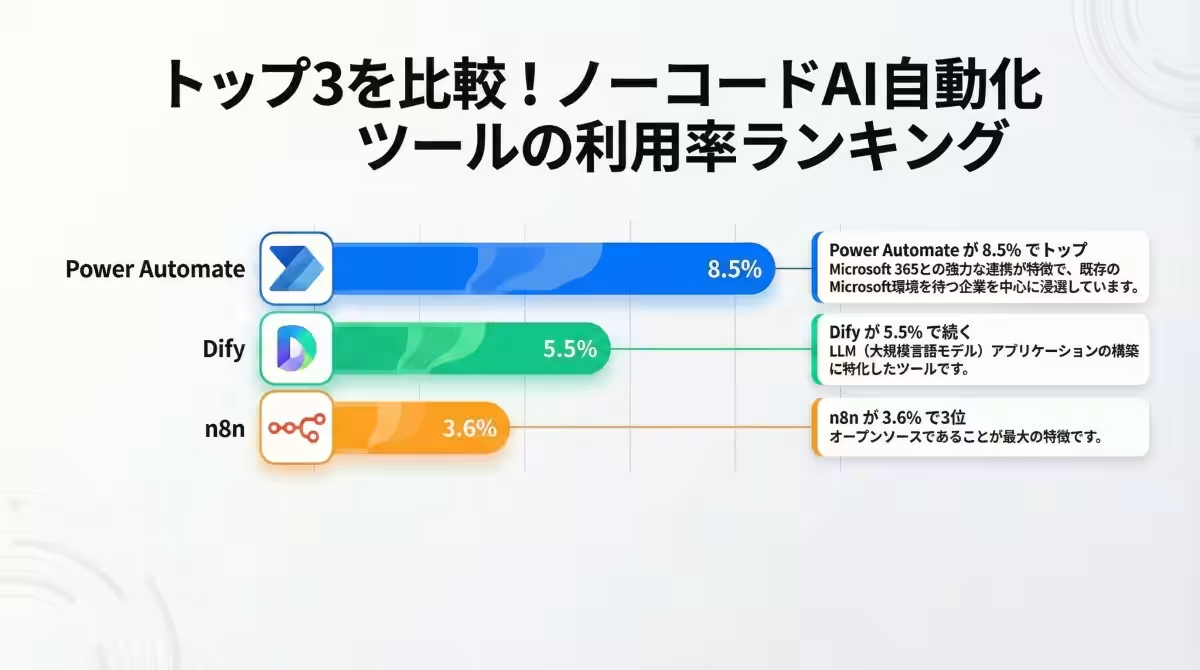
In December 2025, Ragate Inc. conducted a survey involving 505 business professionals from the IT and DX promotion departments to assess the state of no-code AI automation tools. The results highlighted that Power Automate leads the pack with an 8.5% adoption rate, followed by Dify at 5.5%, and n8n at 3.6%. This survey comes at a time when businesses are increasingly looking to integrate AI solutions but often face challenges due to a lack of in-house engineering expertise. In this landscape, no-code automation tools are gaining significant traction, enabling business units to leverage AI without requiring deep programming knowledge.
Survey Highlights
Top Performers in No-Code Tools
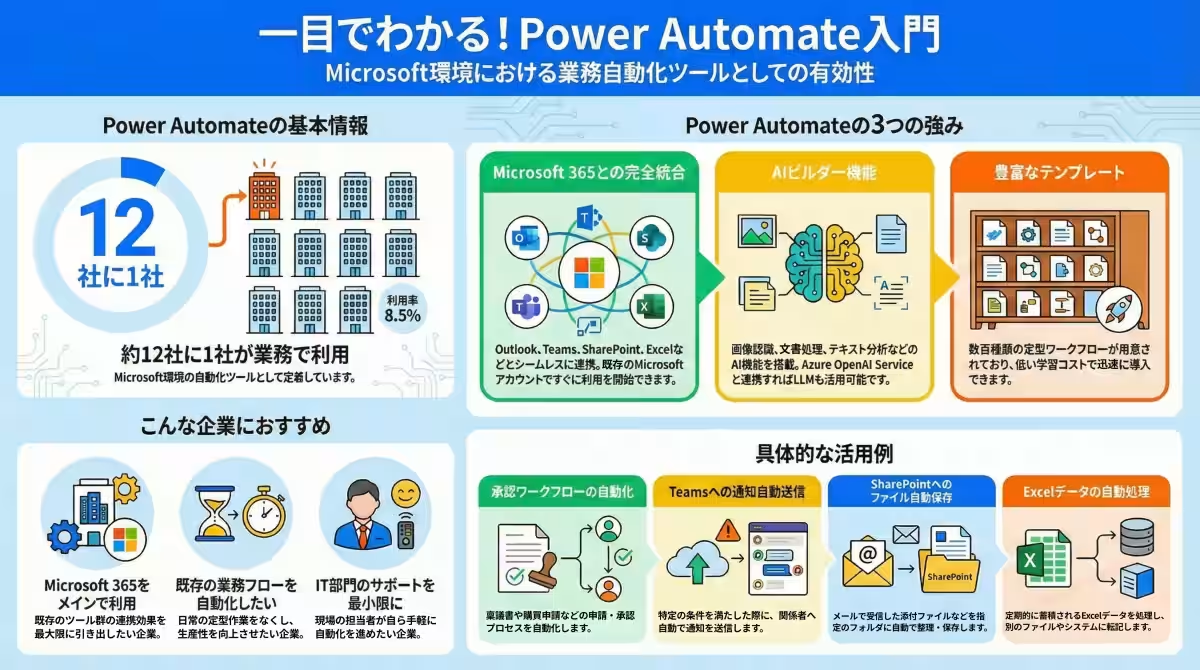
The survey indicated that Power Automate stands out with an 8.5% adoption rate, becoming the go-to solution for companies utilizing the Microsoft 365 ecosystem. The tool's strengths lie in its seamless integration with existing Microsoft applications, an extensive library of templates, and its user-friendly AI Builder feature. This makes it particularly appealing to organizations already embedded within Microsoft’s infrastructure.
In comparison, Dify secured a notable 5.5% market share, thriving as a tool specially designed for building LLM (Large Language Model) applications. Its rapid growth reflects a significant shift among companies toward internalization and the development of proprietary AI applications. Furthermore, 30.5% of the surveyed companies indicated plans to increase their investments in generative AI, underscoring a strategic shift from outsourcing to in-house capabilities.
Insights into Tool Features and Applications
Power Automate:
- - Key Usage Examples: Automating approval workflows, auto-sending notifications via Teams, and automating file storage in SharePoint exemplify how organizations leverage Power Automate to streamline operations and enhance productivity.
Dify:
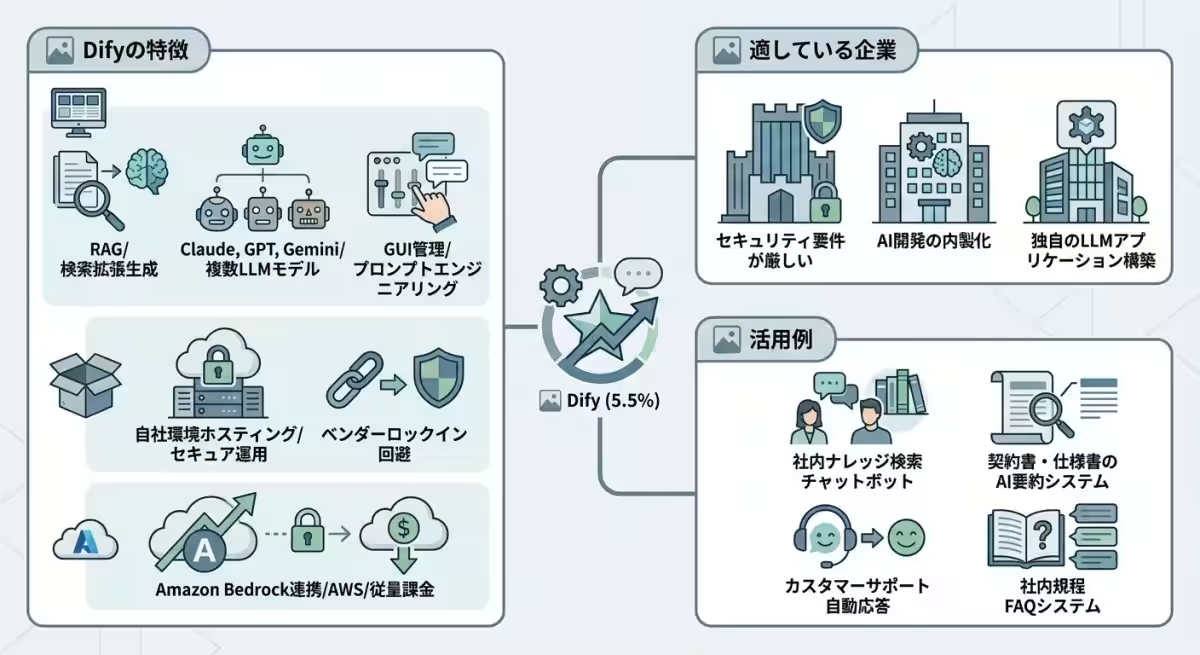
Despite its 5.5% adoption, Dify has carved a niche for itself as a robust tool for LLM application development, characterized by its:
- - LLM-Specific Environment: Dify facilitates easy setups for RAG (Retrieval-Augmented Generation) environments and allows flexible switching between multiple LLM models.
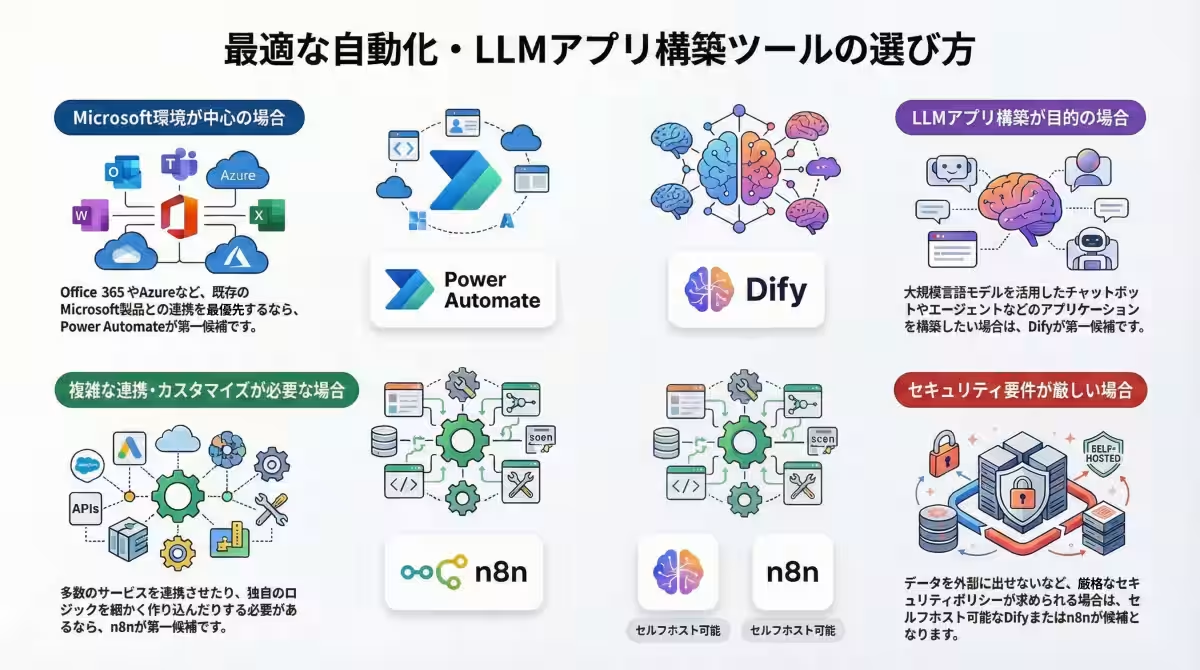
- - Security and Self-Hosting Capabilities: Companies can host Dify within their infrastructure, ensuring that sensitive data remains secure. It is particularly favored by enterprises managing stringent security requirements.
- - Integration with Platforms like Amazon Bedrock: This partnership allows companies to optimize costs while ensuring secure operations on AWS.
The Shift Towards In-House Development
The survey results reveal a clear trend towards internalization as 30.5% of respondents indicated plans to bolster their generative AI investments. This marks a transition from relying on external developers to fostering in-house capabilities.
When choosing the right tool:
- - For Microsoft-centric environments, Power Automate is an ideal fit due to its ease of integration and familiarity among employees.
- - For firms focused on LLM application, Dify offers the necessary tools and security for internal hosting.
- - Companies needing extensive customization should consider n8n, which provides a fully open-source option along with over 400 available integrations.
Challenges Ahead
Despite these positive trends, 24.9% of companies cited a lack of employee skills and 42.2% pointed to security risks as significant challenges hindering the adoption of no-code AI tools. Addressing these issues is crucial for organizations wishing to internalize AI development.
Future Outlook and Ragate's Role
Ragate envisions the no-code AI automation tools market is on the precipice of rapid growth despite currently being in its early stages of adoption. With Power Automate's establishment as a leading choice among Microsoft users and Dify's expansion into the LLM arena, the market is poised for transformation. The inclination towards increased investment in AI showcases that organizations are ready to adopt AI not merely as a passing trend but as a core operational capability.
However, barriers such as skill shortages and security concerns must be tackled proactively by enhancing vendor training, utilizing self-hosted tools, and securing partnerships with industry experts. Ragate is committed to supporting businesses in navigating these challenges through comprehensive assistance in developing no-code AI environments, secure hosting, and employee reskilling initiatives.
For organizations considering the implementation of no-code AI automation tools, Ragate offers tailored support services to enable successful internalization and transformation.
Conclusion
The shift toward no-code AI automation is undeniable as companies strive for operational efficiency and agility. By embracing these tools, organizations can equip themselves with the capabilities needed to succeed in an increasingly AI-driven business landscape.
Topics Consumer Technology)
【About Using Articles】
You can freely use the title and article content by linking to the page where the article is posted.
※ Images cannot be used.
【About Links】
Links are free to use.