




Exploring Domestic Working Holidays Through Resort Jobs in Japan
The Rise of Resort Jobs as a Language Learning Opportunity
In light of rising costs associated with studying abroad or taking working holidays, a recent survey by Dive Group highlights a growing trend: resort jobs in Japan may serve as a viable alternative for those looking to immerse themselves in English language use and experience foreign cultures without the significant financial burden of international travel.
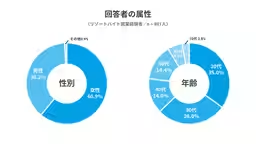
Dive Group operates a specialized job listing site called "Resort Baito Dive," which ranks first in both job postings and user reviews for resort work in Japan. The company conducted a survey targeting 801 individuals, comprising past and current resort job workers, to assess attitudes around resort work and language learning.
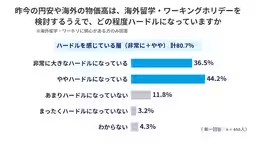
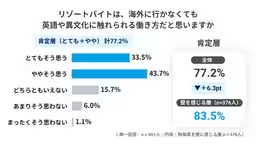
The survey indicated that 83.5% of those who view the rising yen exchange rate and expensive overseas costs as barriers to studying abroad considered resort jobs an effective means by which to engage with English and experience cultural diversity within Japan. This figure shows a significant 6.3-point lead over the general sentiment of all respondents.
Survey Insights: Background and Key Findings
As international student enrollment increases—according to data from Japan's Ministry of Education, the number of Japanese students studying abroad rose to 91,054 in 2024—the constraints posed by the weak yen are impacting aspirations. With projections indicating visitor numbers to Japan may exceed 42.68 million in 2025, more Japanese citizens are likely to encounter foreign tourists in various locales, thereby increasing the opportunities to practice English in a real-world setting.
Given this backdrop, the survey sought to explore the idea that resort jobs could emerge as a form of domestic working holiday, allowing individuals to improve their language skills without the necessity of overseas travel.
Key findings included the following:
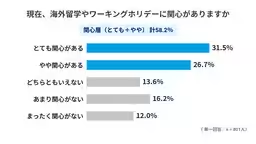
- - 58% of former and current resort workers expressed an interest in studying abroad or participating in a working holiday. However, 81% of these individuals reported significant concerns about the costs related to currency exchange rates and international living expenses.
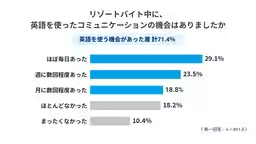
- - An impressive 71% of survey participants indicated that they had opportunities to use English while working in resort jobs. Notably, 53% reported using English 'almost daily' or 'several times a week.'
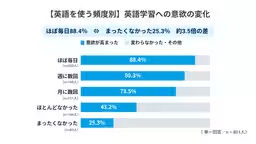
- - Among those who used English 'almost daily,' 88% noted an increase in their desire to learn, a stark contrast to only 25% of those who did not use English at all.
- - From the subgroup who felt financial barriers to travel, 84% recognized resort work as a means to engage with English and cultural diversity without leaving Japan.
Attractiveness of Resort Jobs: Language Practice and Engagement with Foreign Cultures
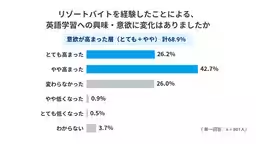
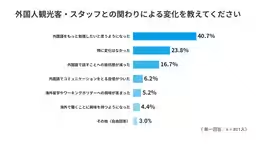
The feedback from respondents indicated a high level of enthusiasm for language acquisition fostered by their employment at resorts. Many expressed that working directly with foreign guests inspired them to improve their language skills. For instance, 40.7% of survey respondents recognized that interacting with tourists motivated them to pursue further language studies.
Responses also revealed a shift in career aspirations as 5.2% of participants became interested in international working opportunities after their domestic experience. This suggests that resort jobs can serve as a bridge toward global engagement.
The survey reinforces the point that participating in a domestic resort job environment can create a robust language-learning atmosphere, facilitating real interactions with English speakers. Additionally, unlike traditional working holiday programs that often impose age restrictions, resort jobs are accessible to a wider demographic, including older adults seeking to explore new cultures.
Conclusion: Cultivating Language Learning Opportunities in Japan
As economic barriers increasingly deter individuals from pursuing international education, domestic resort jobs could present a compelling alternative. The survey highlighted that over half of the respondents are keen on a global experience, with many facing economic hurdles. Yet, those who frequently interacted in English during their resort job reported significantly higher motivation to learn the language.
The environment of Japan’s resort scene offers a distinctive opportunity for individuals to learn and practice English while immersing themselves in diverse cultural experiences. To ensure that aspiring language learners can maximize their potential through resort jobs, they should consider the demographic of the workplace and the frequency of foreign guest interactions prior to accepting a position.
In conclusion, the growing interest in resort work as a form of language learning emphasizes the importance of creating pathways for domestic engagement with English and cultural diversity. As the number of inbound tourists to Japan continues to rise, so too does the opportunity for individuals to enhance their language skills, offering a new outlook on the traditional concept of ‘working holidays.’
About Dive Group
The Dive Group is focused on solving challenges in Japan's tourism sector by providing manpower solutions. They are committed to supporting the growth of the tourism workforce through various projects. Their main job board continues to thrive, providing engaging opportunities that connect those looking to work in resorts with exciting roles that foster language learning and cultural interactions.
For more information about working in resorts and enhancing language skills in Japan, visit Resort Baito Dive.


Topics People & Culture)



【About Using Articles】
You can freely use the title and article content by linking to the page where the article is posted.
※ Images cannot be used.
【About Links】
Links are free to use.