



NordVPN Raises Awareness on Cyber Risks for Japanese Business Professionals
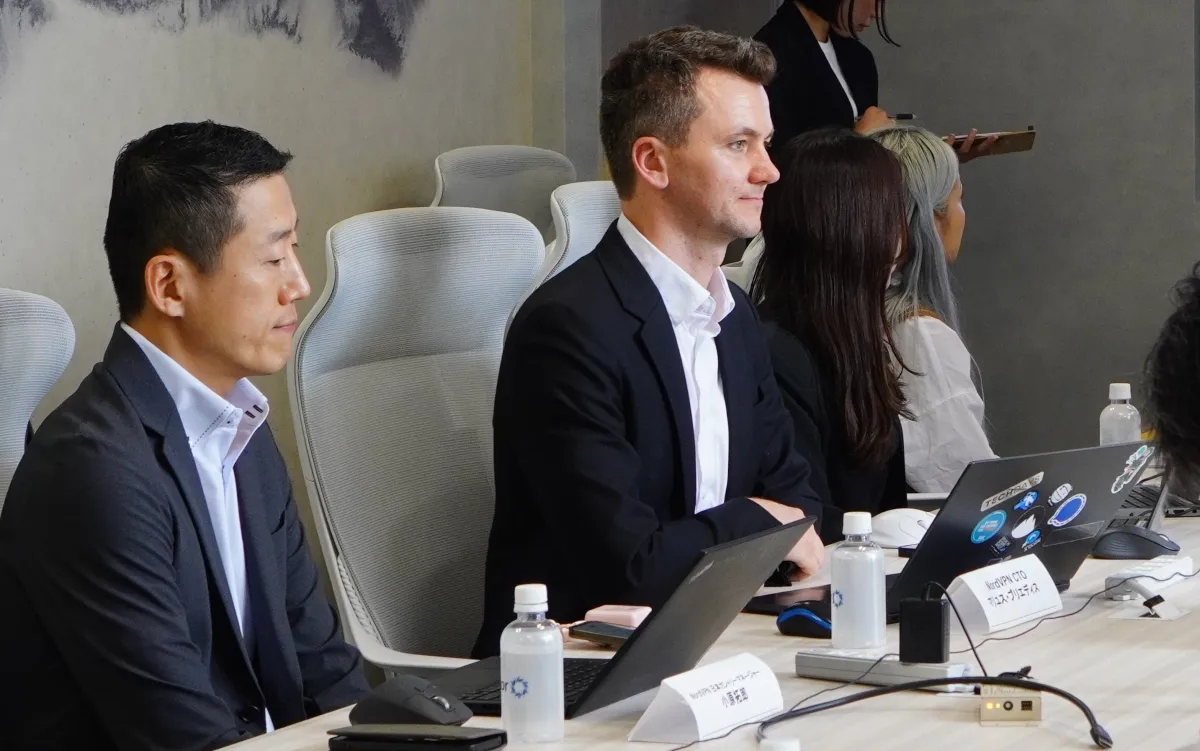
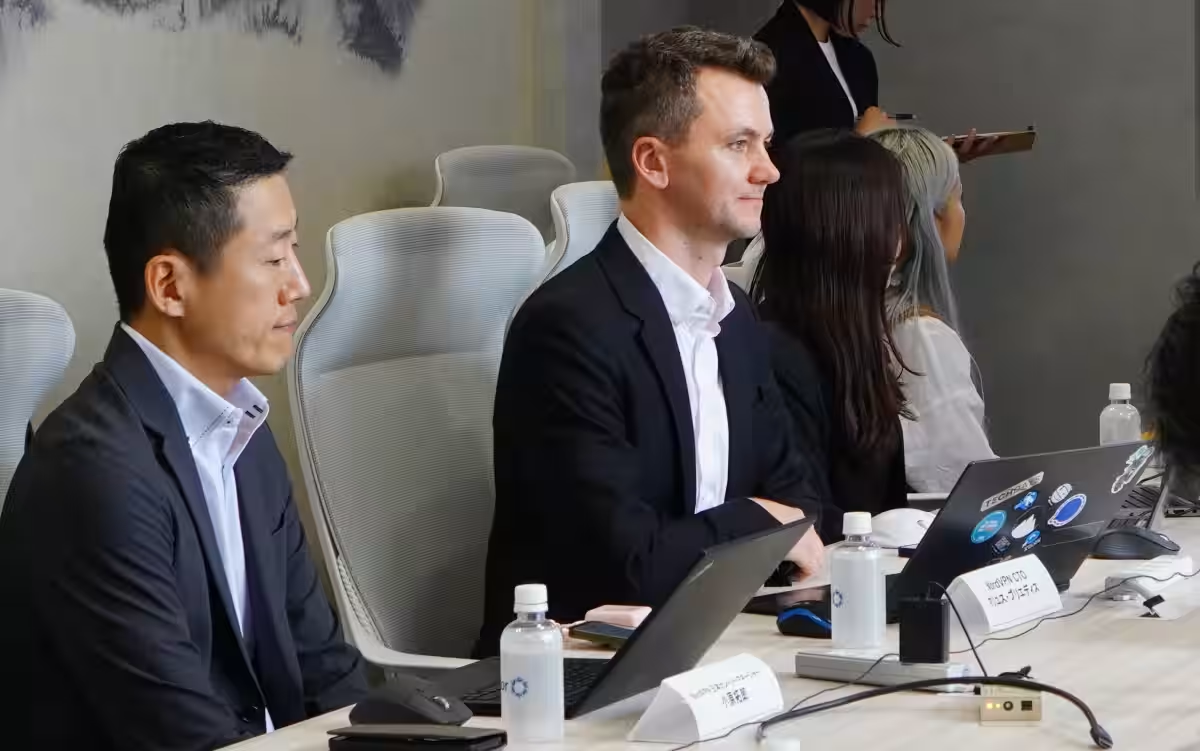
On October 7, 2025, NordVPN, a leading provider of personal security services based in Amsterdam, held a media roundtable in Tokyo featuring its Chief Technology Officer (CTO) Mariusz Buriedis and Japan's representative Takuro Obara. The event aimed at unveiling the results of their latest cybersecurity awareness survey conducted among 1,000 Japanese business professionals. The findings shed light on the alarming truth that many individuals are overconfident about their cybersecurity, unwittingly exposing themselves to significant risks.
The event commenced with an introduction to Nord Security's mission: to create an environment where everyone can access the internet freely and securely. Founded on this vision, NordVPN has evolved from a mere VPN product into a comprehensive cybersecurity application. This transformation includes encryption, strict no-logs policy, and the integration of cutting-edge technologies.
During the roundtable, CTO Mariusz presented three remarkable advancements:
1. Threat Protection Pro™: Utilizing proprietary AI to block malware and phishing sites.
2. Post-Quantum Cryptography (PQC): Future-proof encryption comprehensively being integrated into all applications against potential threats posed by quantum computing.
3. NordWhisper Protocol: This unique protocol disguises VPN traffic as regular web browsing, effectively bypassing detection and blocking by networks.
These innovations enhance NordVPN's reliability, reinforced by the fifth no-logs audit certification conducted by Deloitte Audit Lithuania.
The data revealed from the latest survey displayed a distressing gap between awareness and action among the respondents. About 47% admitted to engaging in risky behaviors unconsciously, especially among those who felt confident in their security measures.
Mariusz highlighted another disturbing trend among workers clocking in over 40 hours of overtime per month. Their usage of public Wi-Fi surged to 2.3 times the average rate, pointing to a neglect in security measures amidst their busy schedules. Additionally, over 60% of participants admitted to having inadequate security for their home Wi-Fi routers, with 23% still using initial IDs and passwords. Mariusz emphasized, 'Router hacking can be extremely dangerous, necessitating updates just like operating systems and applications.'
The figures on cookie data leaking on the dark web were especially eye-opening. More than 940 billion cookies have been recorded this year, with over 250 million stemming from Japan—20 million of which remain active and pose risks for malicious use.
During the Q&A session, robust discussions arose regarding security challenges frequently overlooked by Japanese business professionals. Mariusz critiqued the common assumption that HTTPS communication provides sufficient safety on public Wi-Fi. He explained, 'Only parts of the communication may be encrypted, leaving other app communications exposed. Older protocols like TLS 1.2 can't effectively prevent tracking and are insufficient.'
Mariusz urged the importance of end-to-end data protection, stating that the risk of man-in-the-middle attacks requires comprehensive encryption through VPNs during data transmission at busy locations.
He also pointed to data loss prevention (DLP) as a major challenge. 'The biggest risk is employees taking business data to personal clouds or generating AI. Continuous enlightenment and education are vital alongside technical solutions.' Mariusz stressed how the security strength hinges on the weakest link—communication devices of individual employees can expose entire corporate networks.
Furthermore, he referenced the scams plaguing Japan, with supposedly hundreds of billions in losses due to investment and romance fraud. However, he expressed optimism that tools like the Threat Protection Pro™ feature could help mitigate these risks by blocking known malicious links and wallet addresses.
Mariusz stated, 'Even if individuals are aware of security risks, that doesn't necessarily translate to safe actions. People may recognize that public Wi-Fi or browser auto-saving carries dangers, yet prioritize convenience.' He articulated how seemingly harmless shortcuts can lead to information theft and data breaches, underscoring that cybersecurity hinges on daily habits.
Mariusz recommended replacing auto-saving features with password managers, enabling multi-factor authentication, and relying on reliable VPNs. 'These small, mindful practices accumulate into robust organizational security.' He expressed hope that the roundtable imparted new insights on VPNs, password managers, and overall cybersecurity to attendees, empowering them to improve their online activities safely, while wishing to leverage the media's assistance in promoting these vital messages throughout Japanese society.
NordVPN is a sophisticated VPN service provider trusted by millions worldwide. They offer access to over 8,200 servers across 165 cities in 127 countries and provide various features to enhance online privacy. Their flagship feature, Threat Protection Pro™, goes beyond basic functions, enabling users to block harmful websites, ads, and track malware. Additionally, their latest launch, a global eSIM service named 'Saily,' is designed for travelers, allowing easy data access without the need to purchase local SIM cards.
Company Overview
The event commenced with an introduction to Nord Security's mission: to create an environment where everyone can access the internet freely and securely. Founded on this vision, NordVPN has evolved from a mere VPN product into a comprehensive cybersecurity application. This transformation includes encryption, strict no-logs policy, and the integration of cutting-edge technologies.
During the roundtable, CTO Mariusz presented three remarkable advancements:
1. Threat Protection Pro™: Utilizing proprietary AI to block malware and phishing sites.
2. Post-Quantum Cryptography (PQC): Future-proof encryption comprehensively being integrated into all applications against potential threats posed by quantum computing.
3. NordWhisper Protocol: This unique protocol disguises VPN traffic as regular web browsing, effectively bypassing detection and blocking by networks.
These innovations enhance NordVPN's reliability, reinforced by the fifth no-logs audit certification conducted by Deloitte Audit Lithuania.
Bridging the Gap: Mariusz's Warnings on Security Pitfalls
The data revealed from the latest survey displayed a distressing gap between awareness and action among the respondents. About 47% admitted to engaging in risky behaviors unconsciously, especially among those who felt confident in their security measures.
Mariusz highlighted another disturbing trend among workers clocking in over 40 hours of overtime per month. Their usage of public Wi-Fi surged to 2.3 times the average rate, pointing to a neglect in security measures amidst their busy schedules. Additionally, over 60% of participants admitted to having inadequate security for their home Wi-Fi routers, with 23% still using initial IDs and passwords. Mariusz emphasized, 'Router hacking can be extremely dangerous, necessitating updates just like operating systems and applications.'
The figures on cookie data leaking on the dark web were especially eye-opening. More than 940 billion cookies have been recorded this year, with over 250 million stemming from Japan—20 million of which remain active and pose risks for malicious use.
Unique Security Challenges in Japan
During the Q&A session, robust discussions arose regarding security challenges frequently overlooked by Japanese business professionals. Mariusz critiqued the common assumption that HTTPS communication provides sufficient safety on public Wi-Fi. He explained, 'Only parts of the communication may be encrypted, leaving other app communications exposed. Older protocols like TLS 1.2 can't effectively prevent tracking and are insufficient.'
Mariusz urged the importance of end-to-end data protection, stating that the risk of man-in-the-middle attacks requires comprehensive encryption through VPNs during data transmission at busy locations.
He also pointed to data loss prevention (DLP) as a major challenge. 'The biggest risk is employees taking business data to personal clouds or generating AI. Continuous enlightenment and education are vital alongside technical solutions.' Mariusz stressed how the security strength hinges on the weakest link—communication devices of individual employees can expose entire corporate networks.
Furthermore, he referenced the scams plaguing Japan, with supposedly hundreds of billions in losses due to investment and romance fraud. However, he expressed optimism that tools like the Threat Protection Pro™ feature could help mitigate these risks by blocking known malicious links and wallet addresses.
Mariusz Buriedis's Insights
Mariusz stated, 'Even if individuals are aware of security risks, that doesn't necessarily translate to safe actions. People may recognize that public Wi-Fi or browser auto-saving carries dangers, yet prioritize convenience.' He articulated how seemingly harmless shortcuts can lead to information theft and data breaches, underscoring that cybersecurity hinges on daily habits.
Mariusz recommended replacing auto-saving features with password managers, enabling multi-factor authentication, and relying on reliable VPNs. 'These small, mindful practices accumulate into robust organizational security.' He expressed hope that the roundtable imparted new insights on VPNs, password managers, and overall cybersecurity to attendees, empowering them to improve their online activities safely, while wishing to leverage the media's assistance in promoting these vital messages throughout Japanese society.
About NordVPN
NordVPN is a sophisticated VPN service provider trusted by millions worldwide. They offer access to over 8,200 servers across 165 cities in 127 countries and provide various features to enhance online privacy. Their flagship feature, Threat Protection Pro™, goes beyond basic functions, enabling users to block harmful websites, ads, and track malware. Additionally, their latest launch, a global eSIM service named 'Saily,' is designed for travelers, allowing easy data access without the need to purchase local SIM cards.
Company Overview
- - Company Name: NordVPN
- - Headquarters: Fred. Roeskestraat 115 1076 EE Amsterdam, Netherlands
- - Japan Representative: Takuro Obara
- - Website: NordVPN
- - VPN Information: What is a VPN?
Topics Consumer Technology)
【About Using Articles】
You can freely use the title and article content by linking to the page where the article is posted.
※ Images cannot be used.
【About Links】
Links are free to use.