




TKC Advances Monitoring Information Services for Small Businesses with Financial Institutions
TKC's Initiative to Support Small Businesses
In a significant move to bolster small business support, TKC Co., Ltd., headquartered in Utsunomiya City, Tochigi Prefecture, is intensifying efforts to promote its "TKC Monitoring Information Services." This initiative comes in response to a report published by the Small and Medium Enterprise Agency earlier this year, which highlights the importance of monitoring for the seamless rejuvenation of businesses.
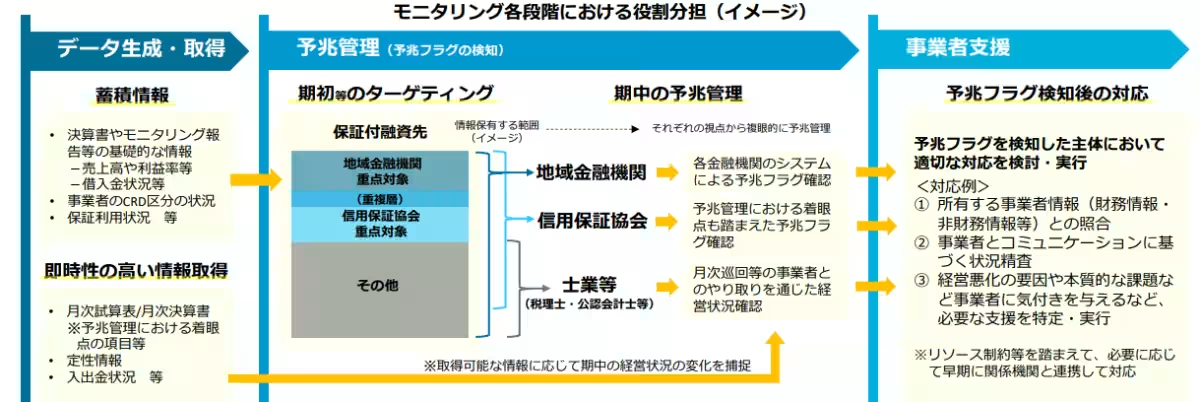
As outlined in the report, the monitoring process is crucial for identifying the roles and responsibilities of various stakeholders involved in financial support for small businesses. Guarantee-backed loan recipients are categorized into three main groups: regional financial institutions, credit guarantee associations, and others. For the 'others' group, which includes businesses with lower risks of operational downturns, professionals such as tax accountants and certified public accountants are expected to conduct monthly visits to assess the health of these businesses. Notably, the report underscores the necessity for regional financial institutions and credit guarantee associations to access the financial data of loan and guarantee recipients to facilitate effective monitoring.
About the TKC Monitoring Information Service
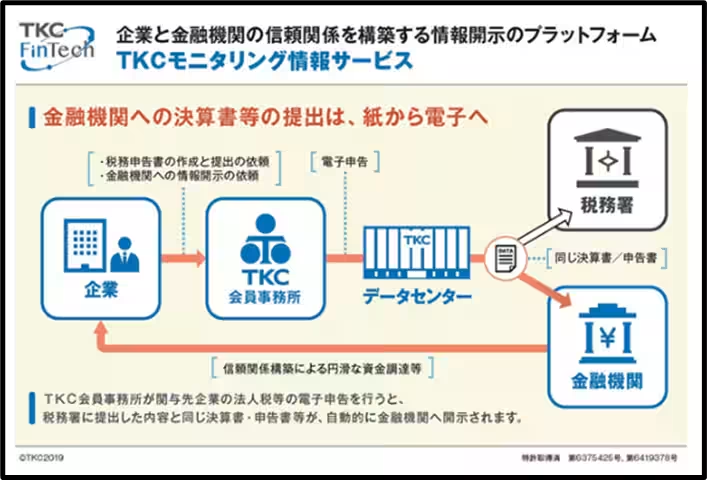
The TKC Monitoring Information Service is designed as a cloud-based platform through which financial information, including monthly income statements and annual financial statements, is made available. This critical service is constructed based on monthly audits and calculations performed by members of the TKC National Association, which consists of tax accountants and certified public accountants. These professionals can effectively provide financial data to financial institutions upon request from the business owners they work with, allowing for informed decision-making regarding credit and guarantees.
The impact of the TKC Monitoring Information Services can be seen in its current utilization among financial institutions across Japan. As of now, a total of 497 financial entities are actively using this service, accounting for more than 90% of mega banks, regional banks, and credit unions for evaluating loan decisions and monitoring borrowers. Moreover, 86.2% of national credit guarantee associations—44 out of 51—have integrated this service into their operations.
Service Offerings
The TKC Monitoring Information Service includes two primary offerings:
1. Financial Statement Provision Service: Members of the TKC National Association provide timely financial statements and documents, such as corporate tax returns, directly to financial institutions immediately after electronic submission.
2. Monthly Estimate Provision Service: Following the completion of monthly financial statements by TKC member firms, monthly estimate data is also provided to financial institutions to supplement their assessments.
Additionally, the service includes provisions for early-stage management improvement plans crafted using the TKC Continuation MAS System and local benchmarking data formatted through the TKC Local Benchmark Cloud. These offerings supplement the core service by providing even more detailed financial insights to lenders.
TKC National Association: Supporting Professional Accountants
The TKC National Association, led by President Takashi Sakamoto, represents a large network of 11,400 professional accountants (as of December 2024). The organization plays a pivotal role in ensuring businesses achieve "black figures" (signifying profitability) and fulfill their tax obligations reliably. Their ongoing commitment involves expanding high-quality electronic accounting practices, acting as guardians of tax justice, and nurturing viable businesses through various initiatives.
For further information, individuals are encouraged to visit the TKC group's official website at TKC Official Website.
In summary, TKC's monitoring information services represent a transformative approach to financial services for small businesses, focusing on collaboration, transparency, and proactive management. As these services gain traction among financial institutions, they have the potential to positively influence the sustainability and growth of small businesses throughout Japan.

Topics Business Technology)
【About Using Articles】
You can freely use the title and article content by linking to the page where the article is posted.
※ Images cannot be used.
【About Links】
Links are free to use.