



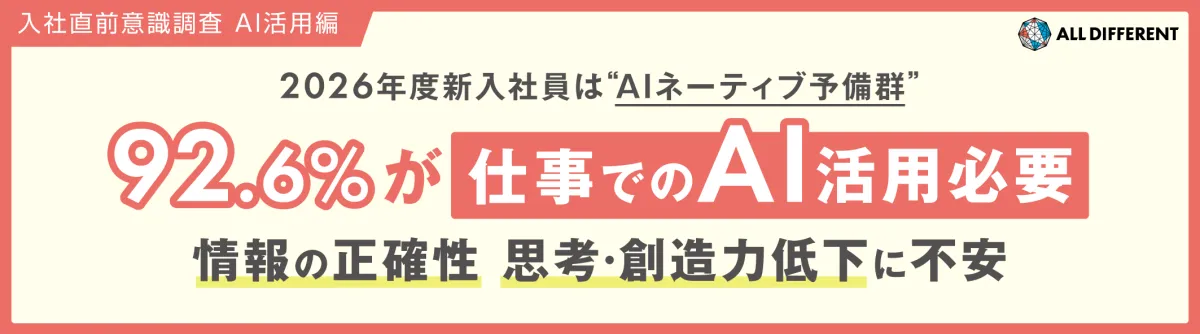
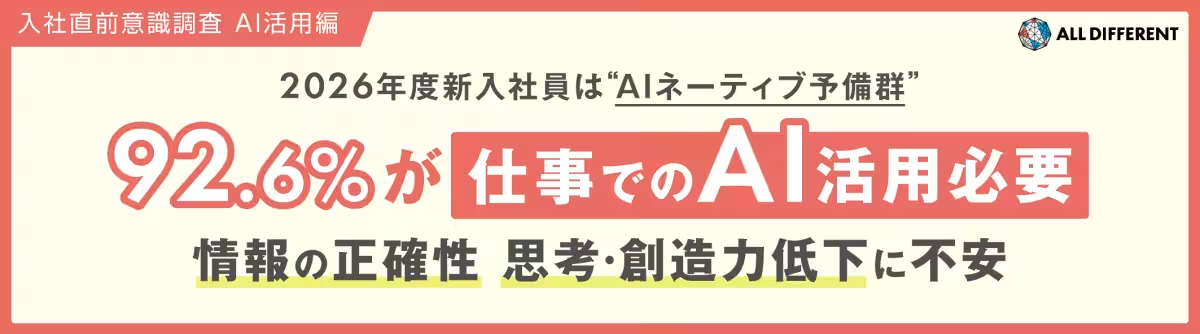
New Employees of 2026: Embracing AI in the Workplace While Voicing Concerns
New Employees of 2026: Embracing AI in the Workplace
A survey conducted between January 20 and March 4, 2026, targeting new employees joining companies in 2026, reveals significant insights into their perception of AI in the workplace. The findings, released by ALL DIFFERENT, a company dedicated to organizational development and human resource training located in Chiyoda, Tokyo, show that 92.6% of these new hires perceive AI as necessary for their work while also expressing concerns regarding its impact on accuracy and their creative thinking.
Background of the Study
As artificial intelligence (AI) continues to evolve rapidly, many businesses have begun integrating generative AI into their operations to enhance efficiency, productivity, and foster new business ventures. The incoming class of 2026 features individuals who have grown up with smartphones and social media, many of whom have experience with online learning. Their high tendency to prioritize efficiency and frequent use of generative AI distinguishes them as the first 'AI-native generation'.
To further explore how these new employees have utilized generative AI up to this point and how they intend to incorporate it into their careers, a survey was conducted.
Key Findings from the Survey
1. Widespread Use of Generative AI
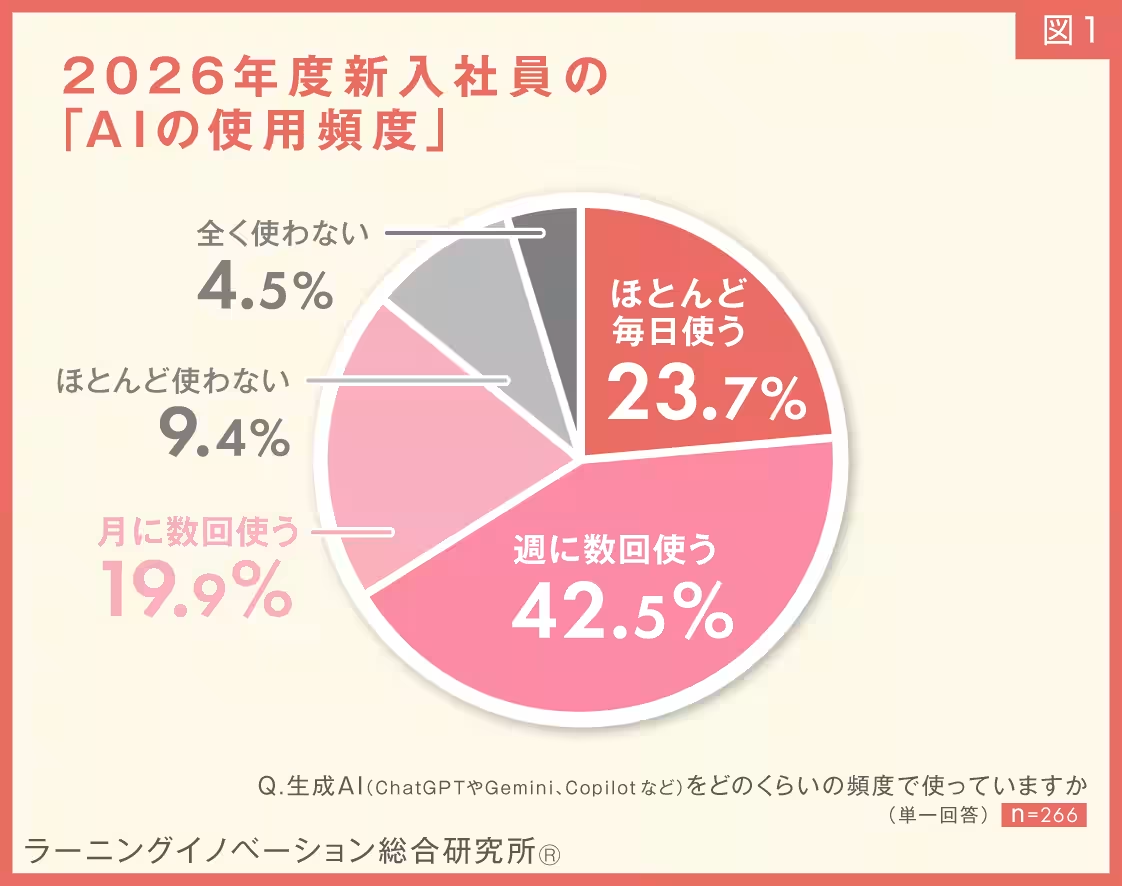
About 86.1% of the 2026 new employees reported using generative AI tools such as ChatGPT, Gemini, and Copilot regularly. Notably, around 23.7% mentioned using these tools almost daily, while 42.5% reported using them several times a week.
2. Primary Uses for Generative AI
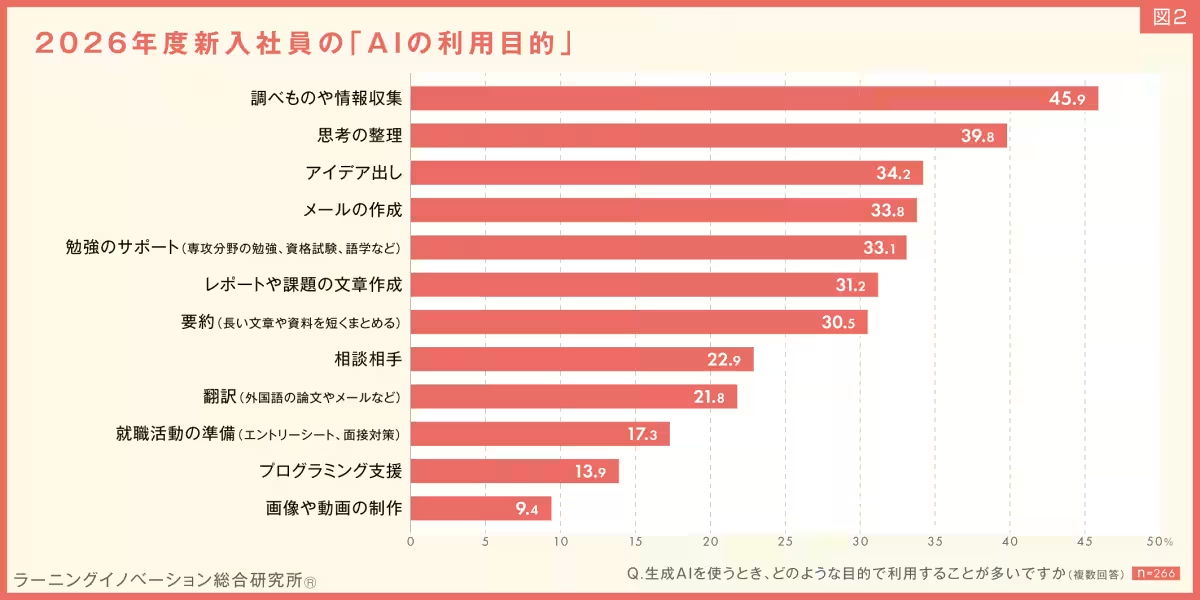
The primary motivation for using generative AI among these individuals included research and information gathering (45.9%), followed closely by organizing thoughts (39.8%) and brainstorming ideas (34.2%). Other notable uses included writing emails (33.8%) and supporting studies (33.1%).
3. Cautious Approach to AI Usage
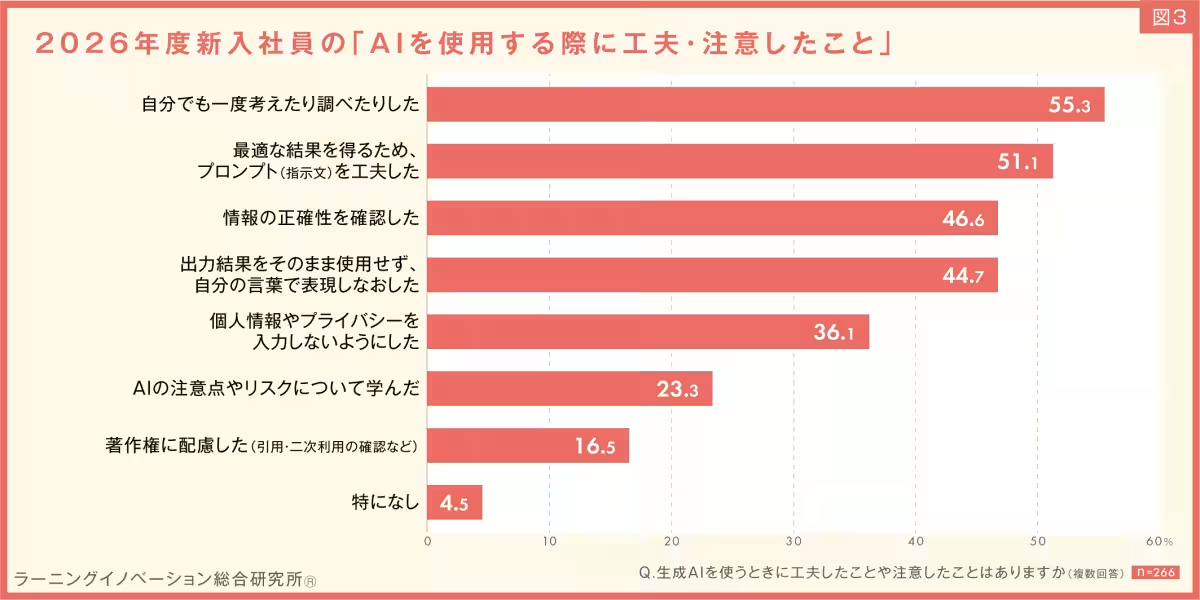
When utilizing generative AI, over 55% of respondents noted that they first considered or researched the information independently. In contrast, only about 46.6% affirmed that they verified the accuracy of the information generated by AI.
4. Concerns Regarding Information Accuracy
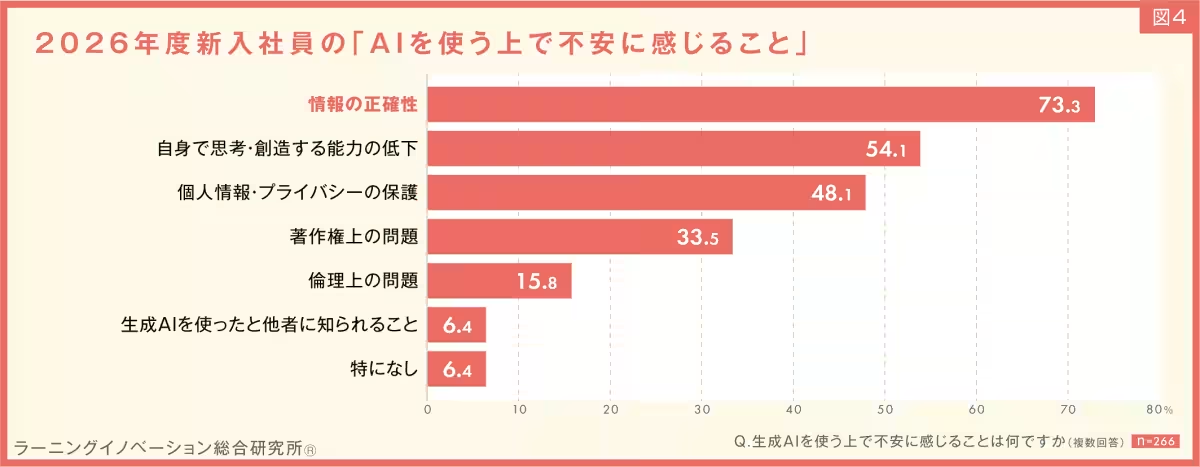
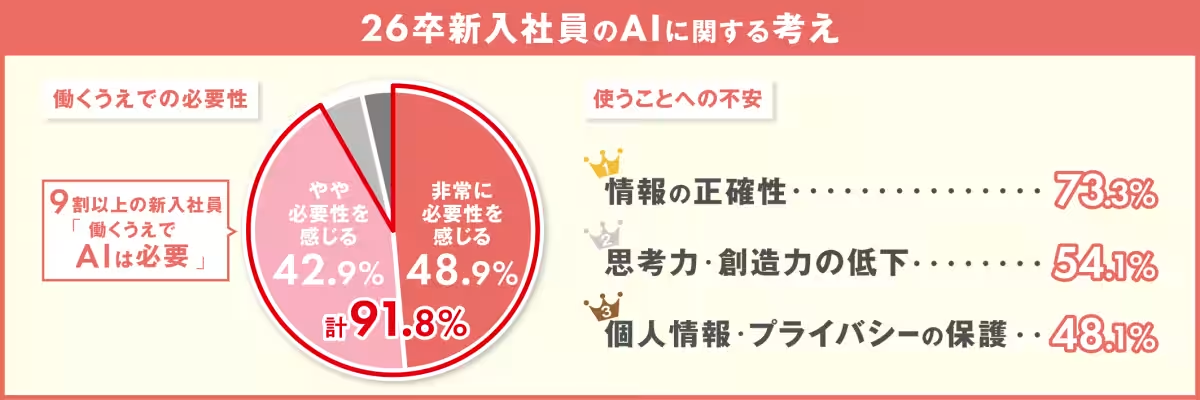
A significant majority, 73.3%, expressed concern over the accuracy of information provided by generative AI, while 54.1% feared a decline in their creative and analytical abilities. Concerns regarding personal data privacy and copyright issues also ranked highly at 48.1% and 33.5% respectively.
5. Influence of AI on Job Search
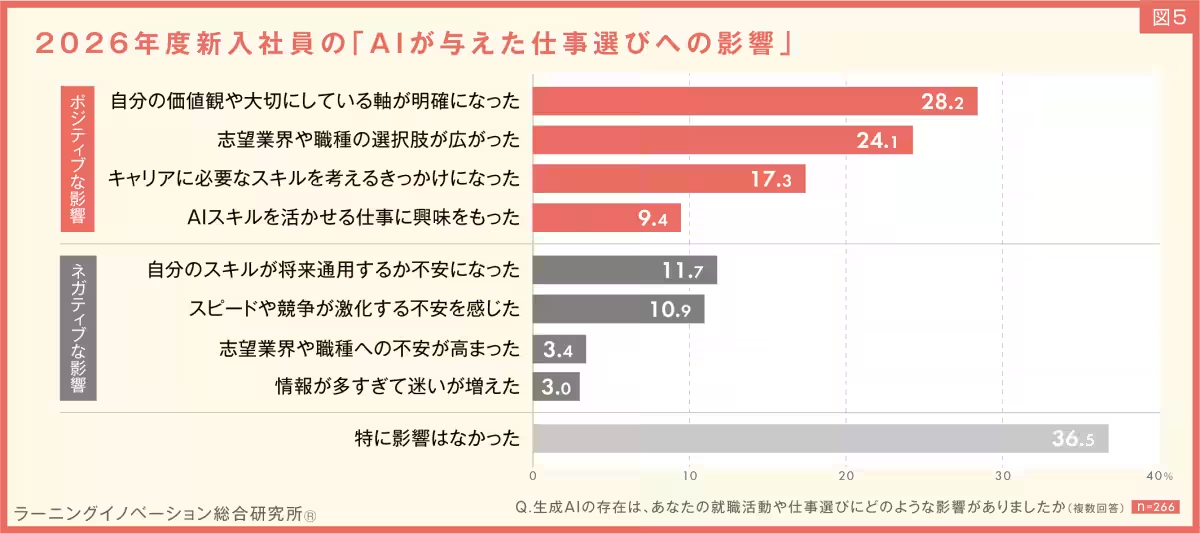
When discussing the impact of AI on their job search, 36.5% reported no significant influence. However, many participants noted positive effects, such as clarifying personal values and broadening career options. A lesser percentage highlighted anxieties about their skills being relevant in the future.
6. Need for AI in Future Work
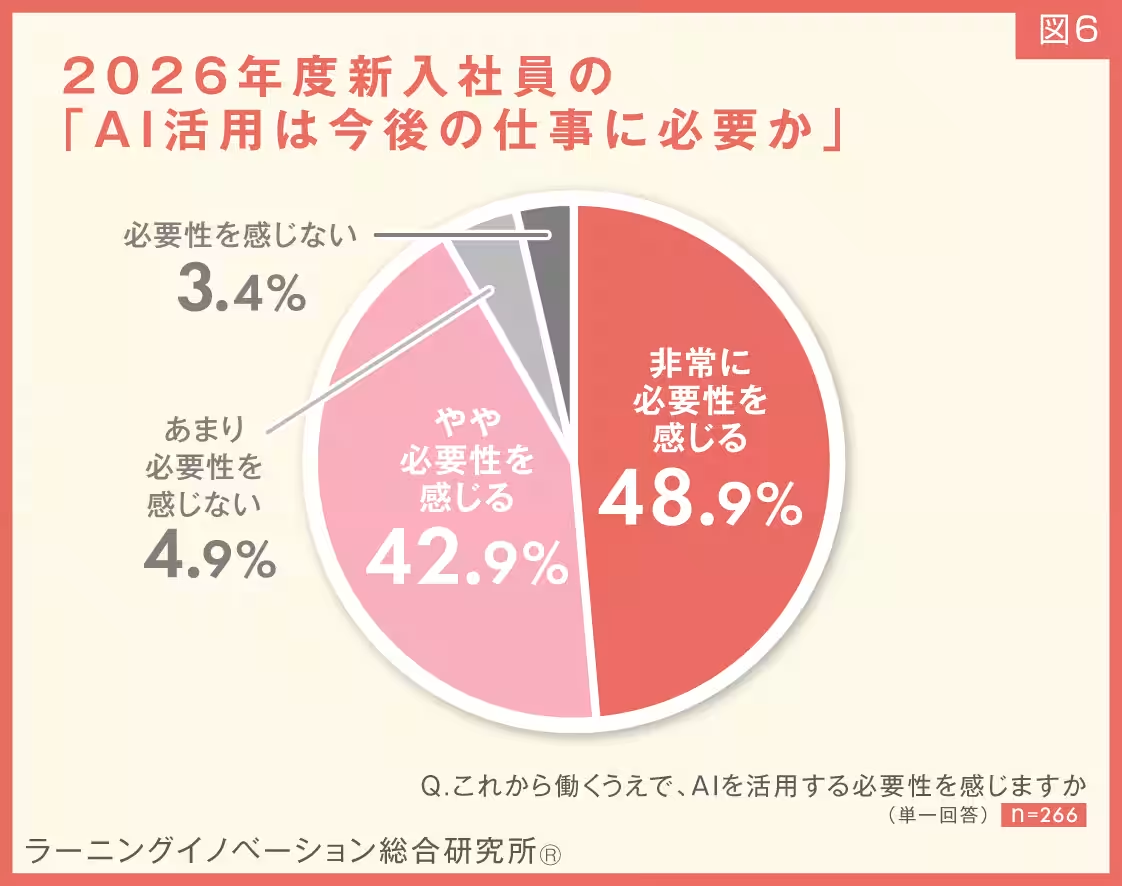
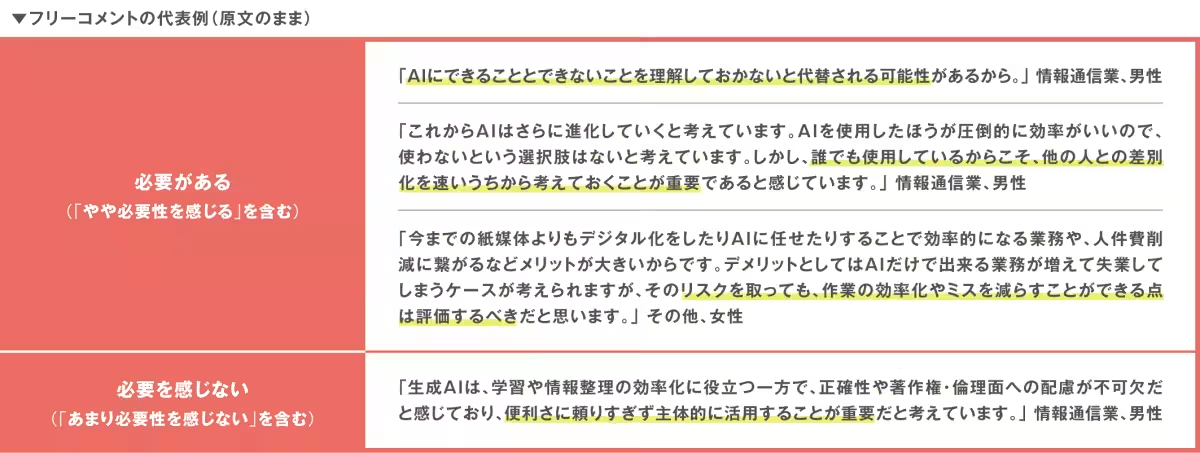
An impressive 91.8% of the respondents indicated that they found AI to be essential for their future jobs, citing several reasons for this necessity. This reflects a strong inclination towards needing to understand and master AI to maintain a competitive edge in the job market.
7. Mixed Feelings About Future Job Security with AI
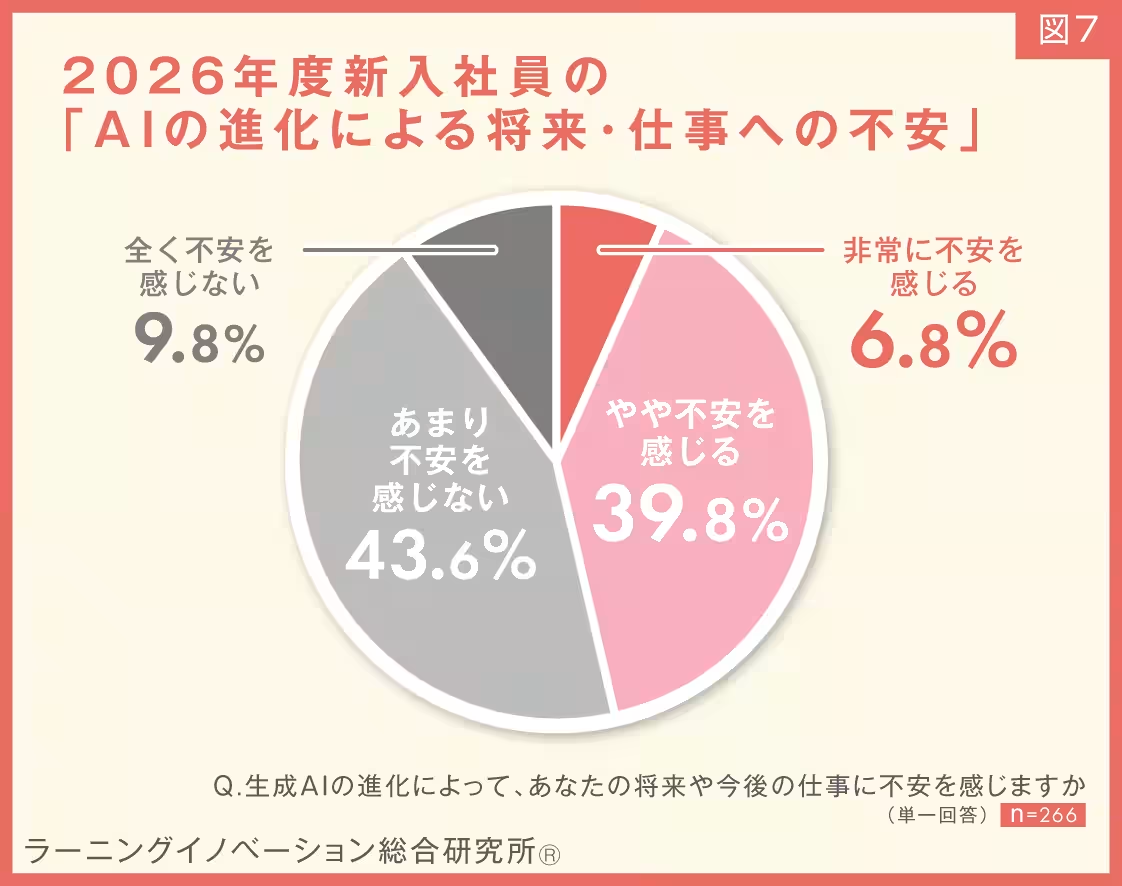
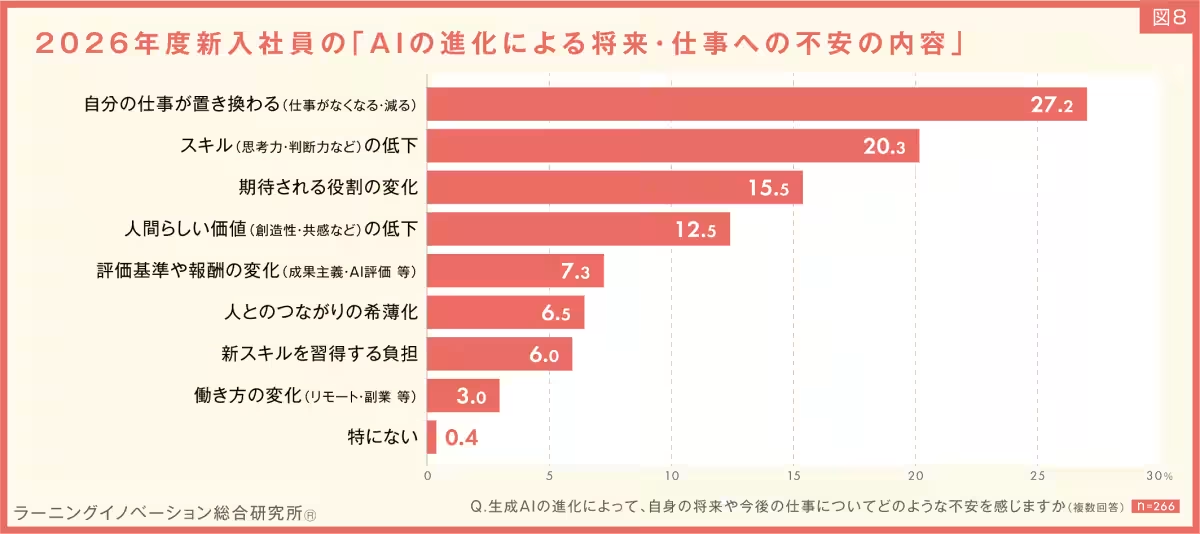
When asked about the future implications of evolving AI in their jobs, a fairly balanced view emerged, with 46.6% expressing varying levels of concern regarding job security and the possibility of their roles being replaced by technology. Among the anxiety points, the most common response was the fear that their jobs might be eliminated (27.2%).
Conclusion
The survey indicates that the new hires of 2026 extensively use generative AI in diverse contexts, focusing on research, thought organization, and idea generation. Despite their predominant use of these technological tools, they hold apprehensions regarding accuracy and the potential stagnation of their creative abilities. Many view AI support as vital for their professional lives, laying the groundwork for their future roles in a tech-infused job landscape. Consequently, it becomes crucial for organizations to navigate these transitions effectively, addressing both the productive use of AI and the concerns of new employees as they embark on their careers.
Call to Action for Organizations
To cultivate this new generation of ‘AI natives’ effectively, organizations must ensure that their new hires understand the responsibility that comes with utilizing AI. This involves encouraging an environment of creative thought and critical evaluation of AI-produced outputs. Furthermore, providing diverse experiences and continuous feedback can help foster the development of the thinking skills required to thrive in an increasingly AI-driven workforce. Companies must reinforce the message that while AI can be an incredibly powerful tool, the intellectual and creative input of human employees remains indispensable for achieving impactful outcomes.


Topics Business Technology)
【About Using Articles】
You can freely use the title and article content by linking to the page where the article is posted.
※ Images cannot be used.
【About Links】
Links are free to use.