



Analysis of Japan's Labor Market Trends in March 2026: Key Insights
Insights into the Japanese Labor Market - March 2026
The Tsunagu Working Style Institute, a research organization based in Tokyo and a subsidiary of Tsunagu Group Holdings, has released its latest monthly report concerning Japan’s labor market data. This report specifically focuses on the statistics from March 2026, revealing significant trends in job openings and unemployment rates. Here are the key findings:
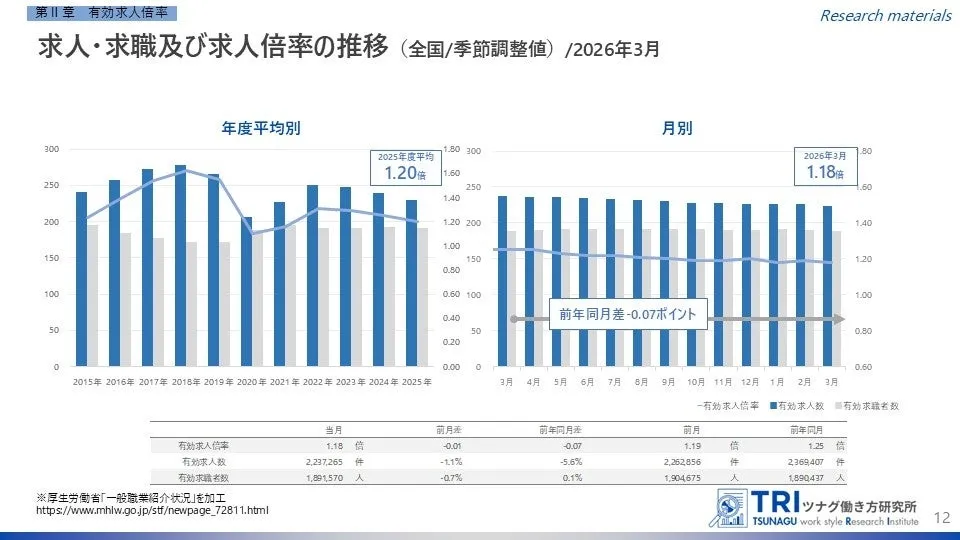
Effective Job Openings Ratio
In March 2026, the effective job openings ratio was recorded at 1.18, which is a slight decrease of 0.01 points compared to the previous month and 0.07 points lower than the same month last year. Notably, the ratio for part-time positions was lower at 1.10, evidencing a 0.07 point decline year-over-year. The ratio for full-time positions remains particularly concerning at 0.99, marking its sixth consecutive month below the one-point threshold. This declining trend highlights ongoing challenges in the job market, especially for full-time employment opportunities.
Unemployment Rate Trends
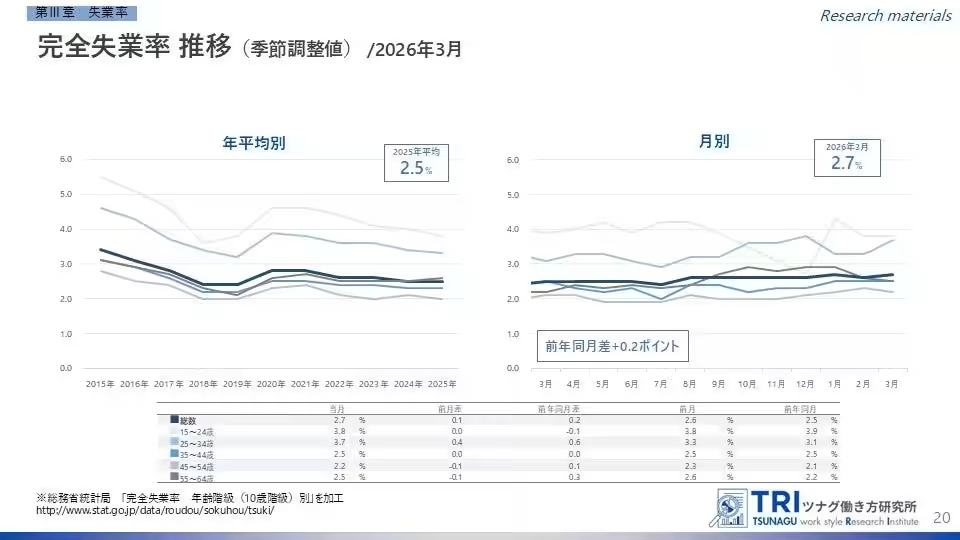
The unemployment rate for March 2026 reached 2.7%, marking a 0.1-point increase from the previous month and a 0.2-point increase compared to the same month the previous year. This rise in unemployment has particularly affected individuals aged 15 to 24 years, who saw a slight decline of 0.1 points year-over-year. Moreover, the total number of unemployed individuals has risen to 1.94 million, reflecting an increase of 140,000 from the previous year. These statistics reveal the tightening of job opportunities and increasing difficulty for certain demographics in finding stable work.
New Job Openings and Employment Growth
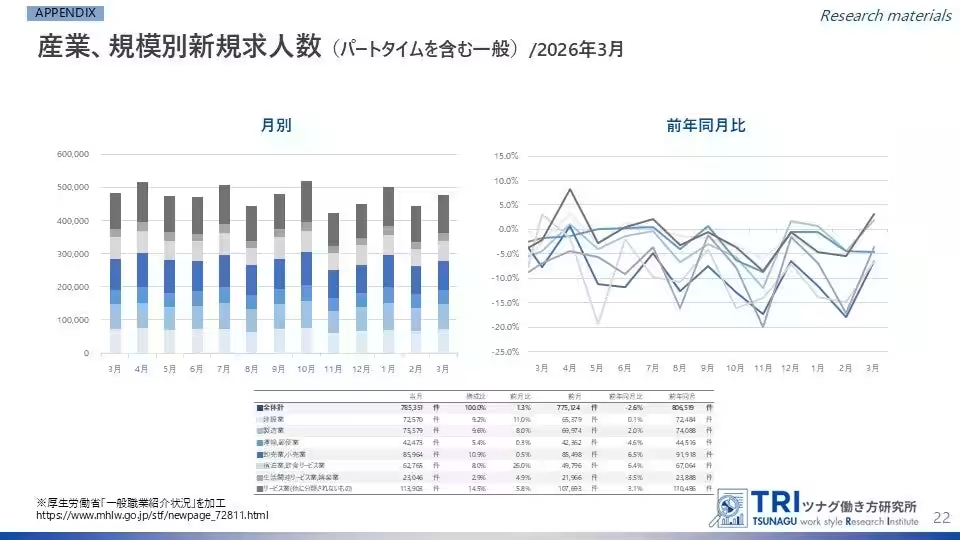
The number of new job openings in March 2026 saw a 2.6% decline year-over-year, marking the 11th consecutive month of decreases in comparison to the previous year. Although there were increases in job openings within certain sectors—such as the service industry (+3.1%), manufacturing (+2.0%), and construction (+0.1%)—other crucial sectors faced notable declines. Particularly, the information communication industry saw a significant 15.8% decrease, as well as the wholesale and retail sector (-6.5%), alongside accommodation and food services (-6.4%). This signifies a shift in employment demand, emphasizing the need for adaptation and innovation within the workforce.
Implications for the Future
The Tsunagu Working Style Institute, established in 2015 under Tsunagu Group Holdings, aims to provide extensive research into varying employment methods. They focus on enhancing the understanding of workforce diversity and projecting future labor market trends. Given the current statistics, it is evident that Japan's employment landscape is facing numerous challenges, including a growing gap between job vacancies and qualified applicants. As the population continues to evolve, and the labor demand fluctuates, it’s crucial for companies and policymakers to strategize these changes effectively.
For those interested in deeper insights into Japan’s labor market, including potential policy implications and future outlook, more information can be found on the official Tsunagu Group website at Tsunagu Group.
Conclusion
The labor market data for March 2026 illustrates a complex and challenging scenario for job seekers in Japan. With a declining job openings ratio, a rising unemployment rate, and a sustained drop in new job openings, it is imperative for stakeholders to address these issues with informed strategies and collaborative solutions to foster a more resilient workforce in Japan.

Topics Business Technology)
【About Using Articles】
You can freely use the title and article content by linking to the page where the article is posted.
※ Images cannot be used.
【About Links】
Links are free to use.