



Building a Sustainable Inbound Market: Trends and Insights from EY Strategy and Consulting
Overview of the Inbound Market Analysis
EY Strategy and Consulting has recently released a comprehensive report analyzing sustainable inbound tourism in Japan. This report delves into various factors affecting the market, including behaviors of tourists based on their visit frequency and consumption patterns in different regions. The analysis utilizes data from the Japan Tourism Agency's inbound consumer behavior research, as well as insights into district diversification and the importance of repeat visits.
Key Highlights
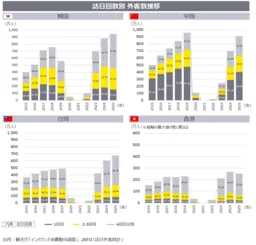
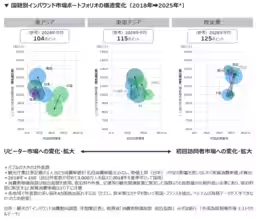
1. Visitor Composition: East Asian countries are at different stages of maturity in terms of first-time visitors. For instance, South Korea has about 16% of its visitors being first-timers, Taiwan at approximately 12%, and Hong Kong at less than 10%. In contrast, around 40% of visitors from China are first-time visitors, indicating a need for tailored strategies for both mature and growing markets.
2. Impact of Currency Fluctuation: The rise in consumer spending can largely be attributed to the weaker yen, which has affected consumption habits across different nationalities. The report emphasizes the necessity of assessing consumption trends relative to exchange rates, indicating potential economic impacts worth ¥945.4 billion by 2025, should current rates fluctuate to historical averages.
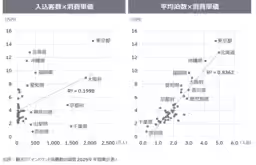
3. Regional Consumption Patterns: Out of the total inbound consumer spending, consumption outside major metropolitan areas accounts for only ¥2 trillion, or about 24.8%. The per capita spending disparity between these regions and major cities stands at ¥22,000, highlighting the significance of increasing overnight stays to enhance regional economic benefits.
4. Strategic Recommendations for Future Trends: The report calls for targeted strategies that consider the unique visitor behaviors based on region and market maturity, aiming for improved engagement with repeat visitors. It suggests the importance of 'experience-based' consumption over mere product purchases to foster sustainable tourism development.
Future Forecast
The upward trend in inbound tourism is expected to continue with projections estimating the number of foreign visitors reaching over 42 million by 2025, marking a 15.8% increase from 2024. The report outlines the Japanese government's goal of achieving 40 million repeat visitors and enhancing local accommodation durations. While the figures suggest promising growth, the nuances in consumer behavior necessitate a focused approach to ensure sustainable market dynamics.
Advice from Experts
Tomotaka Hirabayashi, EYSC Strategic Impact Partner, highlights the intricate relationship between urban and regional tourism experiences. As tourism diversification becomes crucial, he points to the need for effective management strategies that accommodate not just the influx of visitors, but also enhance local community resilience against issues such as overtourism.
In conclusion, the report beckons stakeholders to recognize the complexity of the international tourism landscape while crafting adaptable strategies that simultaneously support economic growth and local community well-being.
For the full detailed report, "Constructing a Sustainable Inbound Market: What Should be Done from the Perspectives of Regional Diversification and Repeat Visits," you can download it from EY’s website.
About EY
EY is distinguished as a global leader in assurance, consulting, strategy, transaction, and tax services, aiming to build a better working world by creating long-term value for clients, people, and society. With a diverse team of over 70,000 consultants worldwide, EY utilizes technology, innovation, and human insights to spearhead transformational changes for organizations across multiple sectors.
Topics Consumer Products & Retail)
【About Using Articles】
You can freely use the title and article content by linking to the page where the article is posted.
※ Images cannot be used.
【About Links】
Links are free to use.