




Innovative Recycling: Tokuyama's Contribution to Solar Panel Glass Upcycling
Innovative Recycling: Tokuyama's Contribution to Solar Panel Glass Upcycling
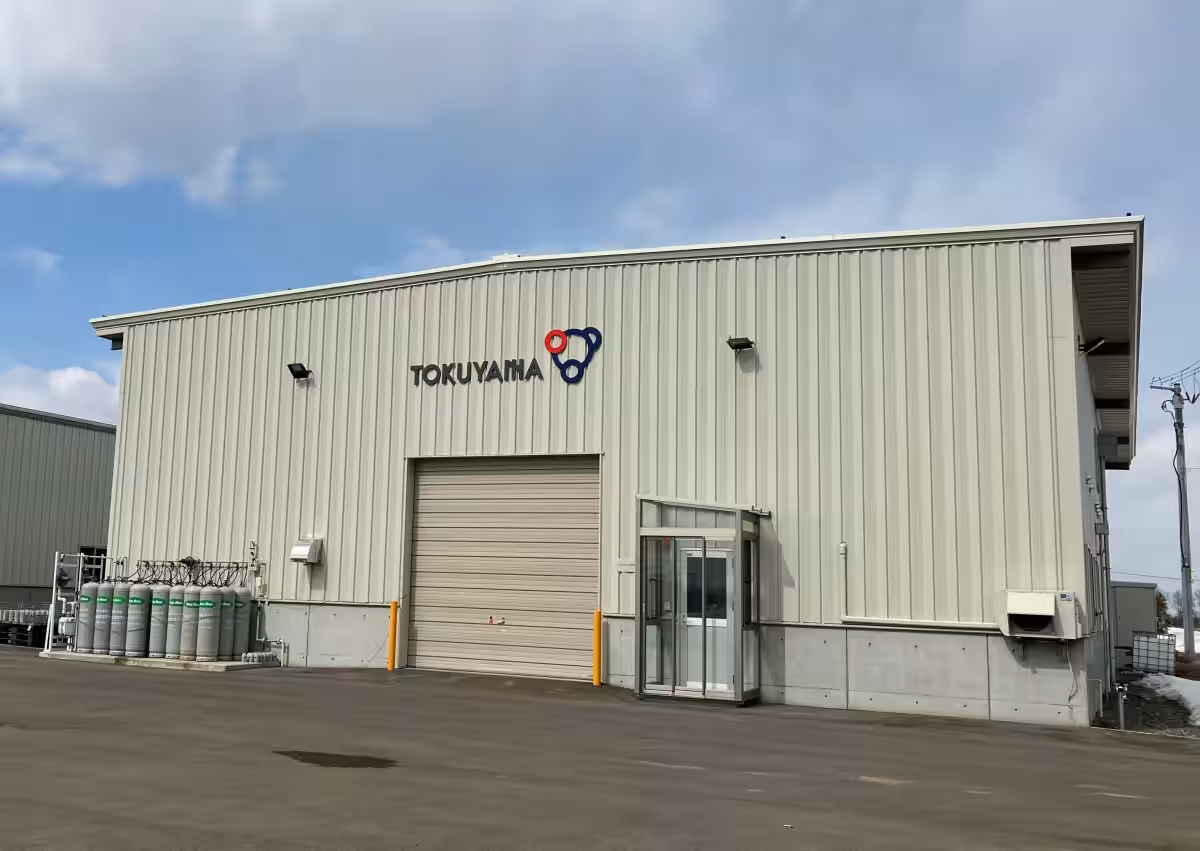
In an era where environmental sustainability is paramount, the collaboration between Tokuyama Corporation and NSG Group marks a significant leap forward in recycling technology. Tokuyama has recently announced the successful supply of transparent cover glass for solar panels, which has undergone a sophisticated low-temperature pyrolysis recycling process, developed in partnership with NEDO (National Institute of New Energy and Industrial Technology).
This innovative recycling process, taking place at NSG's Chiba plant in February 2026, is designed to convert solar panel cover glass into float glass products, showcasing how recycled materials can be utilized effectively. The groundbreaking technology allows for the complete thermal decomposition of the resin components, which bind the materials of solar panels together, using a ceramic filter augmented with a catalyst
The significance of this development cannot be overstated. Traditionally, the recycling of cover glass into float glass was deemed infeasible due to quality constraints. However, by employing their unique low-temperature pyrolysis method, Tokuyama has turned this challenge into an opportunity, allowing for the horizontal recycling of cover glass into board glass. This not only facilitates the recycling of waste solar panels but also supports the transition toward a circular economy by mitigating greenhouse gas emissions.
Moreover, Tokuyama is investing in advanced second-generation pyrolysis systems aimed at enhancing efficiency further. These innovations will also include separating silicon from extracted photovoltaic cells to be used as raw materials for polysilicon products employed in semiconductors, which is presently under the NEDO grant program.
The pressing issue of solar panel waste is anticipated to escalate in the 2030s, and Tokuyama is committed to addressing this problem through rigorous technological development and the promotion of advanced recycling techniques. Their mission is clear: to achieve 100% resource recovery through practices that do not rely on landfilling.Getting more technical, Tokuyama’s method stands out because it renders previously problematic glass components into usable materials without compromising quality. The potential impacts of this technology extend beyond just convenience; they resonate with the larger goals of resource circulation and environmental sustainability.
Tokuyama Corporation was founded in 1918 in Yamaguchi Prefecture and has significantly evolved from producing domestic soda ash to now engaging in diverse fields, including electronic materials and environmental solutions. The company’s innovative approaches are indicative of its commitment to sustainability and technological advancement.
On the other hand, NSG Group is recognized as one of the largest glass manufacturers globally, providing a wide array of products including construction glass, automotive glass, and specialized glass for creative technology. Their commitment to sustainability aligns well with Tokuyama's initiatives, making their partnership a natural fit in the push towards a greener future.
As the world transitions into more sustainable practices, the success of Tokuyama's low-temperature pyrolysis technique could serve as a model for industries grappling with waste management and material recycling. By contributing to the development of efficient, circular systems for solar panel materials, Tokuyama not only enhances its product line but also plays a pivotal role in fostering a more sustainable society.
Thus, the collaboration between Tokuyama and NSG places us one step closer to a future where 100% recycling of solar panel materials becomes a norm—reflecting a shared vision for a resource-efficient and greener planet.
For more information about Tokuyama Corporation and its innovations, visit Tokuyama’s official website. To explore NSG Group and their extensive glass products, check out NSG’s official site.

Topics Consumer Products & Retail)
【About Using Articles】
You can freely use the title and article content by linking to the page where the article is posted.
※ Images cannot be used.
【About Links】
Links are free to use.