



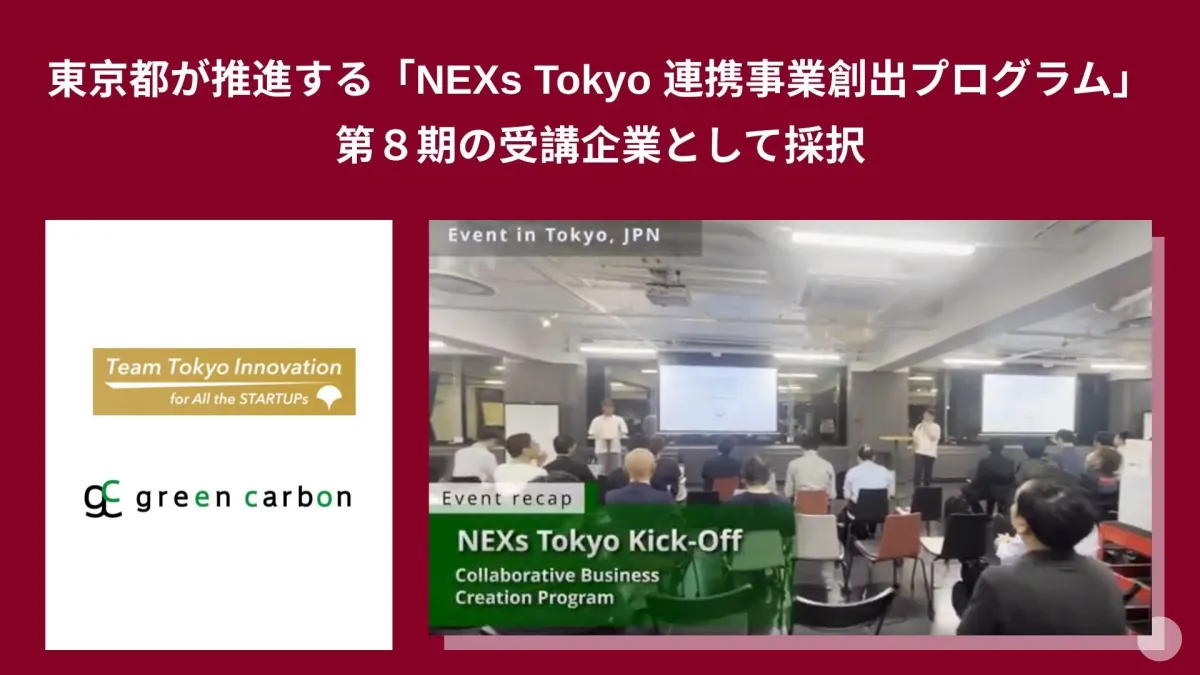
Green Carbon Selected for NEXs Tokyo Program to Drive Decarbonization Initiatives
Green Carbon and NEXs Tokyo Program
In a significant move towards decarbonization, Green Carbon, a company specializing in nature-based carbon credits, has been accepted into the NEXs Tokyo roster for its eighth phase of the collaboration initiative. This initiative, spearheaded by the Tokyo Metropolitan Bureau of Industrial and Labor Affairs, aims to create partnerships beyond regional and sectoral confines, providing all-encompassing support for startups aspiring toward growth.
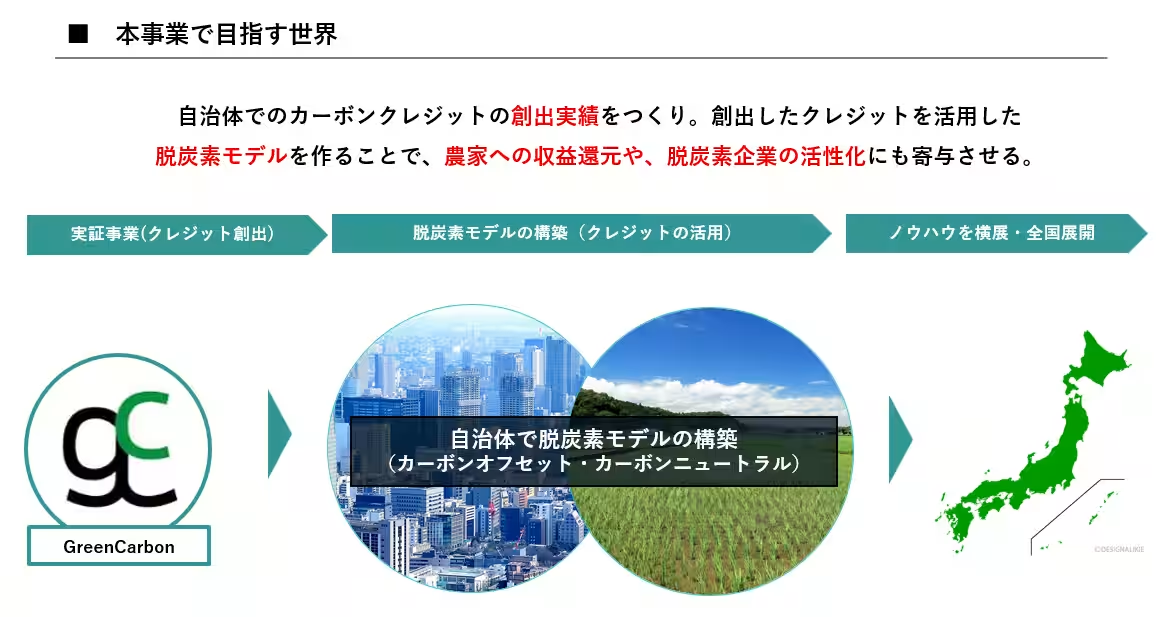
Launched on July 30, 2025, the Kick-off event united 20 selected companies, enabling them to showcase their pitches to community members and mentors. By leveraging NEXs Tokyo's expansive network, which encompasses over 200 municipalities and enterprises nationwide, Green Carbon will strive to enable collaborations with organizations across Japan, aiming to establish robust decarbonization models. This approach advocates for partnerships with local governments and farmers to generate nature-based carbon credits, thus contributing to regional decarbonization and enhancing farmers' incomes.
Initiative Overview
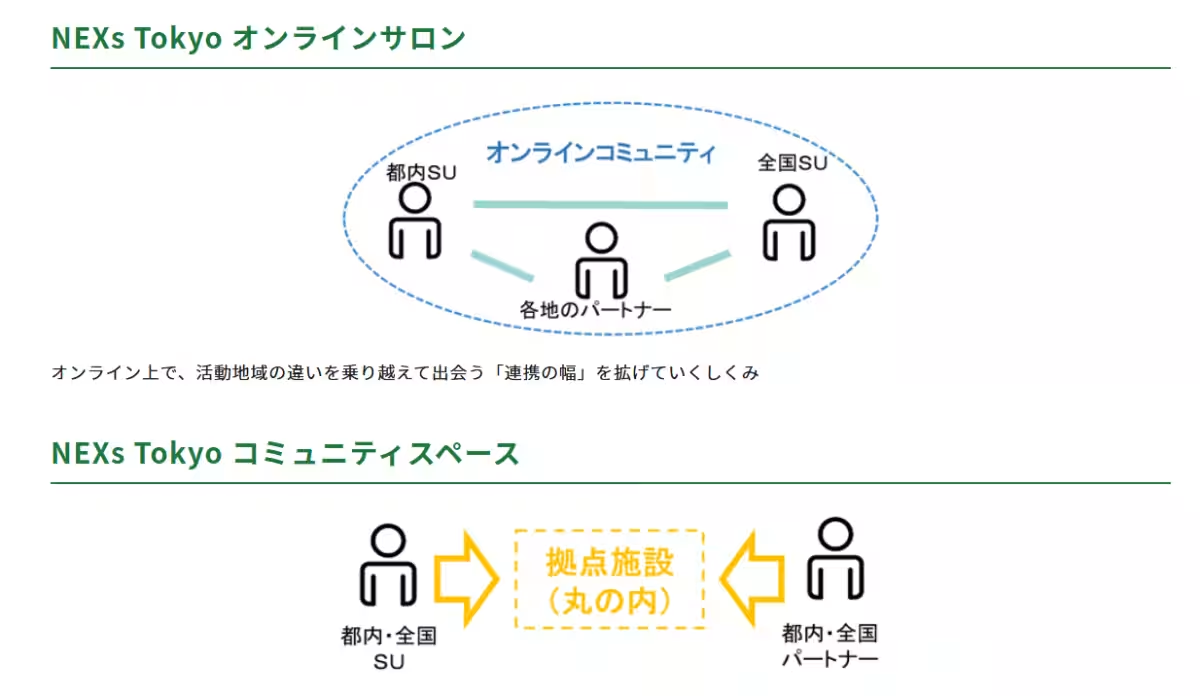
NEXs Tokyo aims to support startups through extensive collaborations that reach across various industries and regions. The program promotes community-building where startups seeking business expansion can connect with supportive partners. Each company gets assistance from dedicated staff to facilitate matchmaking opportunities and address challenges effectively.
Moreover, NEXs Tokyo aligns itself with existing support organizations across regional startup facilities, establishing a HUB function that connects members with project partners to resolve business challenges. The project concept integrates online engagement with physical locations, widening collaboration for startups aiming to innovate, while enriching their relational dynamics within the community.
Why Green Carbon?
Green Carbon has made remarkable strides in Southeast Asia, focusing on creating nature-based carbon credits through various initiatives such as forest conservation, rice paddy methane reduction, and mangrove planting. They leverage satellite technology for site selection and monitoring, ensuring project implementation is both efficient and transparent. Green Carbon primarily operates in Japan through the generation and sale of nature-based J-Credits, with a notable project that achieved a record of approximately 6,220 tons of J-Credits from methane reduction in rice paddies, marking it as the largest project of its kind in Japan as of 2023. Looking ahead, they plan to expand this initiative to cover approximately 40,000 hectares in 2024.
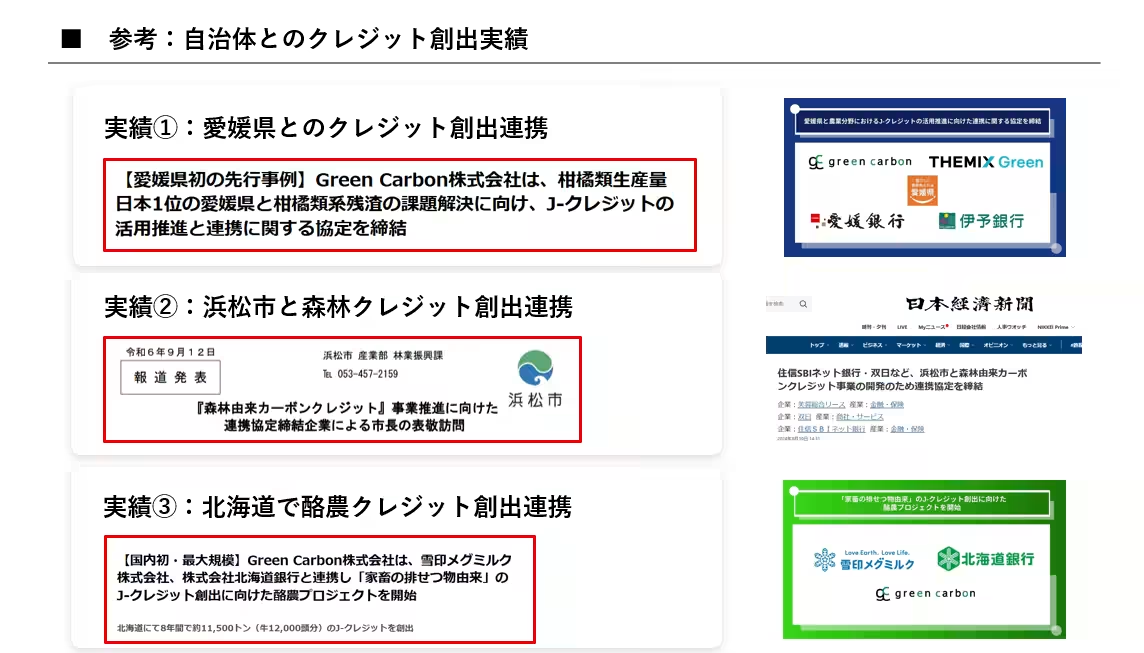
Beyond rice paddy projects, Green Carbon is also spearheading the country’s first significant project aimed at generating J-Credits from enhancing livestock waste management. Collaborations with local governments, including those in Hokkaido, Ehime, and Hamamatsu City, highlight Green Carbon’s commitment to fostering regional partnerships.
The selection of Green Carbon for the eighth phase of the NEXs Tokyo program is a testament to its innovative vision. By tapping into the program's extensive network, the company aims to align itself closely with municipalities and enterprises across Japan to bolster decarbonization efforts. Ultimately, this collective mission supports both local decarbonization and farmers' financial sustainability, contributing to regional revitalization.
Corporate Overview of Green Carbon
- - CEO: Jun Okita
- - Location: 9F Hanzomon PREX North, 2-3-2 Kojimachi, Chiyoda-ku, Tokyo, Japan
- - Founded: December 2019
- - Business Focus: Carbon credit generation and sales, agricultural related businesses, environmental services, and ESG consulting.
- - Website: Green Carbon
Green Carbon aims to save the planet through life, providing comprehensive support for the creation, registration, and sale of nature-based carbon credits while expanding its reach into Southeast Asia, Australia, and South America. With a mission centered around sustainable practices, Green Carbon remains committed to exploring innovative solutions across diverse environmental sectors.
Topics Environment)
【About Using Articles】
You can freely use the title and article content by linking to the page where the article is posted.
※ Images cannot be used.
【About Links】
Links are free to use.