




Unlocking the Future of Content Marketing in the AI Era: An In-Depth Guide
The Transformation of Content Marketing in the Age of AI
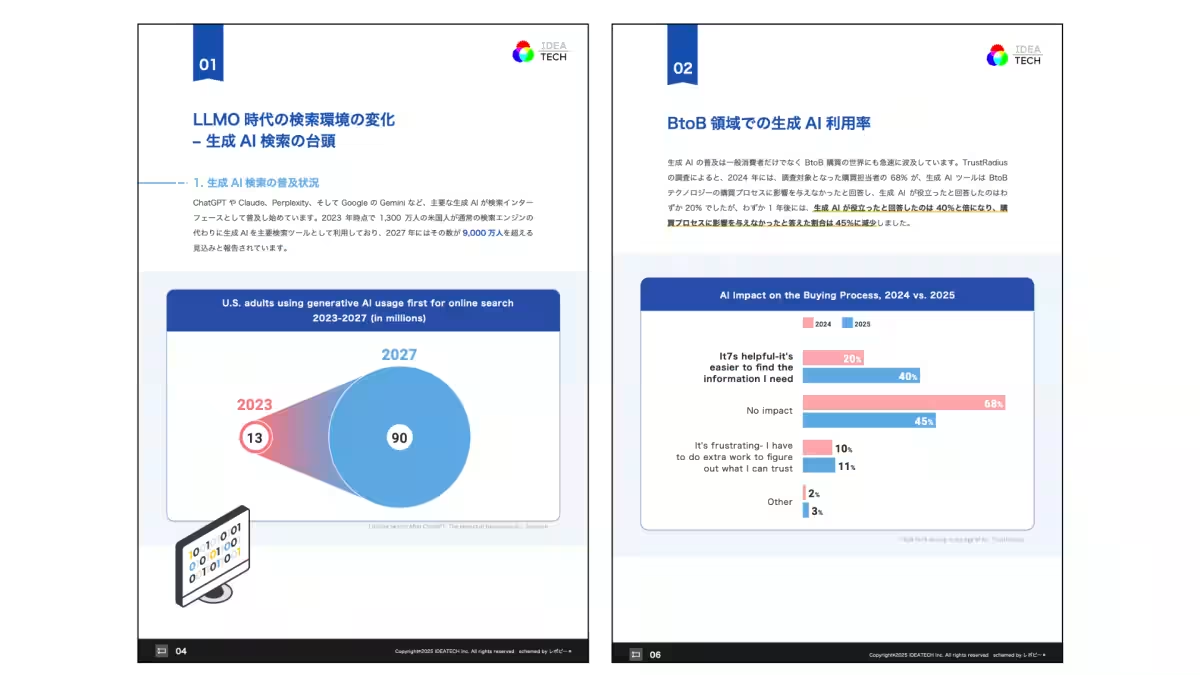
In a rapidly evolving digital landscape, the advent of generative AI has fundamentally shifted how we collect information and make decisions. Traditional practices such as SEO and click-dependent strategies are now facing intense scrutiny, prompting brands to adapt their approaches swiftly. As AI-driven technology continues to permeate search engines, it is becoming increasingly vital for companies to create content that is not just found but also recommended.
The Paradigm Shift in Search Environment
As generative AI gains traction, the way users interact with search engines is undergoing a significant transformation. Users now expect more personalized and relevant information at their fingertips, driving the need for companies to rethink their content marketing strategies. The introduction of Large Language Model Optimization (LLMO) offers a new perspective for crafting content that resonates with AI algorithms and, consequently, with the audience.
Understanding LLMO and Its Impact
In this new landscape, LLMO emerges as a critical factor in content design. It guides marketers on how to align their content with the expectations of AI-driven platforms. By leveraging LLMO, businesses can enhance their visibility and ensure that their content is optimized for the algorithms determining what is recommended in search results.
8 Essential Strategies for Recommendation-Driven Content
To thrive in this AI-influenced environment, companies must implement several key strategies:
- - Focus on Quality: High-quality content is crucial as it increases the likelihood of being favored by AI algorithms.
- - Engage Interactively: Incorporate interactive elements that encourage user engagement, facilitating a deeper connection with the audience.
- - Utilize Data Wisely: Understand user behavior through analytics and refine content accordingly.
- - Foster Authenticity: Genuine content resonates better with both users and AI evaluation.
- - Create Contextual Relevance: Content that is contextually relevant to user queries stands a greater chance of being recommended.
- - Diversify Formats: Use various content formats, such as videos, infographics, and articles, to cater to diverse audience preferences.
- - Incorporate Feedback Loops: Regularly seek and analyze feedback to continuously improve content quality and effectiveness.
- - Stay Updated with Trends: Keeping abreast of the latest advancements in generative AI will inform strategic adjustments necessary for success.
Why This Guide is Essential
This guide is particularly beneficial for B2B marketing professionals who feel constrained by traditional SEO methods, as well as PR managers seeking to enhance the efficacy of their campaigns. Additionally, it serves as a resource for executives and planning departments striving to understand the information dissemination landscape in the age of generative AI.
Suggested Readers
- - B2B marketing managers struggling to see the results they desire from their SEO efforts.
- - PR professionals encountering challenges in their content marketing outcomes.
- - Business leaders exploring new avenues for effectively sharing information in a world increasingly shaped by generative AI.
Conclusion
The future of content marketing is here, led by AI advancements that will redefine how companies communicate with audiences. By embracing LLMO and incorporating these eight strategic approaches, businesses can position themselves advantageously in the new digital landscape. Download the guide today and begin your journey towards mastering content marketing in the AI era.
Further Reading
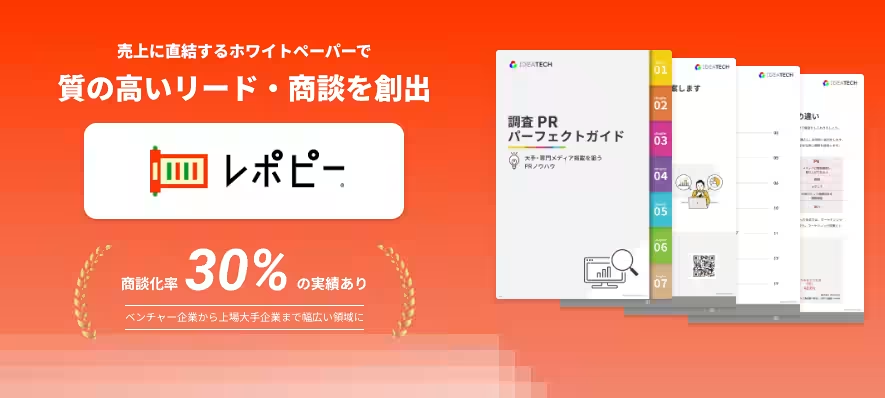
Download our detailed guide on this topic here for more insights and actionable strategies.
For more information on our services, visit IDEATECH.

Topics Consumer Technology)
【About Using Articles】
You can freely use the title and article content by linking to the page where the article is posted.
※ Images cannot be used.
【About Links】
Links are free to use.