




INSOL-HIGH Secures 100 Million Yen in Seed Funding for Humanoid Robots Initiative
INSOL-HIGH Secures Significant Seed Funding
INSOL-HIGH, a company based in Chiyoda, Tokyo, specializing in the comprehensive support platform for humanoid robots known as REAaL, has announced that it successfully raised 100 million yen in seed funding. This funding was secured through a third-party allocation of shares led by Nissei Capital, along with loans from financial institutions. This milestone is pivotal as the company aims to redefine the collaborative landscape of humans and robots in response to Japan's critical labor shortages.
Addressing Labor Shortage with Technology
As the global industry races towards the commercialization of humanoid robots, INSOL-HIGH recognizes the pressing labor shortages facing various sectors in Japan, particularly in manufacturing and logistics. In the U.S., for instance, the deployment of humanoid robots in automotive production has shown a remarkable quadrupling of speed and a sevenfold increase in success rates, demonstrating the effectiveness of integrating robotic solutions into the workforce. These developments underscore the urgency for Japan to embrace these technologies to sustain its industry.
INSOL-HIGH’s strategy involves leveraging its proprietary platform, REAaL, which supports the entire lifecycle of humanoid robot implementation: from task design and imitation learning to data accumulation and on-site application. Unlike the traditional approach of rolling out isolated robotic systems, REAaL enables large-scale learning through data sharing among multiple enterprises. This model aims to optimize robot utilization within Japan's industrial framework.
Building a Training Center for Humanoid Robots
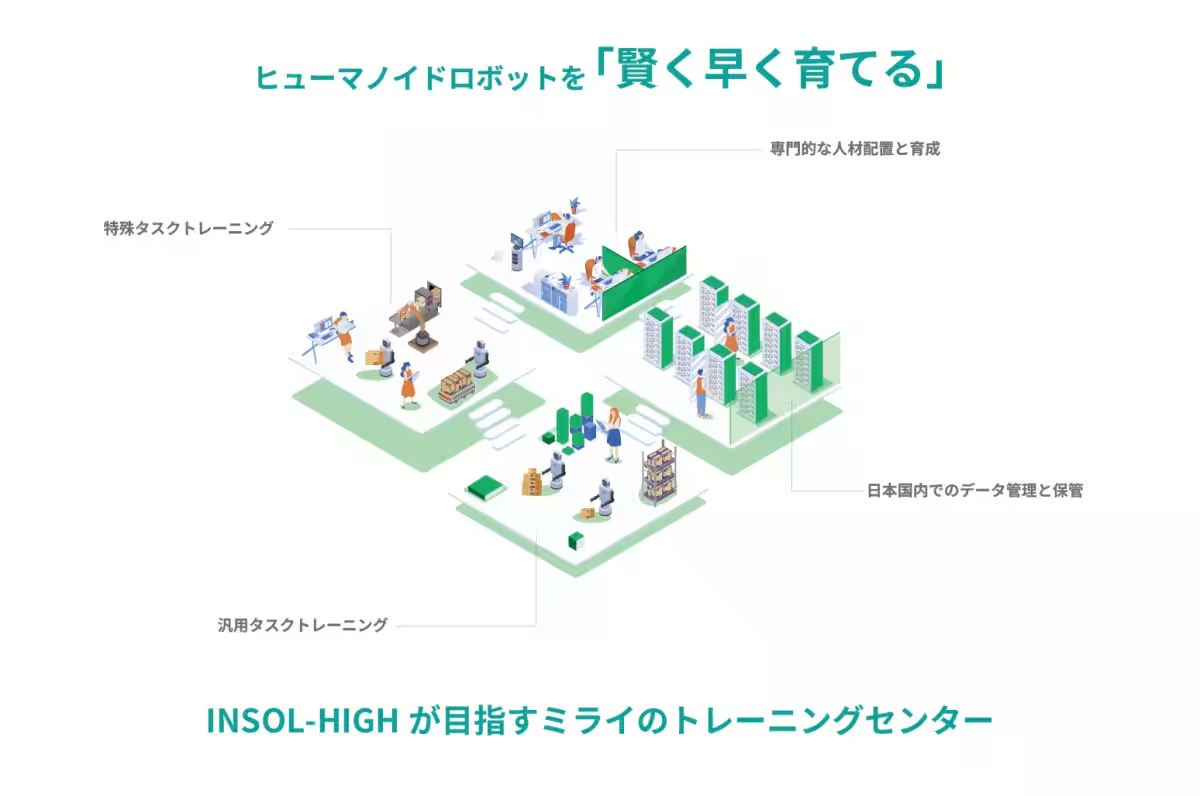
To ensure the successful implementation of humanoid robots, it's crucial to establish training environments that mimic real-world operations. INSOL-HIGH is addressing this need by launching Japan's first dedicated training center for humanoid robots, designed specifically for industrial applications. Set to officially open next year, this facility will invite participating companies to prepare for collaborative operations.
The training center will generate the physical data required for humanoid robots through model building, imitation learning, reinforcement learning, and simulation, all within settings that replicate actual logistics and manufacturing environments. This hands-on approach not only prepares robots for diverse tasks but also fosters continuous improvement through real-time feedback.
A Thriving Market for Humanoid Robots
The global humanoid robot market is experiencing explosive growth, with an average annual growth rate of 50.4%. Projections indicate that the market will escalate from approximately 274 billion yen in 2024 to an astounding 2 trillion yen by 2032. With tangible successes already reported in manufacturing scenarios, INSOL-HIGH is well-positioned to capitalize on this upward trajectory while tackling Japan's demographic challenges, which anticipate a significant decline in the working-age population by 2060.
The necessity of humanoid robots is no longer speculative but a pressing need, particularly in sectors such as manufacturing and logistics, where labor shortages are dire. By integrating humanoid technology, INSOL-HIGH seeks to contribute meaningfully to addressing these systemic issues.
Leadership Vision
Masakatsu Isobe, the CEO of INSOL-HIGH, expressed pride in obtaining investment from Nissei Capital, viewing it as affirmation of the company's potential to contribute positively to societal challenges. He reiterated that INSOL-HIGH doesn't see itself merely as a technology vendor but as a designer of future work styles, striving for a unified industrial society where humans and robots can thrive together.
Yuuki Ito, a Senior Capitalist at Nissei Capital, notes the vital intersection of AI and robotics in transforming traditional industries. The evolution of humanoids enhances the feasibility of mimicking human-like movements essential in logistics and manufacturing processes. With INSOL-HIGH already making strides in proving these technologies in practical settings, their efforts to integrate humanoids in Japan’s workforce will likely propel the industry forward.
Conclusion
Considered a pioneer in Japan's humanoid robotics field, INSOL-HIGH is not just innovating but also championing a movement toward a future where robotic assistance mitigates prevailing labor market challenges. With significant funding secured and ambitious plans underway, the company stands on the brink of transforming the relationship between humans and technology within various industries.
Topics Consumer Technology)
【About Using Articles】
You can freely use the title and article content by linking to the page where the article is posted.
※ Images cannot be used.
【About Links】
Links are free to use.