



Dentsu Institute Launches AI Agent to Automate Systems Development Processes
Dentsu Institute Introduces AI Agent for System Development Automation
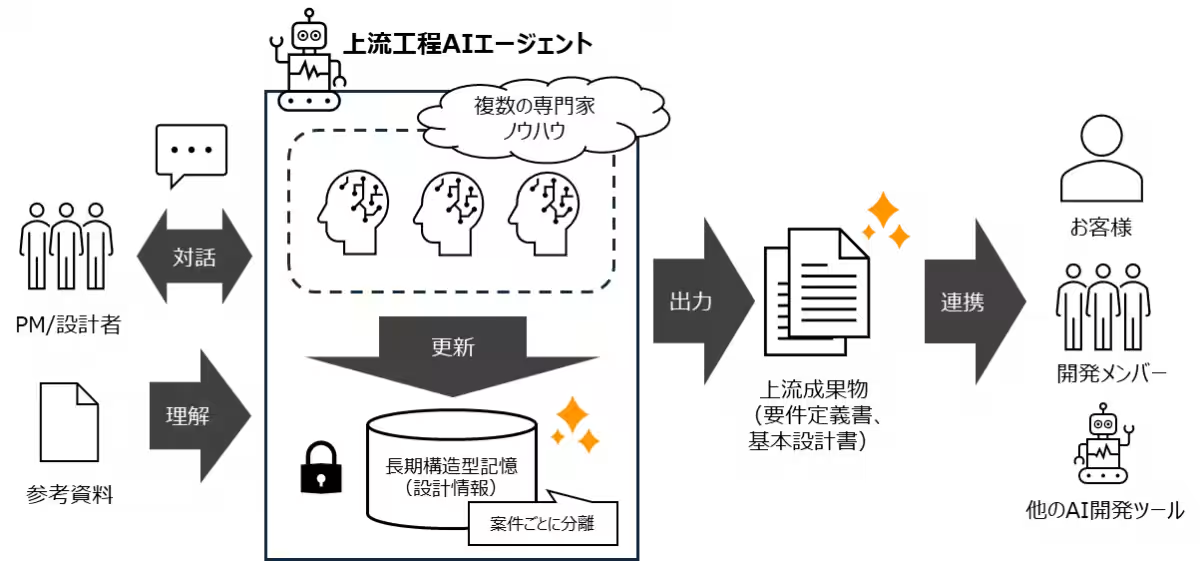
Dentsu Institute, headquartered in Minato, Tokyo, has initiated the full-scale operation of its proprietary AI agent aimed at semi-automating the upstream stages of system development. This innovative system focuses on improving efficiency in requirement definition, basic design, and architectural design, by facilitating dialogue among project members.
In a validation experiment carried out in June 2025, the AI agent demonstrated a remarkable 30% increase in productivity in both requirement definition and basic design phases, compared to traditional methods. As a result, project members can now dedicate more time to higher value-added tasks, such as developing system strategies and enhancing communication with clients. Dentsu is set to implement this AI agent across all new development projects by 2027.
Background
With the rapid changes in societal and customer needs, the demand for quicker development timelines and improved product quality in system development is at an all-time high. Historically, the upstream processes have been riddled with high costs due to the need to ensure completeness and consistency in requirements, which posed significant challenges to efficiency. In response, Dentsu has developed an internal AI agent to streamline the processes ranging from requirement definition to basic design for high-quality system development within a short timeframe.
Features of the Upstream AI Agent
1. Interactive Requirement Definition and Design Automation
The AI agent converses with internal project managers and subject matter experts to organize demands and offer improvement suggestions. Leveraging the expertise of seasoned staff and the company's technical know-how, it automates tasks relating to requirement definition and basic design, thus maintaining high quality in outputs.
2. Accumulation and Continued Utilization of Design Information
The agent also gathers design information from various projects into an internal database for ongoing use throughout the entire lifecycle of a project. Required documents, such as requirement definitions and design specifications, can be generated on-demand. This allows project members to request confirmation of specifications, detailed designs, or test design from the AI agent, fostering overall productivity in the development process.
3. Automatic Response to Changes and Quality Maintenance
In the event of specification changes, the AI agent identifies the area of impact and suggests amendments, subsequently adjusting the design documents. This minimizes the potential for oversights due to manual editing and aids in maintaining the quality of upstream products and the entire system.
Dentsu Institute is committed to continuously enhancing the capabilities of their AI agent. Furthermore, they aim to promote integration with their enterprise-focused ChatGPT solution, known as "Know Narrator," expediting the application of AI agent technology in various business domains. Dentsu will continue to push for active AI utilization in system development, targeting significant improvements in both productivity and quality.
About Dentsu Institute
Dentsu Institute operates under the corporate vision of "HUMANOLOGY for the future – creating the future with people and technology." Through a collaboration of their three functions: system integration, consulting, and think tank services, they engage sincerely with the entire social structure, including corporations, government agencies, local authorities, and citizens. This approach facilitates a loop from recognizing issues to implementing technological solutions, aiming to support and actualize a better society. Dentsu promotes "X Innovation" that transcends the boundaries of technology, industries, corporations, and regions, striving to continue creating new value through the synergy of people and technology.
Note: Dentsu International Information Services (ISID) has changed its name to Dentsu Institute. All company and product names mentioned are trademarks or registered trademarks of their respective owners.
Topics Consumer Technology)

【About Using Articles】
You can freely use the title and article content by linking to the page where the article is posted.
※ Images cannot be used.
【About Links】
Links are free to use.