



Enhancements in Sodium Ion Battery Lifespan Through Scandium Substitution and Surface Modification
Introduction
Recent advancements in sodium-ion battery technology have highlighted the potential for improved performance and longevity. A recent study by researchers from Tokyo University of Science sheds light on how incorporating scandium (Sc) can significantly enhance the lifespan of the O3-type NaNi1/2Mn1/2O2 cathode through two main mechanisms: crystal substitution and surface modification.
Mechanisms of Improvement
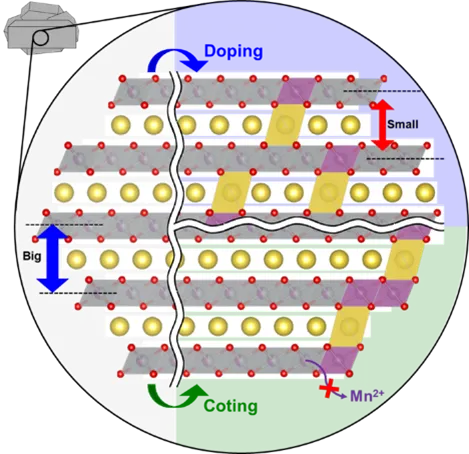
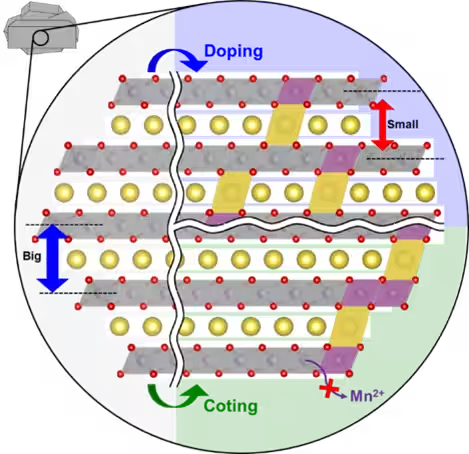
The research successfully differentiated the effects of internal crystal substitution with Sc and surface modification on battery performance. The crystal substitution has been found to suppress structural changes associated with cycling, stabilizing the cathode material's structure significantly. On the other hand, surface modification effectively mitigates side reactions occurring at the electrode/electrolyte interface, thereby reducing degradation during long-term cycling.
Through a combination of experimental and computational methods, the researchers demonstrated that Sc substitution successfully inhibits the formation of the problematic O’3 phase, contributing to improved cell voltage.
Results and Analysis
Research led by master’s student Kodai Moriya and professors Shinichi Kumakura and Shinichi Komaba involved comprehensive evaluations of scandium-modified materials. This involved testing on the promising O3-type NaNi1/2Mn1/2O2, known for its high reversible capacity but previously limited by performance degradation after charge-discharge cycles due to structural changes.
In this groundbreaking study, researchers designed target materials that allowed for a systematic evaluation of the individual impacts of Sc-induced crystal substitution and surface modification on battery performance. Results indicated that crystal substitution effectively prevents structural changes during charge-discharge cycles, improving structural stability of the cathode.
Simultaneously, surface modification played a vital role in stabilizing interface reactions, which prevented degradation and allowed for over 300 cycles of stable operation. Notably, both modification techniques contributed to considerable retention of capacity after extensive cycling, confirming their effectiveness. Sc-doped samples maintained 71.4% capacity and those with surface modification retained 91.2% post 300 cycles.
Researchers collaborated with Professor Yoshitaka Tateyama and Assistant Professor Huu Duc Luong from Tokyo Science University, employing first-principles calculations alongside various electrochemical assessments and structural analyses. They pinpointed the formation of the troublesome O’3 phase as a bottleneck in battery reactions and found that Sc substitution effectively suppressed the phase transition, enabling a higher voltage for reversible reactions.
Implications for Future Research
The outcomes of this study signify a breakthrough in understanding the differing contributions of doping and coating effects on battery longevity and performance. The success in differentiating these effects may allow for optimized material design strategies, opening new avenues for improved sodium-ion battery applications, particularly in renewable energy systems and industrial sectors requiring high-performance batteries.
This work is not merely an academic achievement but also a significant step toward realizing the potential of sodium-ion batteries, especially vital in our global push for carbon neutrality and energy sustainability.
Conclusion
With ongoing advancements, this research presents a promising direction for future studies to further optimize both doping and surface modification techniques. The ultimate aim is to fully capitalize on the benefits of these strategies, paving the way for the next generation of sodium-ion batteries capable of meeting the growing energy demands sustainably. The findings are published online in the August 6, 2026 edition of the journal 'Small'.
References
The detailed paper titled "Scandium doping and coating for improving O3-NaNi1/2Mn1/2O2 electrode in sodium battery" is available for further reading, featuring its authors and the DOI for quick access.
Topics Energy)
【About Using Articles】
You can freely use the title and article content by linking to the page where the article is posted.
※ Images cannot be used.
【About Links】
Links are free to use.