


Breakthrough in Memory Mechanisms: Insights from Fruit Fly Research
Understanding Immediate Memory through Synaptotagmin 7 in Fruit Flies
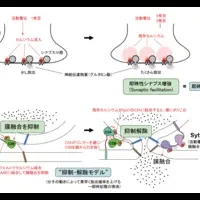
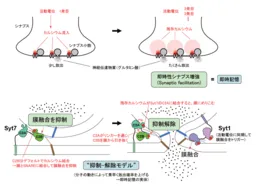
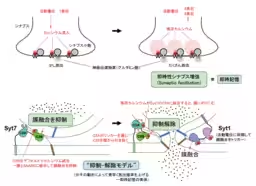
Recent research led by Motojiro Yoshihara and his team at the National Institute of Information and Communications Technology (NICT) has uncovered fascinating insights into the mechanisms underlying immediate memory. Utilizing fruit flies as a model organism, the team focused on a process known as 'synaptic facilitation,' a phenomenon where synaptic transmission is enhanced during rapid neuronal firing. Though known for some time, the specifics of this enhancement remained largely elusive until now.
Key Findings
The study identifies Synaptotagmin 7 (Syt7), a protein that plays a crucial role in this synaptic facilitation. The researchers found that Syt7 interacts with 'residual calcium,' a remnant of previously activated signals, to increase the probability of neurotransmitter release. This mechanism is pivotal for creating immediate memories, such as remembering what we just saw or heard.
Dynamic genetic experiments leveraging the unique properties of fruit fly embryos revealed that Syt7's interaction within its molecular structure facilitates this process. By pinpointing how one of Syt7's domains (C2A) releases the inhibition caused by another domain (C2B), researchers were able to delineate the molecular interactions responsible for synaptic enhancement.
Implications for Mental Health
The implications of this research extend beyond basic neuroscience. Understanding the function of Syt7 may pave the way for breakthroughs in treating conditions such as bipolar disorder and certain cancers. Notably, studies have shown that individuals with bipolar disorder may have reduced levels of Syt7, which could lead to impaired dopamine regulation and contribute to various symptoms, including abnormalities in working memory. This research establishes an initial connection between the molecular mechanisms of memory and mental health disorders, potentially guiding future therapeutic strategies.
Exploring Memory Mechanisms
By identifying a novel mechanism for immediate memory at the molecular level, the research provides a significant advance in our understanding of brain function. As researchers continue to explore the relationship between immediate and long-term memory, they hypothesize that similar mechanisms might also play a role in memory consolidation. Future studies will likely investigate how synaptic activity on the receiving side (post-synaptic) contributes to these processes.
Future Directions
This discovery opens new avenues for research, particularly in combining genetic manipulation techniques in fruit flies with ongoing studies in synaptic mechanics. The goal is to further unravel the complexities of memory formation and identify alternative methodologies to address related neurological conditions. Moreover, the findings may support ongoing efforts to unify disparate theories of how memory functions across various neurological and psychological contexts.
Publication Details
This groundbreaking research was published on September 21, 2026, in the Proceedings of the National Academy of Sciences (PNAS). The authors, including Akira Sakurai, Takaaki Fujii, and Yoshihara, are optimistic about the future implications of their findings for understanding and treating cognitive disorders.
In summary, the elucidation of immediate memory mechanisms using fruit flies marks a significant step forward in neuroscience, potentially leading to innovative approaches in dealing with mental health issues and enhancing our overall understanding of memory functions.
Topics Health)

【About Using Articles】
You can freely use the title and article content by linking to the page where the article is posted.
※ Images cannot be used.
【About Links】
Links are free to use.