



Enhancing Corporate Strategies Through Generative AI Adoption: Insights from the Second Member Summit
Enhancing Corporate Strategies Through Generative AI Adoption: Insights from the Second Member Summit
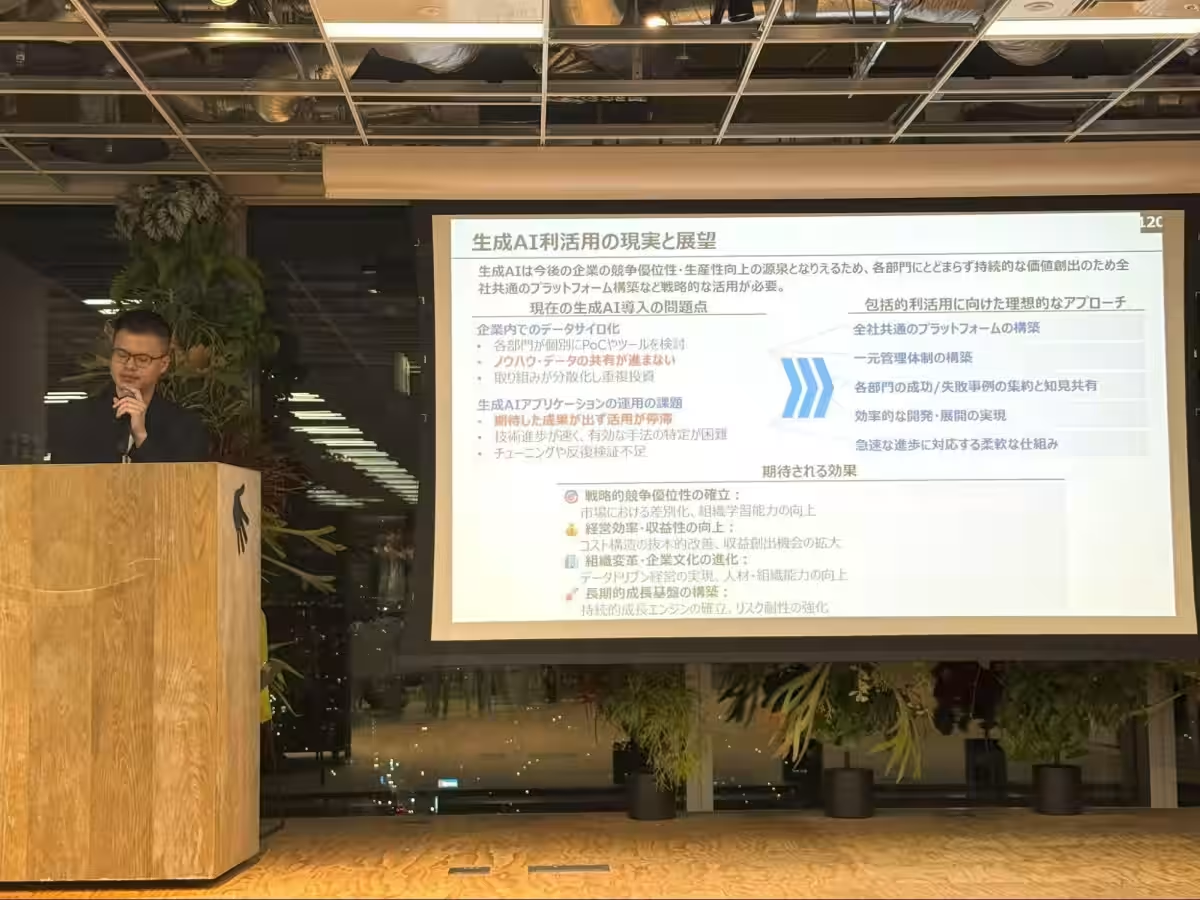
On July 16, 2025, Arsaga Partners, a Tokyo-based company dedicated to driving digital transformation (DX) in Japan, participated as a member in the Second Member Summit organized by the Generative AI Japan association. During this event, Hiroshi Yokomizo, the head of Arsaga's AI Lab, delivered a short pitch discussing the company's initiatives in the field of generative AI. This summit served as an annual gathering for leaders at the forefront of generative AI technology, enabling discussions about its applications and future prospects.
About Generative AI Japan
Established in January 2024, Generative AI Japan aims to enhance Japan's industry competitiveness through the promotion of generative AI applications and the development of rules and guidelines. The association is led by Hiroshi Miyata, a professor at Keio University School of Medicine, and includes 19 experts from academia and advanced industries. As of April 2025, over 70 companies are members of the organization. More information can be found on their official website: Generative AI Japan.
Arsaga Partners has been involved with this association since its inception, with CEO Yasumasa Omata serving as a board member.
Speaker Introduction: Hiroshi Yokomizo
Hiroshi Yokomizo, the head of Arsaga Generative AI Lab, was born in Odawara, Kanagawa Prefecture, in 1995. He launched a learning support business during his university studies, which eventually led him to pivot into engineering. He worked on banking system development using PHP and Laravel for an SES company. In 2023, he joined Arsaga Partners, where he now leads projects using generative AI for applications, focusing on mitigating hallucinations and enhancing search generation effectiveness. His expertise spans server-side engineering and various programming technologies, including Python, PHP, Laravel, AWS, and Azure.
Current State and Challenges of Generative AI Utilization: Barriers Faced by Businesses
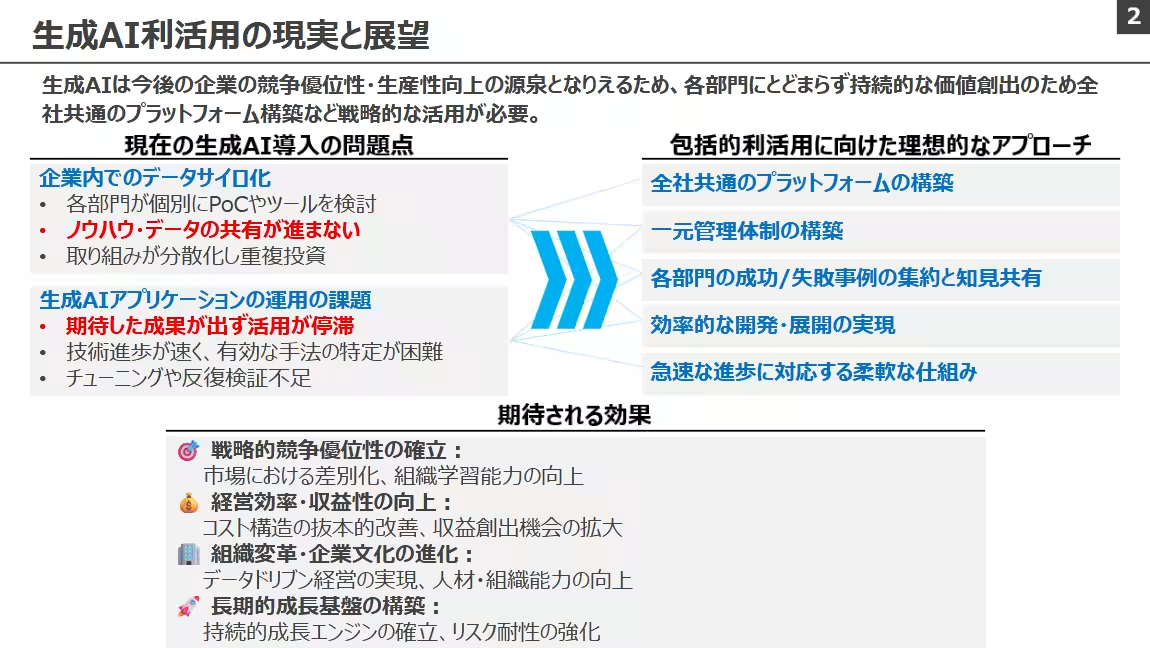
Given the rapid advancements in technology, generative AI has been widely recognized as a potential driver of competitive advantage and productivity improvement for businesses. However, the road to effective adoption is rife with obstacles, particularly for larger enterprises that face several critical challenges.
One of the significant issues seen across many organizations is


Topics Business Technology)
【About Using Articles】
You can freely use the title and article content by linking to the page where the article is posted.
※ Images cannot be used.
【About Links】
Links are free to use.