




Japan Airlines and All Nippon Airways Unite for 2050 Carbon Neutrality Goals with New SAF Report
Collaborative Efforts Towards Carbon Neutrality by 2050
Japan Airlines (JAL) and All Nippon Airways (ANA) have taken a significant step towards achieving carbon neutrality in air transport by 2050. The airlines released the second edition of their collaborative report titled "Towards Carbon Neutrality in Air Transport by 2050: A Joint Report on Sustainable Aviation Fuel (SAF)." This report outlines the current status of SAF, its challenges, and emphasizes the necessity for collective efforts to promote its use in society.
Since the first report in 2021, both JAL and ANA have made considerable progress in raising awareness regarding the importance of SAF. This increased awareness comes amidst a rapidly changing global landscape that poses new challenges, such as intense competition in securing raw materials and variations in governmental policies across countries. The deployment of SAF is now at a critical juncture, transitioning from mere recognition to addressing pressing challenges in the next five years.
Recent Developments in SAF
As of 2026, the production of SAF globally is expected to cover only 0.6% of the total aviation fuel demand. The report underscores the need for specific production plans and public support to achieve ambitious carbon reduction targets; otherwise, achieving these goals will either be unfeasible or incur massive societal costs.
The economic impact of Japan's aviation ecosystem is profound; it generates approximately 17 trillion yen annually. Additionally, to maintain a robust aviation network essential for local and remote areas, a steady supply of SAF is critical. Without the necessary infrastructure and collaboration, both domestic and international travel will be jeopardized.
Building a Sustainable Model
To overcome the significant barriers to SAF implementation, it is crucial to develop a practical "Japan-Style Model" that synchronizes the pace of SAF adoption with its supply capacity, taking learnings from successful initiatives in Europe. JAL and ANA are committed to engaging with government authorities, the industry, and customers to distribute the costs associated with carbon neutrality transparently.
Aimed at fostering dialogue and collective action, the report calls upon all stakeholders to collaborate towards establishing a sustainable aviation network. By effectively communicating the importance of SAF, Japan's aviation sector can maintain and evolve its role as a vital social infrastructure connecting Japan to the global community.
Commitment from Leadership
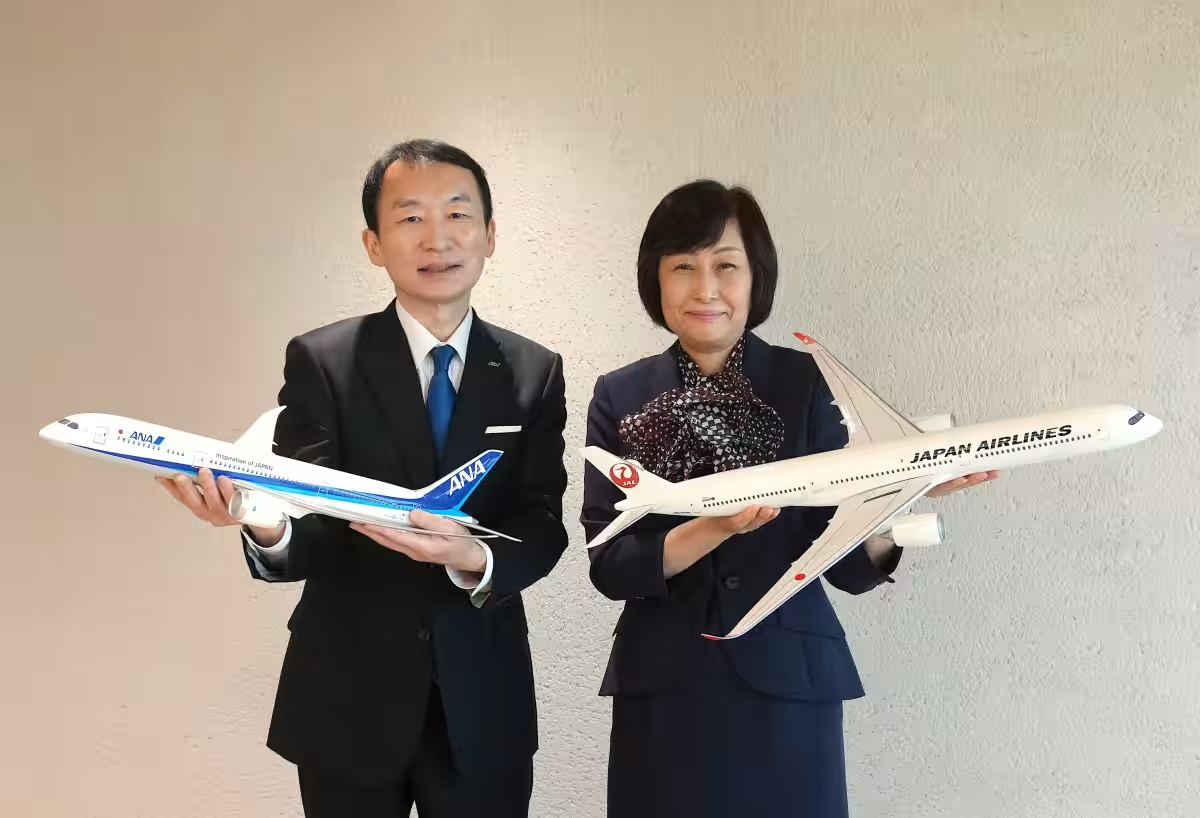
Comments from the CEOs of both airlines reflect their dedication to this mission. JAL's President Mitsuko Torii stated, "Our responsibility is to maintain connections through travel and contribute to social well-being. Although we face challenges in promoting SAF, we must not falter in our pursuit of a sustainable future for aviation. Together with ANA and all stakeholders, we will tackle this challenge and ensure a bright future ahead."
ANA's President Toshikazu Hirazawa echoed this sentiment, expressing concern over the urgency of domestic SAF implementation and its implications for Japan's economic security. He emphasized, "The current circumstances regarding SAF are very stringent, creating risks for our economic stability. We urge continued cooperation among all stakeholders to ensure the aviation infrastructure remains viable for future generations."
Future Directions
The report not only details the challenges associated with SAF implementation but also delineates the pathways forward, fostering a collaborative model that supports higher costs associated with SAF. Both airlines will publish extensive resources to raise awareness about SAF and its adoption, reinforcing their commitment to ensuring that air travel can sustainably serve Japan's economic and social needs.
In conclusion, Japan Airlines and ANA are paving the way to a sustainable aviation future through collaborative efforts and a strong commitment to SAF development. As they work to overcome the challenges presented in the report, they invite all stakeholders to join in the mission towards carbon neutrality by 2050 to secure a prosperous future for air transport in Japan.

Topics Other)



【About Using Articles】
You can freely use the title and article content by linking to the page where the article is posted.
※ Images cannot be used.
【About Links】
Links are free to use.