



Next Step: A New Era for Circular Economy with Nagoya Base of Tsuginohi
The Rise of Tsuginohi
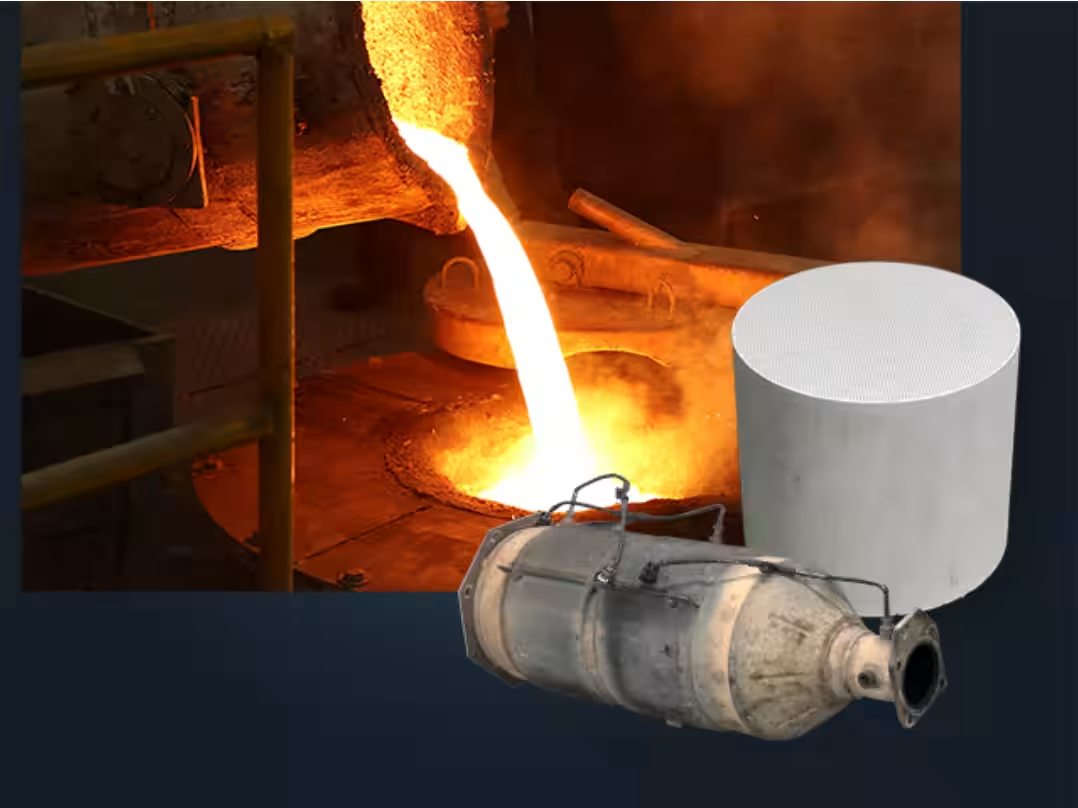
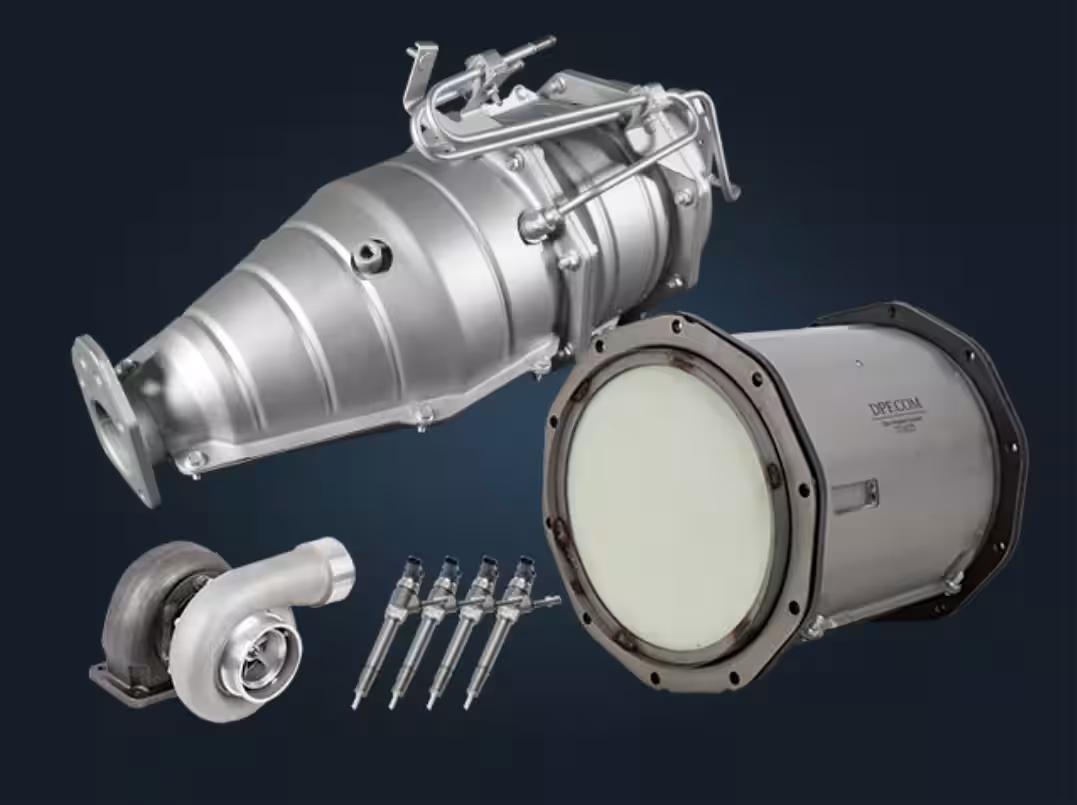
Tsuginohi Co., Ltd., based in Okayama, Japan, has officially begun operations in Nagoya as of April 2026. This environmental venture is committed to the circular economy by purchasing used parts from commercial vehicles, such as DPF filters and SCR catalysts, and ensuring the recovery of precious metals.
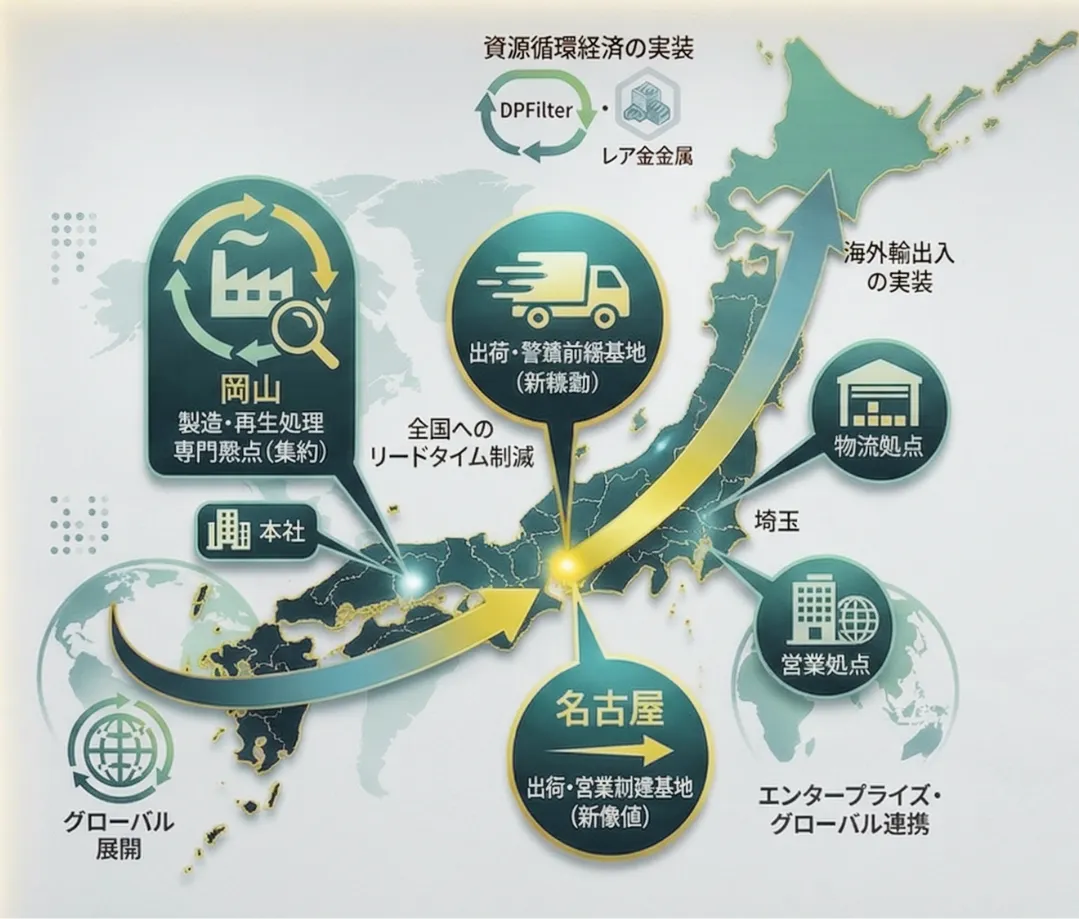
In a bid to optimize its operations, Tsuginohi is restructuring its distribution system. The Okayama facility will focus on manufacturing and regeneration, while the Nagoya base will serve as a frontline hub for shipments and sales. By splitting these functions, the company aims to cut down lead times for over 5,000 business partners nationwide, responding to powerful calls for resource recovery in waste management.
Addressing Industrial Waste through a New Lens
The current system demands a reevaluation of the prevalent waste generation model. Each year, Japan faces the disposal of thousands of commercial trucks, where valuable components such as DPF and SCR catalysts are removed, most often ending up as waste. With precious metals like platinum and palladium contained in these discarded parts, the loss is significant due to two main barriers: the lack of specialized recovery techniques and the high costs associated with the recycling processes.
A cascade of consequences emerges from inaction: the squander of scarce resources, increased CO₂ emissions, and a reliance on foreign sources for precious metals. The government’s initiatives, including the Carbon Neutrality 2050 and the GX Promotion Law, stress the need for industry transformation, highlighting the necessity for an operational "circular infrastructure" as opposed to mere philosophical declarations.
Understanding the Recycling Buyer Model
The innovative Recycling Buyer model initiated by Tsuginohi serves as an actionable solution to the issues discussed. The company directly purchases used DPF and SCR catalysts from repair shops and transport companies across Japan, restores and cleans them in-house, then resells them as refurbished products while recovering the precious metals in the process. This all-encompassing method has established a closed-loop system in which waste is converted into economic value.
Since its inception, Tsuginohi has seen remarkable growth, with revenues skyrocketing from 0.08 billion yen in its first term to 1.13 billion yen by the seventh term, a staggering increase of 14.5 times. The number of business partners has surpassed 5,000, with impressive repeat purchase rates of 73.67% for procurement and 55.20% for sales.
Comparing Disposal and Regeneration Models
A structural comparison clearly outlines the advantages of the Tsuginohi model:
| Traditional Model (Disposal) | Tsuginohi Model (Regeneration) |
|---|---|
| ------- | --------- |
| Disposes of used parts for new replacements | Cleans and regenerates used parts for resale |
| High cost for new parts | 30-40% reduction from new prices |
| Increased CO₂ emissions | Reduces CO₂ from waste handling |
| Loss of valuable metals abroad | Recovers metals domestically |
| Continued dependence on imports | Enhances domestic resource supply |
Expanding Beyond Okayama: The Nagoya Strategy
As the company scaled up its operations, the limitations of the Okayama-centric model became evident. Shipping parts from Okayama to more than 5,000 national partners posed significant challenges in lead time, logistics costs, and operational responsiveness, particularly in the central and eastern regions. The newly opened Nagoya base is designed to address these issues effectively.
"Nagoya is not just a branch," asserts CEO Kurokawa. "Our Okayama factory will specialize in cleaning and processing DPF and SCR catalysts. This concentration will enhance both the credibility and availability of our regenerated products. Given Nagoya's geographic advantages, we can significantly shorten lead times to our partners throughout Japan while broadening our sales and procurement networks. This enables a more straightforward decision-making process for choosing between disposal and regeneration."
With Nagoya operational, Tsuginohi will transition into a four-base structure encompassing Okayama (manufacturing), Shinagawa (sales), Saitama (logistics), and Nagoya (distribution and sales), simultaneously achieving manufacturing consolidation in Okayama and distribution advancement in the central region.
Towards an International Circular Economy
The strategic implications of the Nagoya base extend beyond domestic logistics optimization. Tsuginohi’s medium-term plan, titled "Road to 10B," earmarks international trade as a primary growth avenue. The recovery of platinum and palladium from DPFs and SCR catalysts presents both local recycling and potential export opportunities, particularly to ASEAN nations experiencing growing demand for refurbished components.
By building a multi-faceted domestic supply chain, Tsuginohi aims to facilitate a stable supply for overseas markets. This endeavor represents an international adaptation of the local circular economy model and aligns with Japan’s Resource Circular Economy initiatives and the environment ministry's acceleration packages for transitioning to a Circular Economy.
Intersection of GX, Regional Revitalization, and Energy Security
Tsuginohi is poised to address several pressing structural challenges facing Japan today. Firstly, by regenerating DPFs and SCR catalysts, the company contributes significantly to decarbonizing industry by reducing new manufacturing energy consumption and associated CO₂ emissions. Secondly, it serves as a robust model for building industry frameworks emerging from local regions, reflective of the policies guiding the Green Transformation (GX). Lastly, the domestic recovery of rare metals contributes to energy security, as reducing reliance on foreign sources is crucial given that more than 90% of Japan's platinum-group metal needs are met through imports.
As the choice between disposal and regeneration looms, Tsuginohi endeavors to present well-grounded solutions. The company remains committed to implementing a self-sufficient economy globally that recycles the planet's resources with practical, ground-level answers. This steadfast vision propels Tsuginohi for a sustainable and prosperous future.

Topics Environment)
【About Using Articles】
You can freely use the title and article content by linking to the page where the article is posted.
※ Images cannot be used.
【About Links】
Links are free to use.