



The Future of Laboratory Automation: AI and Robotics as Caretakers
The Future of Laboratory Automation: AI and Robotics as Caretakers
Introduction
The dawn of an exciting future in laboratory automation is upon us as researchers propose a groundbreaking design philosophy known as Self-maintainability (SeM). This innovative concept aims to enable laboratories to operate as fully automated systems where AI and robotics manage behind-the-scenes tasks that were traditionally handled by humans. Led by a collaborative research team, including members from RIKEN, Tsukuba University, and other institutions, this technology promises to pave the way for significant advancements in life sciences and chemistry.
The Current State of Laboratory Automation
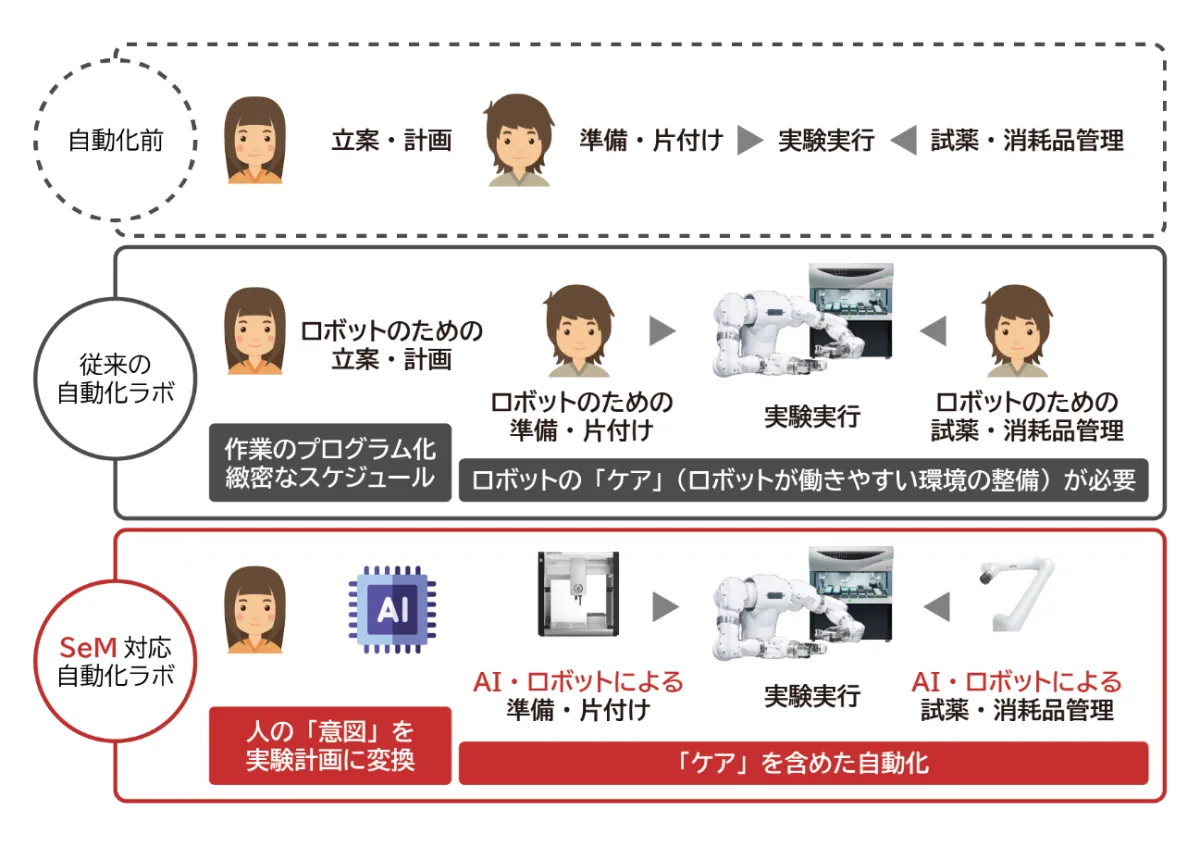
Recent years have witnessed remarkable progress in laboratory automation, primarily driven by advancements in robotic technology. Instruments such as automatic pipetting machines and robotic arms have started to perform experimental operations autonomously. Meanwhile, artificial intelligence (AI) has enabled large-scale experiments and data analyses that were previously impossible. However, a critical glaring gap remains: the care tasks, which include creating experimental protocols and managing supplies, are still heavily reliant on human researchers.
These care tasks often limit the full potential of automation, as human intervention is required for monitoring equipment and responding to unexpected errors. This reliance becomes a bottleneck, particularly in complex experiments involving multiple samples. Conventional automation approaches that adapt through additional mechanisms often lead to suboptimal systems that require frequent modifications for each experiment. Therefore, designing an automated lab capable of self-maintenance has become essential.
Introducing Self-maintainability (SeM)
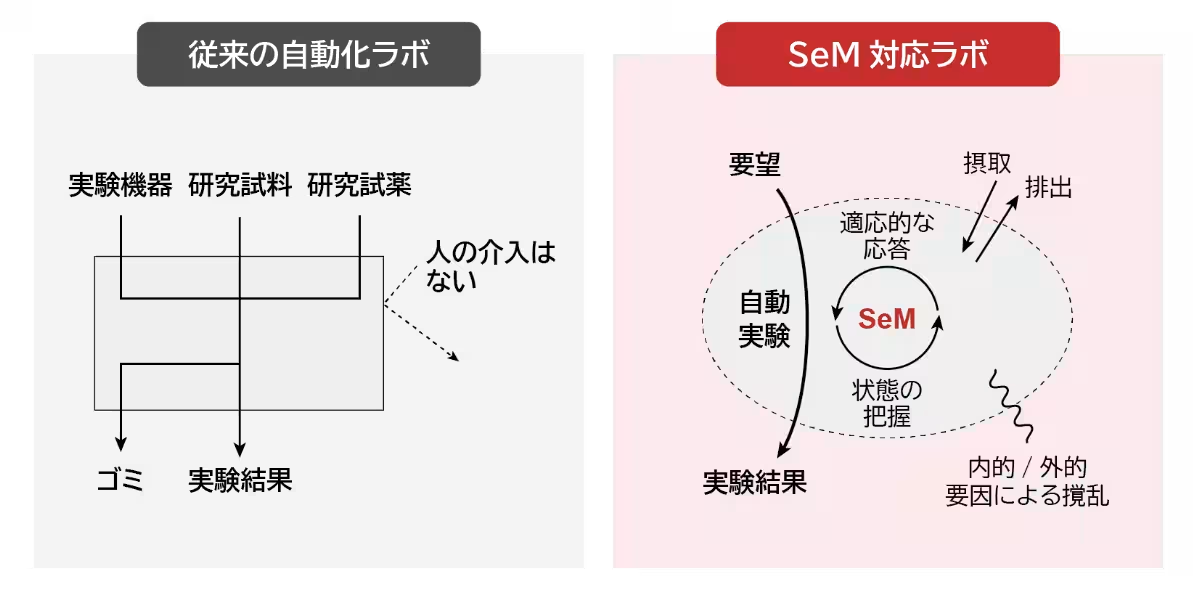
The concept of SeM emerged from discussions on what an ideal automated lab should encompass in this AI-driven era. SeM refers to a laboratory’s capability to continuously maintain its operational state amidst various challenges, including resource consumption and equipment degradation. Inspired by the homeostatic mechanisms of biological cells, the SeM-enabled laboratory seeks to autonomously address care requirements, significantly transforming the automation landscape.
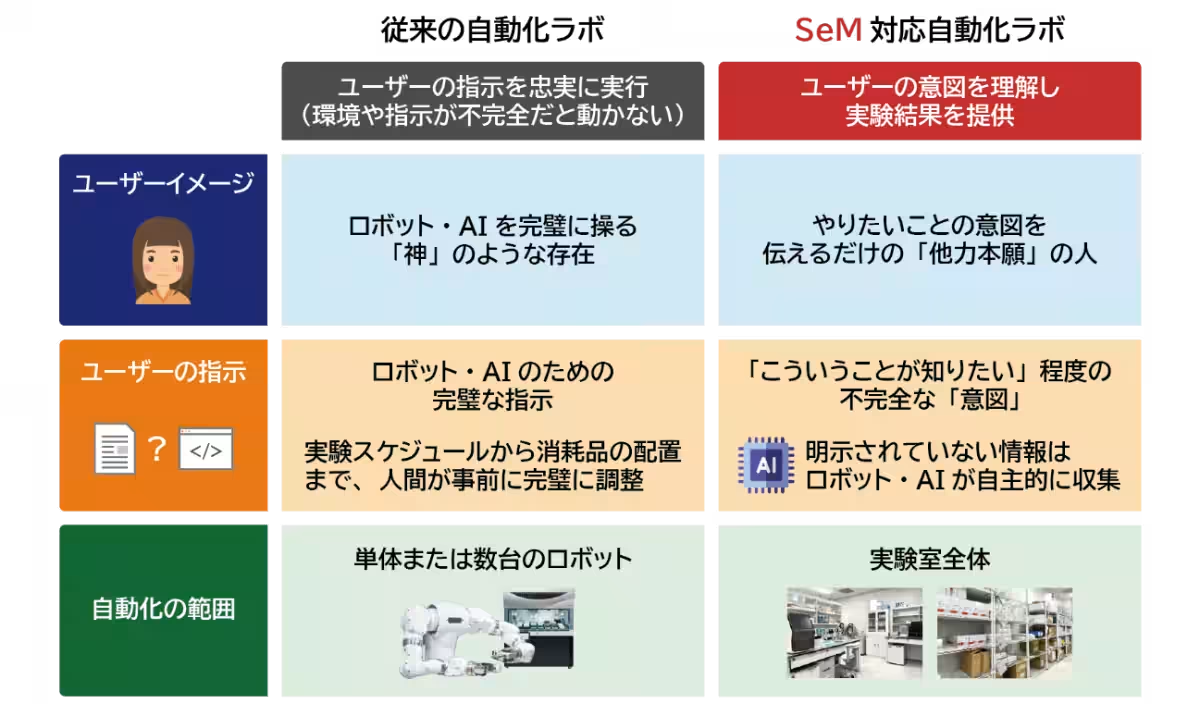
This shift changes the user's role from being a meticulous planner and supervisor to a collaborator who imparts intentions for the lab to realize autonomously. The lab is built to gather necessary information independently, thereby eliminating the need for humans to provide exhaustive detail about every experiment.
Design Requirements for SeM-enabled Labs
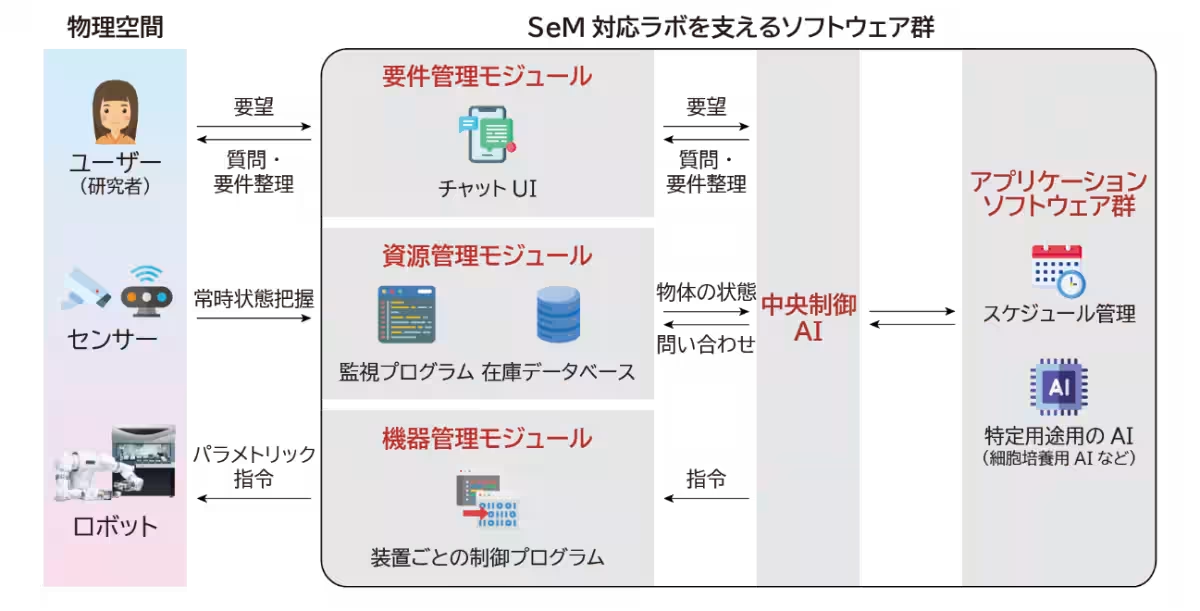
To effectively implement SeM, four essential requirements were identified:
1. Proactive Requirement Gathering: The system actively inquires about user needs that may be difficult to articulate.
2. Continuous State Monitoring: The lab consistently measures and estimates its condition against expected disturbances.
3. Flexible Parametric Control of Robots: AI enables real-time command generation based on situational context instead of merely executing pre-programmed actions.
4. Dynamic Experiment Request Handling: The lab remains receptive to new experimental demands even during ongoing operations.
These features ensure that the SeM-enabled lab can manage itself efficiently, allowing users to focus on sophisticated tasks without concerns about the manual management of supplies or errors.
Examples in Action
In practical scenarios, when a user sets an instruction such as, "Add 2 mL of medium to each well of this plate," the central control AI autonomously plans and executes all necessary actions. It coordinates with the resource management module to check the availability of supplies, assigns tasks to the robotic system for moving necessary equipment, and executes the dispensing without further user involvement. The framework allows for real-time modifications based on user input, thereby showcasing the adaptive nature of the SeM laboratory.
Advantages of SeM-enabled Labs
The implementation of SeM within laboratories is anticipated to yield numerous advantages, including:
- - Reduction in Labor Burden: By automating care tasks, researchers can devote their time to higher-level thinking and problem-solving, enhancing productivity.
- - Increased Flexibility: With an adaptable system, labs can quickly respond to disruptions or changes in the experimental plan, ensuring continuity.
Future Expectations
This pioneering work introduces SeM as a foundation for broadening the scope of automated scientific research beyond the bounds of computer simulations. The vision is to liberate researchers from tedious managerial duties and foster environments where innovation can flourish. Furthermore, the realization of SeM-enabled laboratories is expected to accelerate discovery cycles in drug development, enhance the stability of stem cell cultures, and streamline testing processes for food and materials science.
As we look ahead, the transformation of laboratories into self-sufficient, automated environments not only signifies a leap in research capabilities but also aligns with longer-term goals of sustainability and efficiency in scientific inquiry.
Conclusion
The collaborative efforts of the research team represent a significant stride towards a future where labs autonomously maintain themselves, thus maximizing efficiency and creativity in scientific research. Ultimately, the overarching ambition remains to create a system that can continue conducting experiments in the absence of human supervision, thereby opening newer horizons in technology and research. The ultimate convergence of AI and robotics in laboratories will undoubtedly reshape the landscape of science, enabling discoveries that were once confined to the realm of imagination.
References
- - RIKEN. "Automating care by self-maintainability for full laboratory automation." Digital Discovery, 2023.
- - Ochiai, K. et al. DOI: 10.1039/D5DD00151J.
For further inquiries, please contact the communications department at RIKEN.
Topics Consumer Technology)
【About Using Articles】
You can freely use the title and article content by linking to the page where the article is posted.
※ Images cannot be used.
【About Links】
Links are free to use.