



XAG's R-Series Rover Revolutionizes Automated Special Crop Farming
The New Frontier of Agricultural Automation
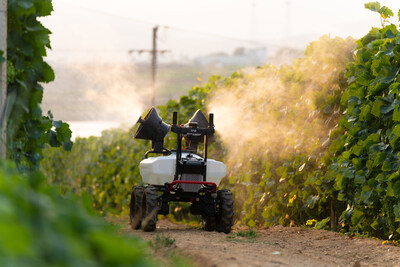
In the face of increasing labor shortages and rising operational demands within agriculture, XAG has unveiled its latest innovation: the R-Series Agricultural Rover. This fully electric ground robot is tailored for special crop environments such as orchards, vineyards, and greenhouses, where traditional equipment often fails to deliver. With the global agricultural landscape evolving, automation is a key driver enhancing productivity and operational efficiencies.
Addressing Labor Challenges
The USDA Economic Research Service has identified that labor accounts for approximately 38% of production costs in specialized crop operations. The reliance on manual labor not only strains resources but also hampers efficiency. The introduction of the R-Series comes as a timely solution to this pressing problem; it offers farmers advanced technology that reduces both labor demands and operational costs while boosting productivity.
Innovative Design and Features
The R-Series consists of two distinct models designed for varying agricultural requirements. The XAG R100 Agricultural Rover is ideally suited for densely planted crops, featuring a compact frame, a 120-liter tank, and all-wheel drive. Its dual JetSprayers can operate at a rate of eight liters per minute, allowing continuous operation under full load for approximately 30 minutes on a single charge. On the other hand, the R200 Agricultural Rover boasts a larger 240-liter tank, six-wheel drive, and enhanced spraying capacity for broader spaces typically found in orchards and vineyards.
Both models employ XAG's innovative centrifugal JetSprayer technology, which produces fine droplets ranging from 60 to 200 micrometers. This design not only ensures uniform coverage but also minimizes drift and reduces overall chemical use. With a horizontal spraying range of up to seven meters, the Rovers are designed for maximum efficiency between plant rows, significantly cutting down on operational time and resource use.
Superior Engineering
Constructed on a robust aluminum chassis with a suspended portal axle, the Rovers provide excellent traction and balance on uneven terrain. Their compact designs, measuring 80 centimeters in width, facilitate seamless navigation through dense rows while minimizing soil compaction and safeguarding delicate plants. The R100 weighs 80 kg, while the R200 tips the scales at 130 kg, both models engineered for stability with a maximum climbing capability of 20%.
Advanced Control Systems
Equipped with intelligent remote control (SRC 5), farmers can operate the Rovers from a safe distance. The interface highlights a user-friendly touch screen combined with joystick precision for real-time monitoring. This advanced technology lets operators maintain full control over field operations while ensuring their safety away from potential hazards.
The heart of the R-Series lies in its sophisticated control system supporting full automation for agricultural tasks. Featuring modes such as Cruise, Path Tracking, and Replay, the system integrates a high-resolution mapping function, RealTerra, which captures detailed aerial images of fields during the initial manual run. This capacity for centimeter-accuracy route planning allows for precise autonomous operation, underlining the implementation of cutting-edge agricultural technology.
Furthermore, the onboard AI safety assistant plays a crucial role, continuously monitoring surroundings to detect obstacles and nearby individuals, thus adjusting the Rover’s movements accordingly to ensure safety during operation.
Enhancing Agricultural Practices
For farmers grappling with labor shortages and increasing workloads, the R-Series transforms repetitive agricultural tasks into efficient automated processes. The versatile platform is customizable for applications beyond spraying, including weed control and transportation, making it a reliable Smart Farm co-pilot essential for managing high-value crops. As the demand for fresh, nutritious food continues to grow, innovations like the XAG R-Series are vital in shaping the future of farming, fostering not only efficiency but also sustainability in agricultural practices.
Topics Consumer Technology)
【About Using Articles】
You can freely use the title and article content by linking to the page where the article is posted.
※ Images cannot be used.
【About Links】
Links are free to use.