



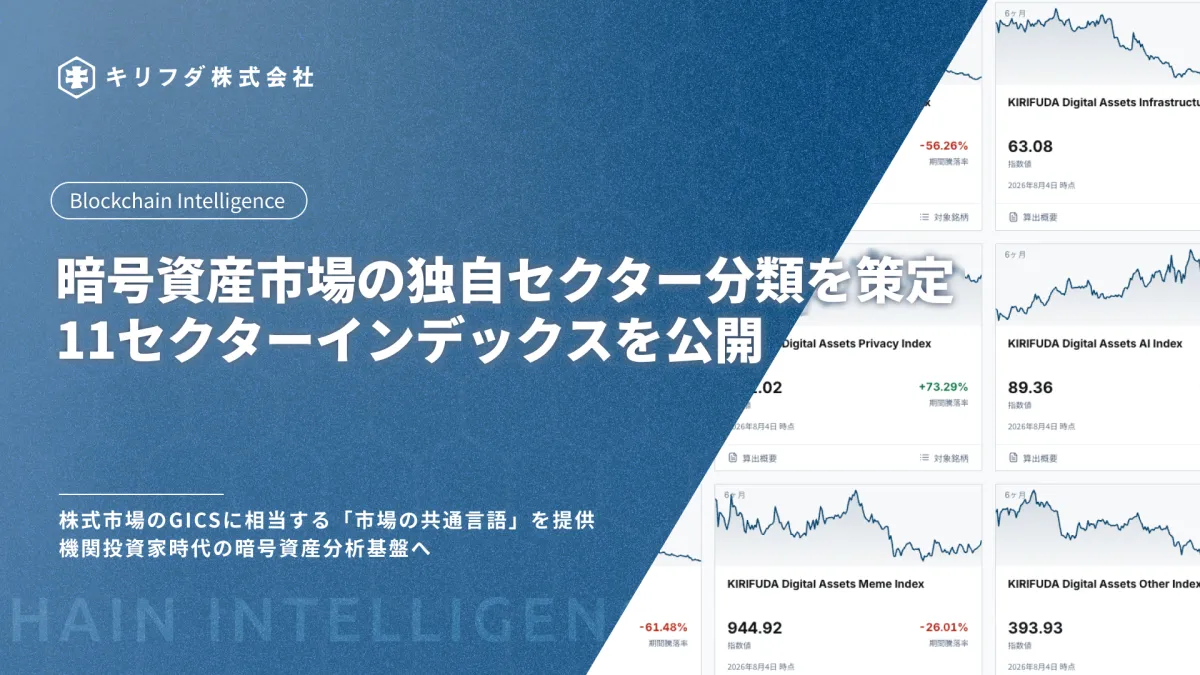
KIRIFUDA Introduces Unique Sector Classification for Digital Assets Market
KIRIFUDA Unveils New Sector Classification in Digital Assets Market
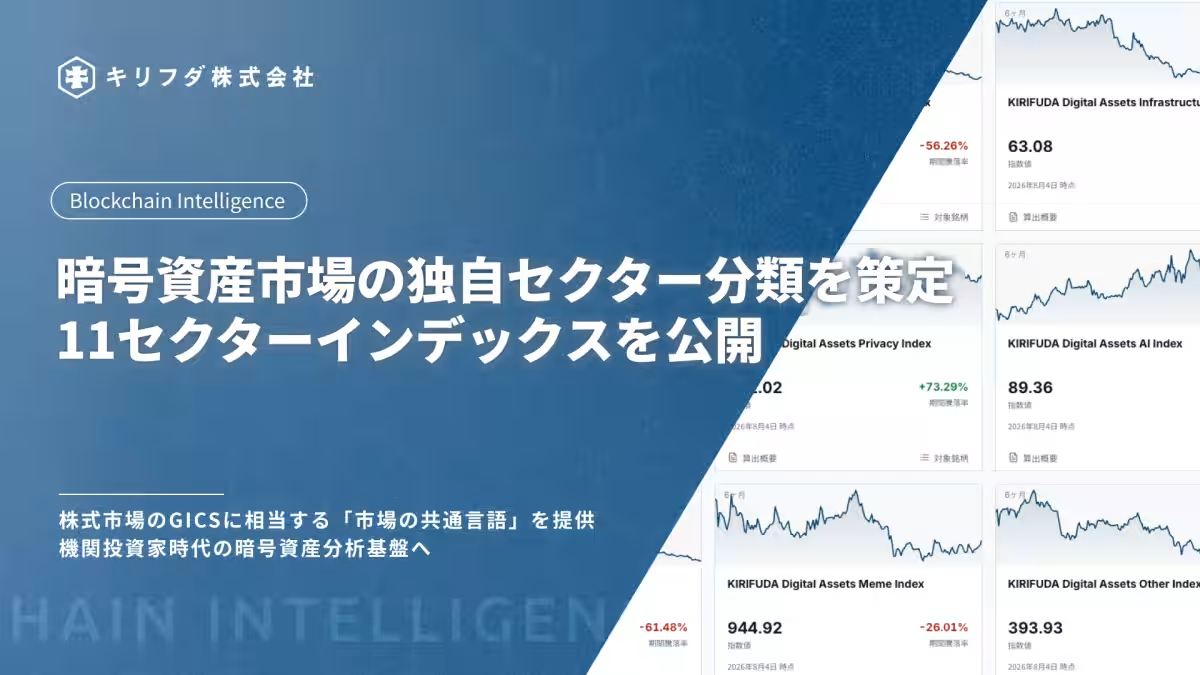
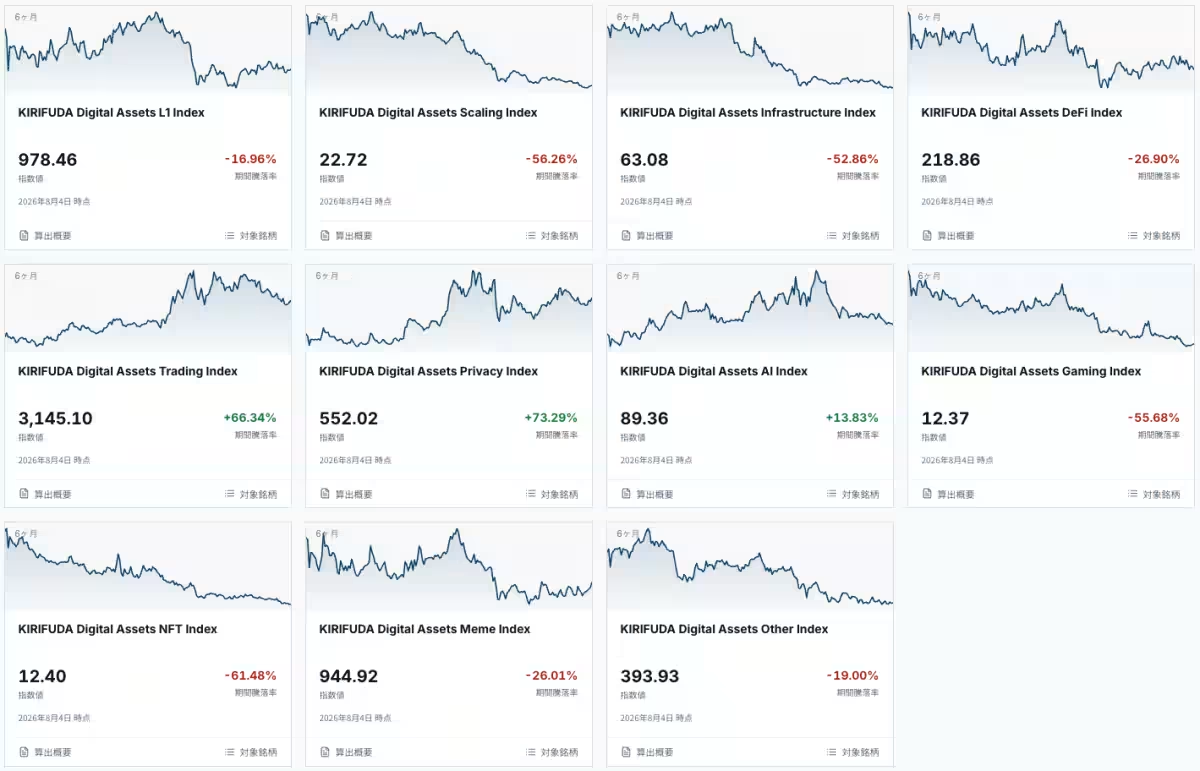
KIRIFUDA, a prominent player based in Chuo, Tokyo, has made a significant leap in the digital assets landscape by introducing the "KIRIFUDA Digital Assets Sector Classification." This innovative framework includes 11 sector indices and the KIRIFUDA Digital Assets Index Series, which serves as a benchmark to illustrate the overall market fluctuations.
This comprehensive classification system can be explored further on KIRIFUDA's official website, where users can find detailed insights into the structure, performance, and methodologies behind each sector.
Understanding the Need for Sector Indices in the Crypto Market
In traditional stock markets, sector classifications such as the GICS have offered investors a common language to understand market environments, thematic investments, and manage portfolio risks. In contrast, the cryptocurrency market has predominantly relied on broad categories like BTC, ETH, and various altcoins. Thousands of cryptocurrencies are often lumped together under the single term "altcoin."
However, as the market continues to expand, clear distinctions are emerging. New sectors such as Layer 1, DeFi, AI, and Gaming possess unique growth drivers and risk characteristics, underscoring the need for a more detailed analysis framework. As the crypto market evolves, discussions surrounding regulatory changes, including the anticipated transition in 2028 and debates over the approval of crypto ETFs, signal a growing demand for institutional investors to gain insights at the sector level.
KIRIFUDA’s research indicated that distinct price movements exist within different sectors of the cryptocurrency market. The creation of these sector indices is a direct response to the demands for precise classification and transparent analysis within this increasingly complex ecosystem.
The Sector Classification System
KIRIFUDA has established a classification criterion that encompasses 188 cryptocurrencies listed on major trading markets. Based on each project's fundamental aspects, including functionality and revenue sources, the market has been divided into 11 sectors:
1. Layer 1 (L1): The foundational layer for blockchains, including EVM-compatible and non-EVM ecosystems, with a total of 38 constituents.
2. Scalability: Focused on enhancing L1 capabilities via L2 solutions, interoperability, and modular chain functionalities, housing 23 cryptocurrencies.
3. DeFi: A suite of protocols that reconstruct financial functions on-chain, involving lending, decentralized exchanges (DEX), stablecoins, among others, totaling 26 assets.
4. Trading: Derivative trading platforms that specialize in perpetual contracts, with 9 key players.
5. Infrastructure: Stocks responsible for underpinning on-chain functionality, including Oracles and DePIN, totaling 19.
6. AI: A range of cryptocurrencies related to artificial intelligence protocols and agents, comprising 9 projects.
7. Gaming: This encompasses blockchain gaming and related infrastructures, with 15 distinct entities.
8. NFT: Focused on NFT marketplaces and their associated ecosystems, involving 8 tokens.
9. Meme Coins: Community-driven meme cryptocurrencies classified under various themes, with a total of 30.
10. Privacy: Cryptocurrencies aimed at enhancing transaction confidentiality, containing 6 items.
11. Other: A category for assets that do not fit into the other classifications, including legacy projects and commodity-linked tokens, with 5 entities.
Launch of Sector Indices
Alongside the classification, KIRIFUDA has launched indices for each sector, calculated from the constituent assets, ensuring transparency and accessibility. Each index is designed with clear weighting methods, rebalancing rules, and entrance criteria, documented to uphold the integrity of the analysis.
Broader Implications and Future Directions
The KIRIFUDA Digital Assets Sector Index will function as a reference point for assessing overall market movements, providing a framework to measure the relative strength and weaknesses among sectors. This classification and indexing will play a crucial role in various applications such as thematic investment tracking, risk management by visualizing sector exposure, and contributing to market research and analysis.
Looking ahead, KIRIFUDA plans to regularly review its sector classifications and could expand its offerings with market analysis reports. Collaborative research initiatives with financial institutions and asset management firms are also envisioned, facilitating product design support. With the Japanese Financial Services Agency's (FSA) ongoing developments to enhance the framework surrounding the cryptocurrency market, KIRIFUDA’s efforts align with the broader goal of improving market infrastructure and supporting participation from institutional investors.
In conclusion, the launch of the KIRIFUDA Digital Assets Sector Classification marks a pivotal moment in the burgeoning world of digital assets, providing both clarity and opportunity for stakeholders in a rapidly evolving landscape.


Topics Consumer Technology)
【About Using Articles】
You can freely use the title and article content by linking to the page where the article is posted.
※ Images cannot be used.
【About Links】
Links are free to use.