



Huawei Digital Power's Energy Storage System Passes Rigorous Fire Safety Test
Huawei Digital Power's CI GFM ESS Achieves Safety Milestone
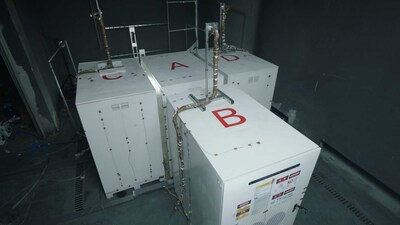
Huawei Digital Power has reached a significant milestone as its Commercial and Industrial Hybrid Cooling Grid Forming Energy Storage System (C&I GFM ESS) successfully passed an extreme ignition test, supervised by TÜV Rheinland. This achievement marks the first fire safety evaluation of an Energy Storage System (ESS) according to the latest UL 9540A:2025 standards, setting a new benchmark in industry safety.
Understanding the Extreme Ignition Test
The rigorous test was meticulously designed to create the most demanding verification environment in the industry. It focused on assessing the safety performance of energy storage systems under extreme ignition scenarios. Specifically, the test involved implementing an overcharge method at the pack level that triggered simultaneous thermal runaway in sixty individual battery cells. This multifaceted approach significantly increased the complexity of the evaluation compared to tests involving only one or a few cells.
Furthermore, several stringent conditions were applied during the test:
- - Optimized Oxygen Availability: The ignition testing followed the specified open-door ignition test method as per UL 9540A:2025.
- - Complete Charging: All battery packs were fully charged to 100% State of Charge (SOC).
- - Safety Systems Off: All proactive and passive fire suppression systems were disabled during the testing, compelling the ESS to rely solely on its inherent design to withstand potential combustion under full energy conditions.
Remarkable Safety Features
Under the intense testing conditions, Huawei's C&I GFM ESS exhibited outstanding safety capabilities, greatly supported by its five-level innovative protective design:
1. Thermal Insulation Between Cells: This feature effectively slows thermal propagation between cells, providing an initial defense for system safety.
2. Fully Metal Pack Enclosure: This durable casing withstands temperatures exceeding 1500°C, maintaining structural integrity even in extreme fire conditions.
3. Oxygen Blocking Under Positive Pressure: This design diverts flammable gases, significantly reducing the overall impact of fire events.
4. Flame-Resistant Labyrinth Design: All sealing surfaces of the ESS use a labyrinth structure to prevent flame spread effectively.
5. Enhanced Fire Resistance of the Container: The container is armored to provide robust fire protection.
Data-Driven Evidence of Performance
Key performance indicators further validate the exceptional safety and reliability of Huawei's C&I GFM ESS. During the extreme testing, when the fire reached a temperature of 961 °C, the highest cell temperature of an adjacent ESS was only 45.3 °C, well below the threshold required for the activation of the explosive-proof valve. The system fully complied with the UL 9540A:2025 standards, with no fire spread between units recorded. The peak heat release was measured at 3 MW, and the total combustion lasted less than three hours before self-extinguishing. Furthermore, under open-door combustion conditions, the system effectively managed the heat release, demonstrating its superior thermal management capabilities.
The Future of Energy Storage Safety
With this successful test, Huawei Digital Power reinforces its commitment to innovation and safety in energy storage technologies. As energy storage systems become increasingly integral to our power grid solutions, achieving robust safety standards will be paramount. Huawei’s advancements not only provide assurance but also inspire confidence in the future of energy storage technology. As the need for efficient, safe, and reliable energy systems grows, Huawei's C&I GFM ESS sets a high standard for the industry moving forward.
Topics Energy)
【About Using Articles】
You can freely use the title and article content by linking to the page where the article is posted.
※ Images cannot be used.
【About Links】
Links are free to use.