



High School Graduate Recruitment Trends for 2027: Companies' Optimistic Hiring Outlook Amidst AI Advancements
2027 High School Graduate Recruitment Trends
As industries evolve in the wake of automation and AI, the hiring landscape for high school graduates continues to show promising signs. A recent survey by Jinjib, a recruitment support company based in Osaka, Japan, indicates that a strong majority of employers are either maintaining or expanding their hiring intentions for 2027 graduates. This article breaks down the findings, what they mean for high school students entering the job market, and how companies are adapting their hiring strategies in this age of technology.
Key Findings from the Survey
1. Strong Recruitment Intentions
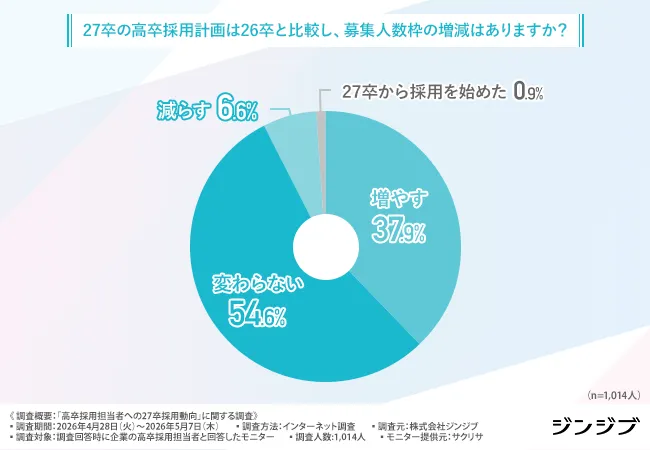
A staggering 92.5% of surveyed companies indicated that they plan to maintain or expand their recruitment numbers for high school graduates. This reflects a critical need for young talent as many industries grapple with labor shortages. Despite the fear that AI could replace human jobs, a significant portion of employers believe that the demand for human workers in frontline roles will persist.
2. Salary Trends
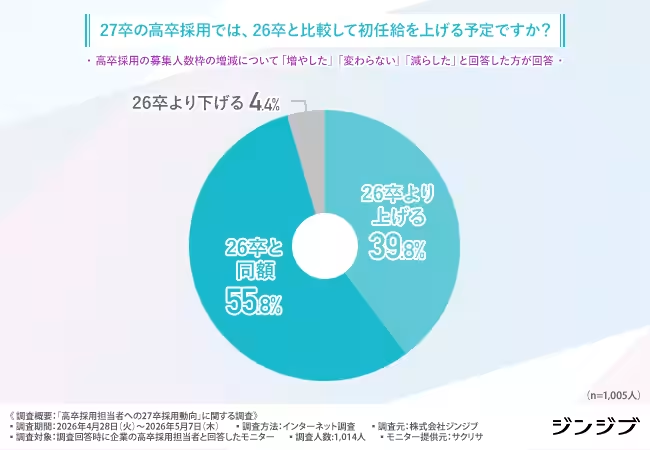
Interestingly, while about 39.8% of respondents plan to increase starting salaries compared to the previous grad cohort, this marks a decline from 72.1% in 2026. However, among companies increasing their recruitment numbers, 65.9% are willing to offer higher starting salaries. This suggests a strong correlation between hiring intentions and salary increases, particularly in industries facing acute labor shortages.
3. Resilience Against Automation
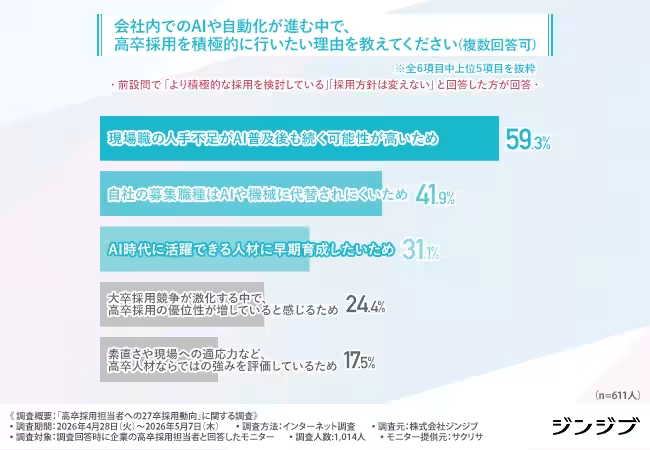
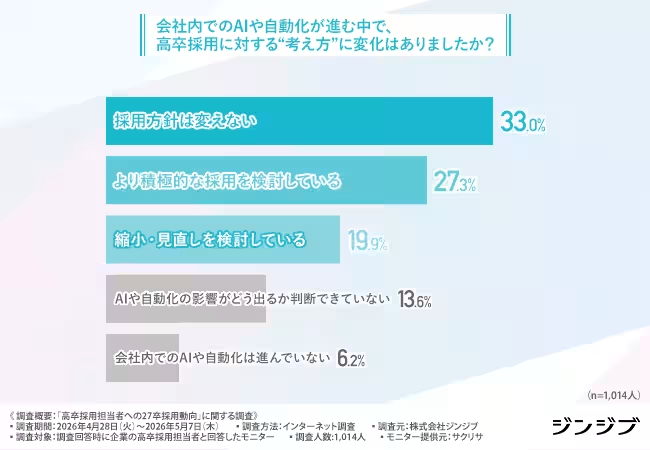
Amidst fears that AI will replace jobs, approximately 60.3% of employers have stated they will keep their hiring policies unchanged or become more proactive in their recruitment. The prevailing rationale is that frontline roles will continue to require human oversight, despite increasing automation in various sectors.
The Context of High School Graduate Employment
With a job-to-applicant ratio of 4.12 for the 2026 graduates, the necessity for high school graduate recruitment remains robust. However, students face a unique challenge with limited time to properly research potential employers, often leading to misalignments post-hire. In fact, around 60% of high school graduates in a follow-up survey revealed they wished they had done more information gathering before their job search.
Adjustments for 2027
The 2027 recruitment cycle will see important changes. The posting of job listings will begin on July 1, with applications opening September 5, adhering to traditional schedules. These measures are intended to ensure adequate time for students to familiarize themselves with potential employers before they apply.
What Employers Are Doing
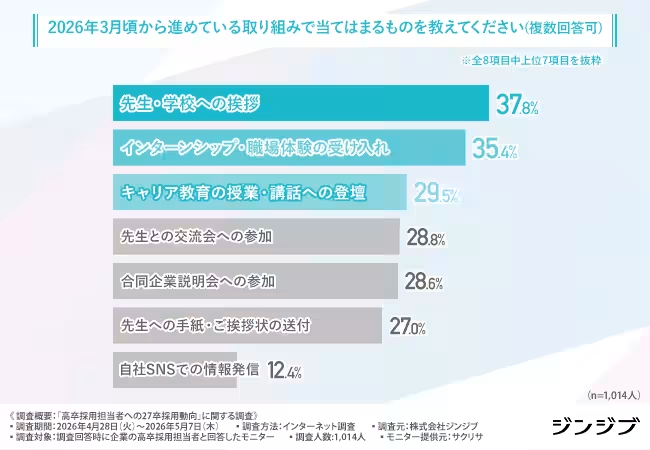
To effectively attract high school graduates, companies are initiating more profound outreach efforts. Survey results indicate that 37.8% of firms began engaging with schools long before the recruitment season, emphasizing the building of relationships with educators to facilitate smoother recruitment processes.
Activities and Strategies
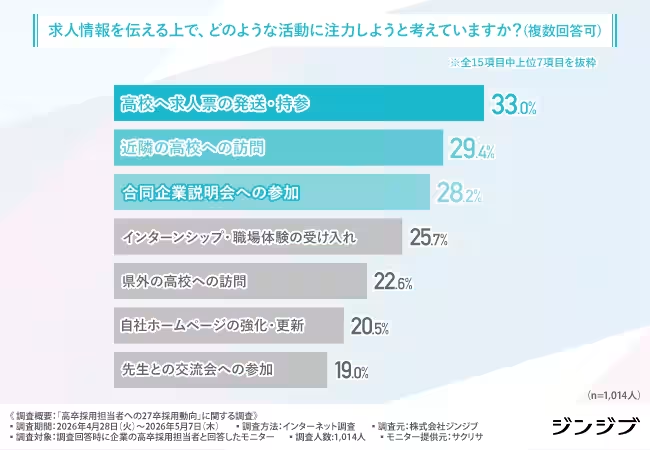
From telephone calls and emails to personal visits and participation in career education activities, businesses are proactively creating trust and visibility in local schools. Traditional methods like mailing job postings are being supplemented by modern approaches, including engaging in joint recruiting fairs and providing internship opportunities that allow students firsthand experience of the work environment.
The Shift Towards Information Transparency
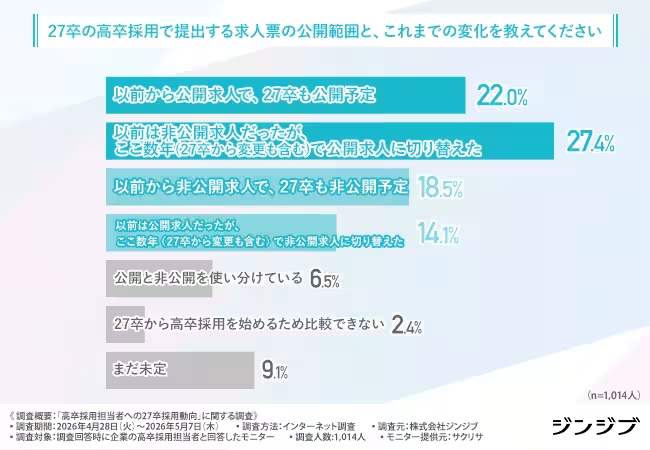
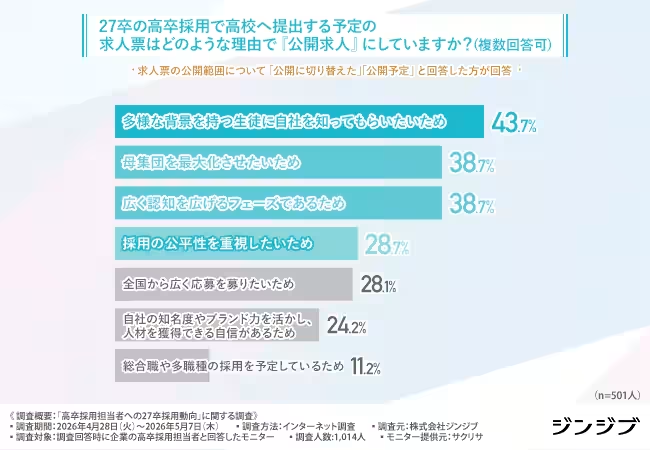
Interestingly, a nearly half of surveyed companies indicated a shift towards public job postings, moving from previously non-public listings. This shift aims to widen their reach and attract diverse candidates, while also navigating the competitive recruitment landscape by striving to enhance brand awareness among students.
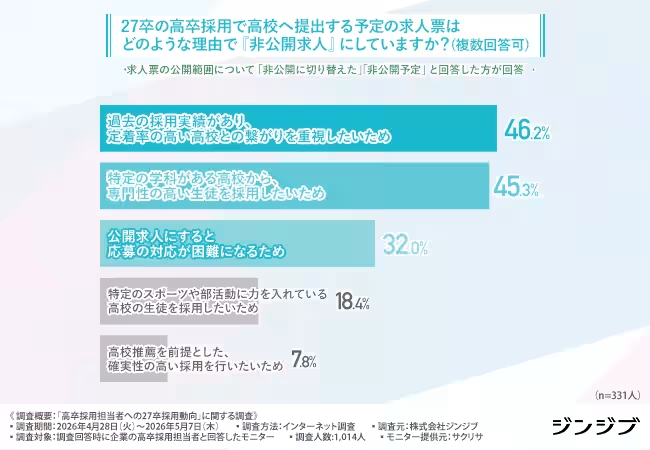
What about companies choosing to maintain non-public job listings? The predominant reasons include leveraging established relationships with specific high schools and targeting students who possess niche skills or backgrounds.
The Role of AI in Future Hiring
As the conversation around AI’s influence in the workplace continues, the survey demonstrated that firms in labor-intensive industries, such as construction and manufacturing, see AI and automation as non-threatening to their hiring needs. Instead, they view AI as a tool to support their existing workforce, maintaining strong graduate recruitment efforts to remain competitive.
Concluding Thoughts
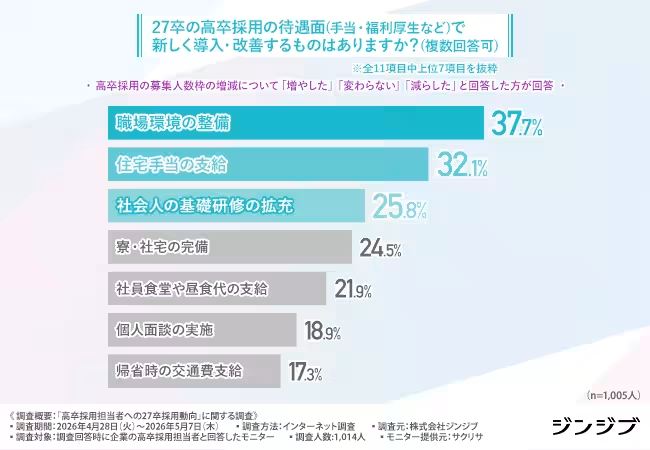
The 2027 high school graduate recruitment landscape reflects a unique dichotomy. While most companies maintain high recruitment intentions amidst technological advancements, the strategies they use are diversifying. Firms are shifting their focus from purely salary-driven incentives to comprehensive employment packages that include better working conditions, housing benefits, and training programs. As employers strive to create a more attractive proposition for young talent, high school students must engage in active research to avoid mismatches that could hinder their professional futures.
In summary, as businesses navigate the intersection of traditional hiring practices and the modern demands of the job market, it becomes clear that adaptability and strategic foresight will define successful recruitment in the coming years. Jinjib’s ongoing efforts aim to bridge the gap between high school students and potential employers, promoting a more informed and proactive approach to career choices among the youth.

Topics Business Technology)
【About Using Articles】
You can freely use the title and article content by linking to the page where the article is posted.
※ Images cannot be used.
【About Links】
Links are free to use.