



Barriers to Introducing Renewable Energy Equipment: Costs and Elusive Benefits
Understanding the Barriers to Renewable Energy Adoption
In the face of rising electricity costs and heightened awareness of climate change and natural disasters, the adoption of renewable energy sources has become a critical topic. A recent survey conducted by WeCapital Co., Ltd. aimed to assess the level of concern and interest among various demographic groups regarding renewable energy and the Sustainable Development Goals (SDGs).
Overview of the Survey
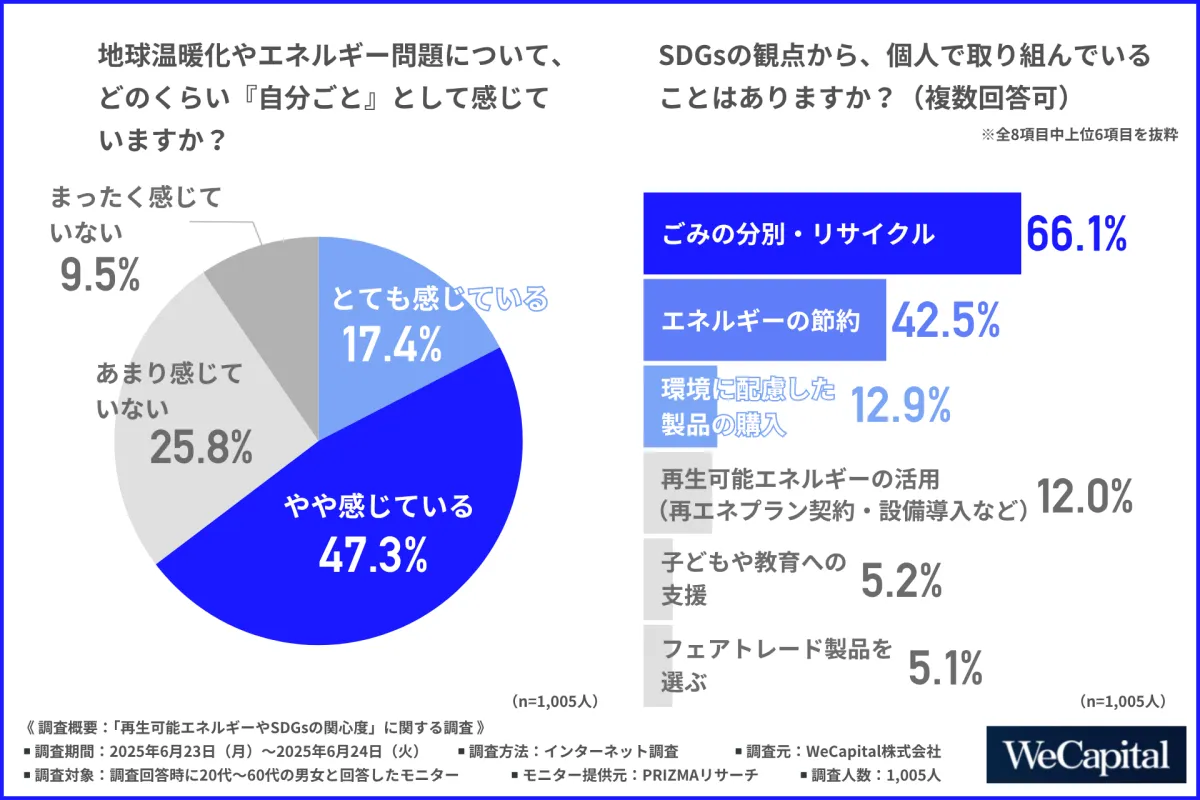
The survey gathered responses from 1,005 men and women aged between 20 and 60. It revealed that about 60% of participants feel a strong personal connection to issues of global warming and energy crisis. This level of awareness suggests that while there is significant recognition of these issues, there remain barriers preventing proactive steps towards adopting renewable energy solutions.
Insights from the Data
The survey results highlighted several key points:
- - High Awareness: Approximately 60% acknowledge climate change and energy issues as personally relevant.
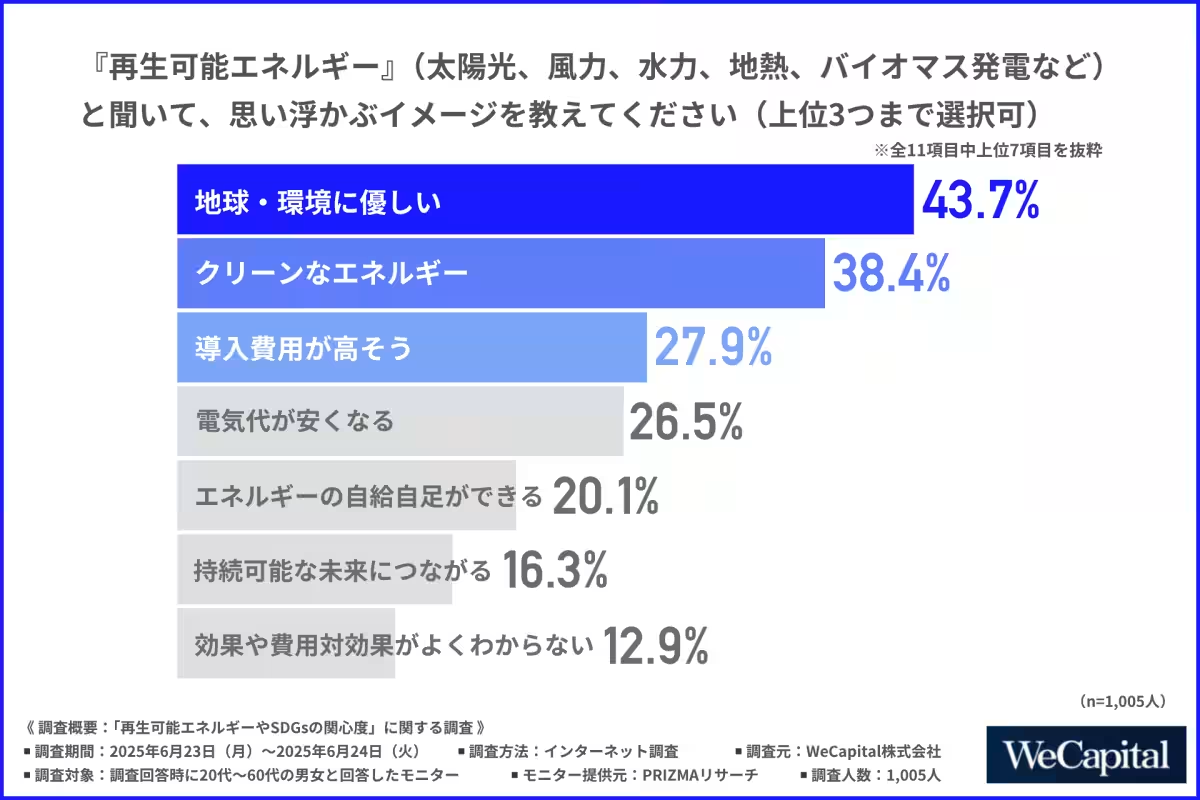
- - Mixed Perceptions of Renewable Energy: The top three perceptions associated with renewable energy were being environmentally friendly, clean energy, and concerns about high initial costs.
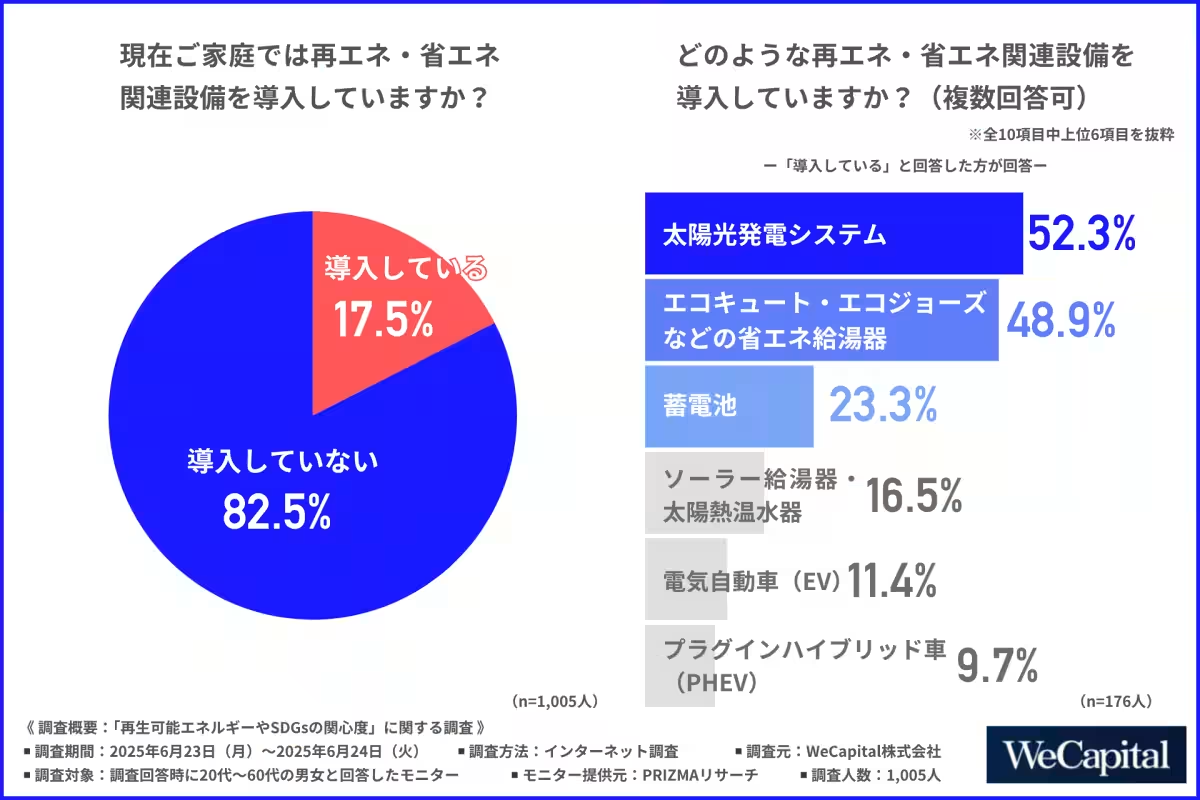
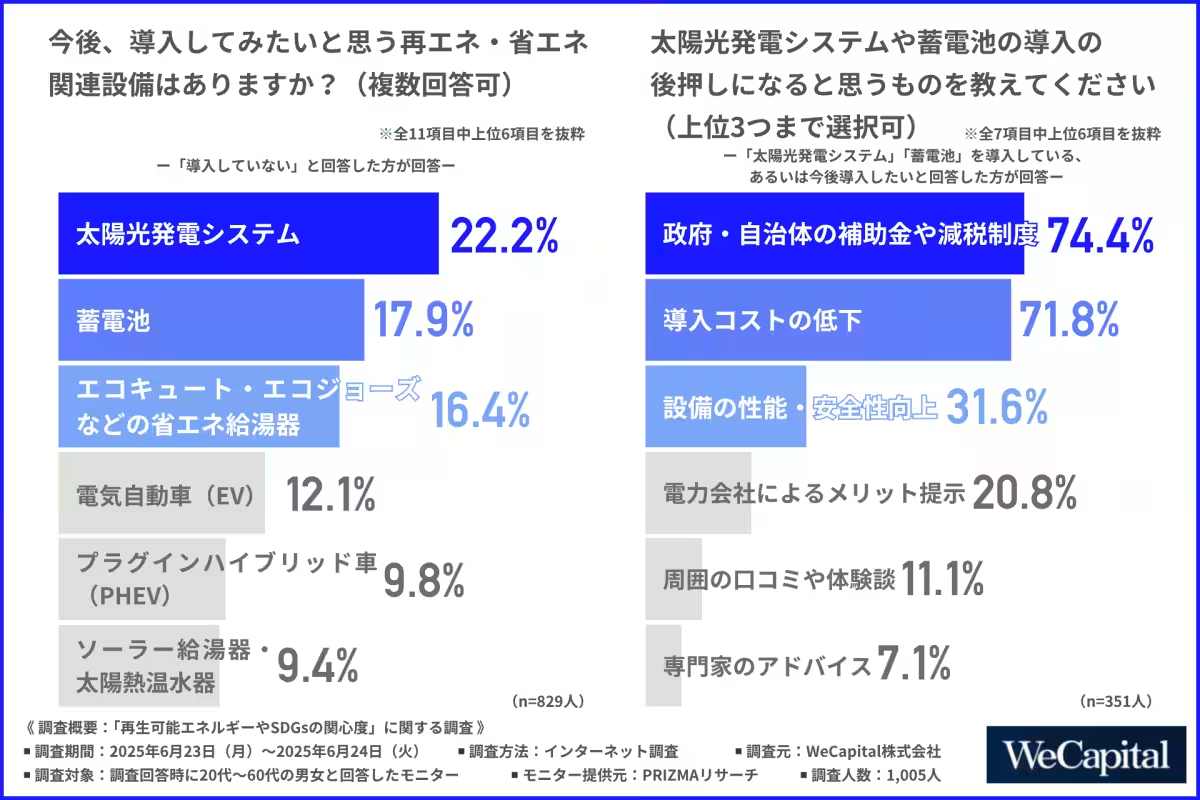
- - Limited Adoption: Only about 20% of households have successfully integrated renewable energy or energy-efficient technologies such as solar panels, eco-friendly hot water systems, and battery storage.
- - Future Aspirations: Among those not currently utilizing renewable technologies, interest remains, with a desire to adopt solar panels, battery storage, and energy-efficient hot water systems in the future.
Factors Influencing Adoption
When exploring the mindset of respondents towards implementing renewable energy solutions, several crucial drivers for potential adoption were identified. Among respondents eager to embrace solar technology or battery systems, the most influential factors included government or municipal subsidies and tax incentives, as well as the reduction of installation costs.
In summary, compelling economic returns and transparent, reliable information about performance and safety are paramount to motivating households to move forward with renewable energy systems. The perception of cost barriers remains strong, yet interest in renewable energy solutions is evident among the public.
Investment in Renewable Energy Projects
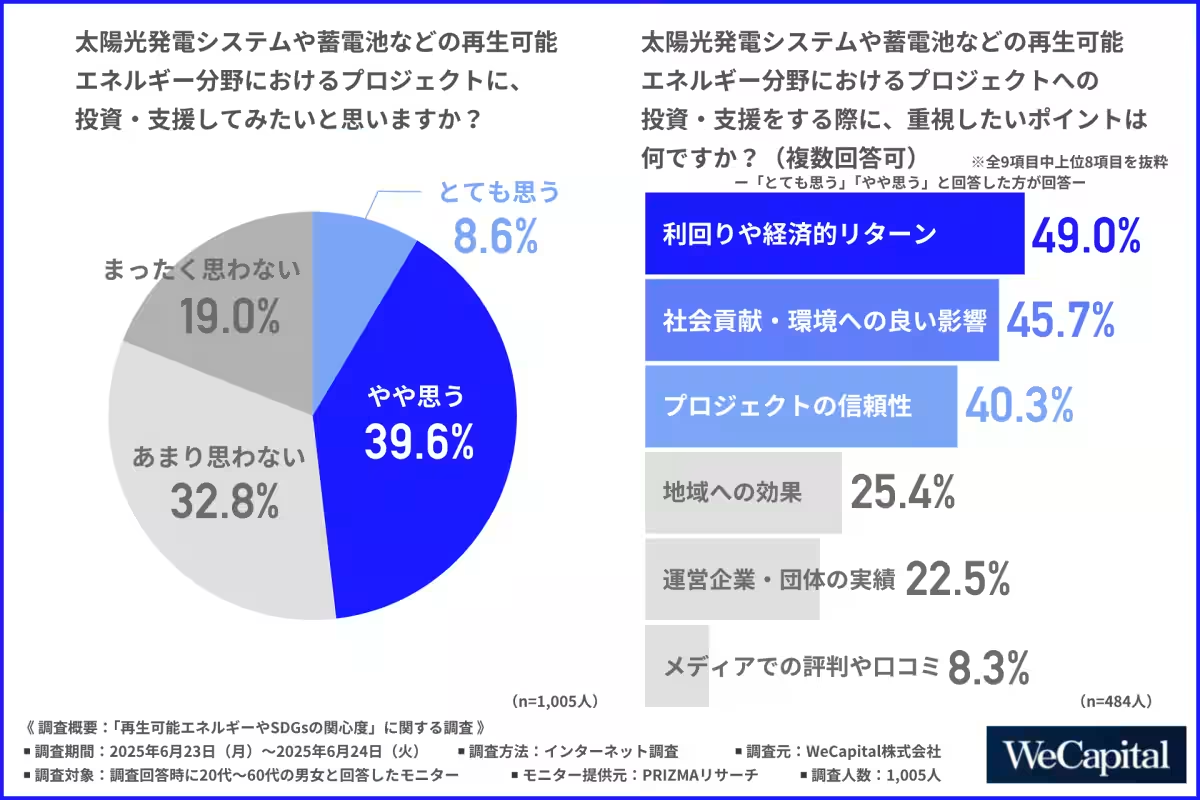
Beyond individual household adoption, the survey also explored participants’ willingness to invest in renewable energy projects. Approximately half of the respondents expressed a desire to invest in or support projects related to renewable energy systems like solar power and battery storage.
- - Investment Motivations: Primary motivators for potential investments include anticipated financial returns, societal benefits, and environmental impacts.
- - Investment Barriers: Those hesitant to engage tend to prioritize financial risks and potential returns, expressing a need for clear communication regarding project reliability and expected outcomes.
Conclusion
The findings of this survey illuminate a complex landscape of attitudes toward renewable energy. While awareness and recognition of the relevance of environmental issues are commendably high, the actual implementation of renewable energy solutions remains limited. Significant barriers such as cost and unclear benefits impede action. To bridge this gap, stakeholders in the renewable energy sector should focus on delivering more accessible solutions, informative communication, and robust incentive programs to encourage greater adoption. As more individuals view renewable energy investment not only as a personal responsibility but as a viable financial strategy, we may witness a shift toward more sustainable energy practices in society.
For comprehensive details regarding this survey, please visit the "Yamawake JOURNAL". More insights on public sentiment toward renewable energy and actionable pathways can be discovered there.
Topics Other)
【About Using Articles】
You can freely use the title and article content by linking to the page where the article is posted.
※ Images cannot be used.
【About Links】
Links are free to use.