



JAL, JAL Card, and Docomo to Enhance Local Vitality Through Innovative Statistical Experimentation
Enhancing Regional Vitality Through Partnership
In a pioneering effort set to launch on August 1, 2025, Japan Airlines (JAL), JAL Card, and NTT Docomo are collaborating to kick off a ground-breaking proof-of-concept experiment focusing on revitalizing local communities. Amidst a backdrop of declining population and aging demographics in many regions across Japan, this initiative seeks to foster engagement by creating a new demographic known as "relationship population". This concept goes beyond mere resident figures, aiming to quantify the variety of ways people interact with different locales.
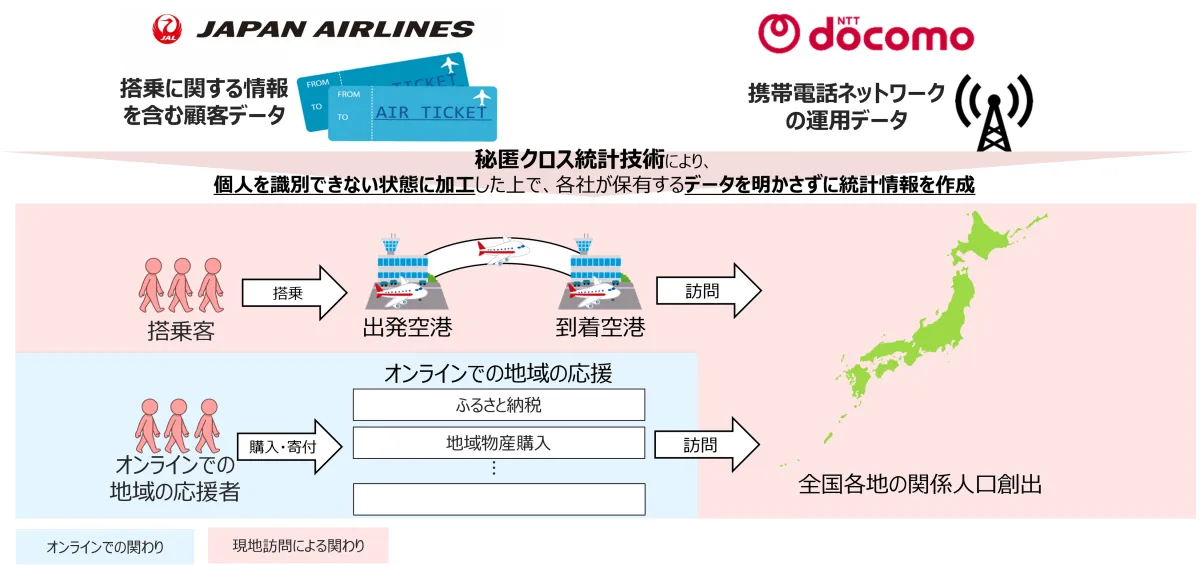
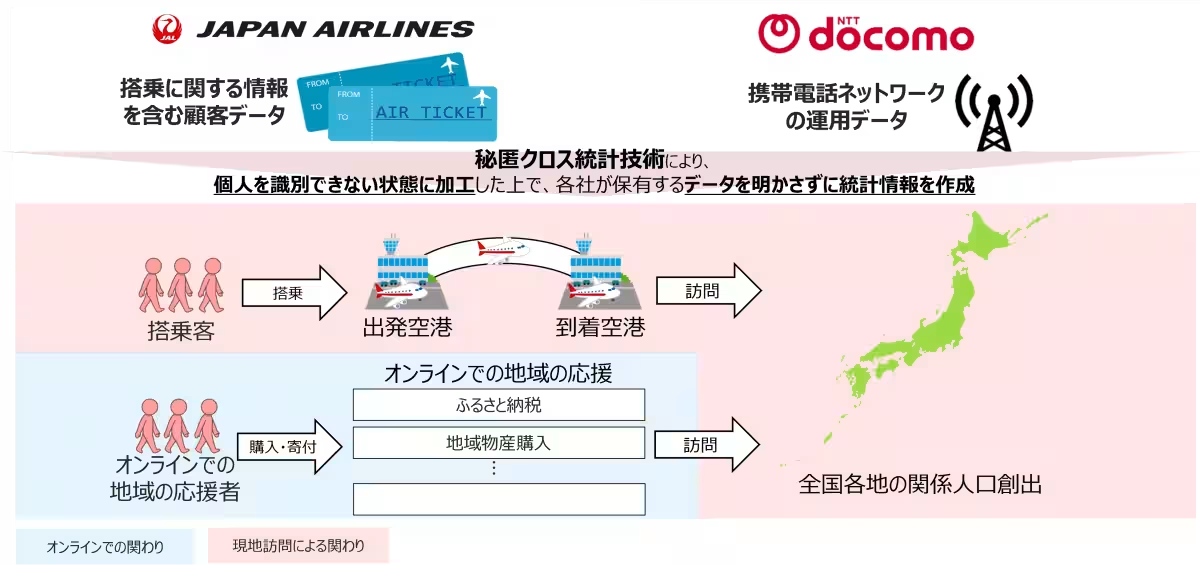
The upcoming experiment aims to uncover patterns in how travelers engage with various regions by harnessing customer data from JAL and network operation data from Docomo. Utilizing an innovative approach known as the “Confidential Cross-Statistical Technology,” developed with cooperation from NTT, the initiative will create safe demographic information without compromising individual privacy.
Understanding the Context
Japan's regions face significant challenges due to population decline and an increasingly aging society. Traditional approaches to local revitalization often focus solely on increasing resident populations. However, the concept of "relationship population"—individuals who engage with a locale through various means—has emerged as crucial for sustainable regional growth. The current inability to quantitatively assess these interactions poses a challenge.
Since 2022, JAL, JAL Card, and Docomo have been actively engaged in addressing this issue. A previous experiment conducted in 2023 successfully revealed statistical insights into visitor trends across regional airports in Hokkaido, focusing on travel patterns to the eastern areas. This forthcoming trial targets four domestic airports: New Chitose, Nanki-Shirahama, Takamatsu, and Fukuoka, aiming to analyze demographics of travelers using JAL flights to uncover insights that may contribute to enhancing the "relationship population".
Experimental Framework
Through the utilization of Docomo’s Confidential Cross-Statistical Technology, the teams aim to provide statistical insights into how travelers engage with the target regions. Additionally, by leveraging Docomo’s Mobile Spatial Statistics, they will enrich their understanding of all visitors—not just JAL customers—thereby gaining a comprehensive overview of regional engagement and movement tendencies.
Detailed Visitor Insights
One of the main objectives is to analyze the travel and stay areas of customers who arrive at specific regions via JAL flights. By examining data on their post-arrival movements, the experiment will statistically illuminate how these visitors repeatedly engage with the region over time. Such insights will be pivotal for crafting effective policies and initiatives aimed at enhancing local connectivity.
Correlation Between Local Donations and Actual Visits
Engagement with regions involves more than just physical visits; it extends to supporting local economies through purchasing local products or participating in hometown tax donation programs. The data from JAL’s Hometown Tax initiative will be analyzed alongside Docomo’s operational data to explore how these donations may lead to future visits. This investigation aims to generate actionable insights on promoting visitation effectively.
Innovating with Privacy in Mind
The demographic information regarding customer movements, generated through this initiative, will ensure safety through the use of the Confidential Cross-Statistical Technology. The methodology guarantees that individual identifiers are removed, allowing for the safe exchange of data among companies while keeping track of overall travel trends. The validity of this technology has been recognized in academia, receiving awards for its social value and safety standards.
Future Prospects
Through the insights gained from this experiment, JAL, JAL Card, and Docomo intend to establish avenues for fostering social and economic value through enhanced human and regional relationships. They are committed to furthering the safe data collaboration between industry sectors, paving the way for innovative approaches to connecting people and local communities.
The impactful results anticipated from this endeavor could very well set a precedent for future collaborations aimed at leveraging data for community benefit.

Topics Travel)
【About Using Articles】
You can freely use the title and article content by linking to the page where the article is posted.
※ Images cannot be used.
【About Links】
Links are free to use.