



The Evolution of SEM Game Server Engine: Embracing TiDB and AI for Enhanced Game Development Efficiency
The Evolution of SEM Game Server Engine
In an era where game development is becoming increasingly complex, Studio SEM, based in Sapporo, Japan, has unveiled the latest version of its backend solution for game developers—the SEM Game Server Engine Ver.3. This new release, which includes official support for the next-generation database TiDB and cutting-edge AI features, aims to streamline the efficiency of game development processes.
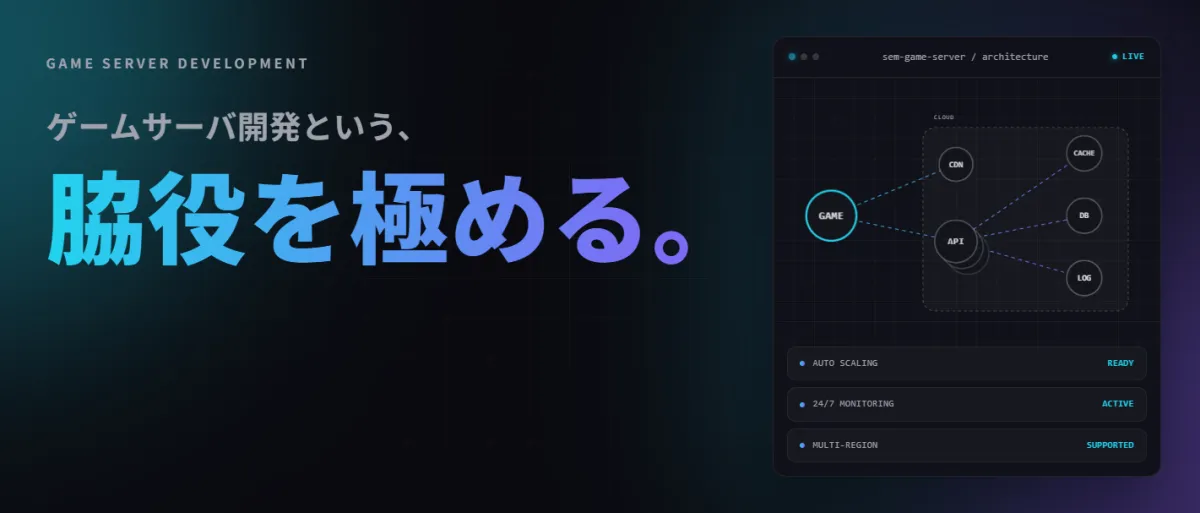
With the slogan "Mastering the Role of Supporting Game Development," SEM is dedicated to providing game creators with an environment that allows them to focus on crafting the core enjoyment of their games. The challenges faced in modern game development include the surge in data volume and traffic, leading to heightened infrastructure costs and increased pressure on development teams. Recognizing these hurdles, the latest version, Ver.3, significantly strengthens the database component, achieving excellent cost performance along with stable system construction. Furthermore, the introduction of AI-driven agent features aims to mitigate the overall burden on developers while ensuring reliable operation of large-scale titles at a lower cost.
Key Features and Updates in SEM Game Server Engine Ver.3
Main Update: Official Support for TiDB
To address infrastructural challenges in large-scale game development, the SEM Game Server Engine now officially supports TiDB, a high-performance distributed database known for its scalability and reliability. This integration allows game developers to leverage the impressive features of TiDB, enhancing their development and operational capacity.
- - Scalability to Handle Traffic Surges: TiDB enables horizontal scaling that maintains the user-friendliness of traditional RDBMS while accommodating unexpected spikes in traffic, ensuring stable performance during significant access increases following a game release.
- - Elimination of Data Partitioning Challenges: Developers often face complications with database partitioning when managing large-scale titles. TiDB resolves these issues, leading to significant reductions in infrastructure management costs and developer workload.
- - Flexibility in Database Choices: By offering TiDB alongside traditional RDBMS options like MySQL, developers can select and combine databases according to the specific scale, budget, and performance requirements of their games.
New Feature: Specification Management AI Agent - SEM-LoreAI
Taking a step beyond traditional server development support, the SEM Game Server Engine now incorporates an AI feature designed to facilitate communication across the entire game development process.
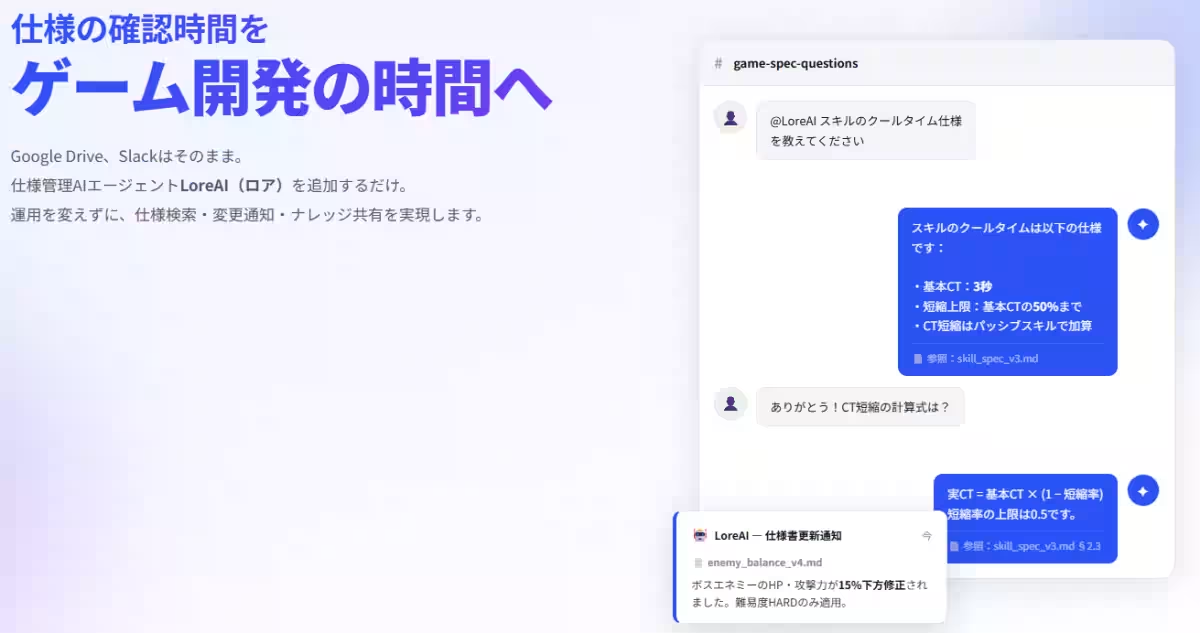
- - Automatic Notification of Changes: The AI detects updates to specification documents and notifies the team via Slack, summarizing the changes so everyone remains informed in real-time.
- - Consistency Checking for Changes: The AI verifies the consistency between added or modified specifications and existing ones, alerting the team to any discrepancies, thereby supporting cohesive planning across teams.
- - AI-Assisted Queries: Team members can ask the AI specification-related questions in natural language, allowing it to cross-reference relevant documents and provide comprehensive answers.
This AI agent significantly reduces information synchronization costs, offering tailored support to development teams.
Additional Updates
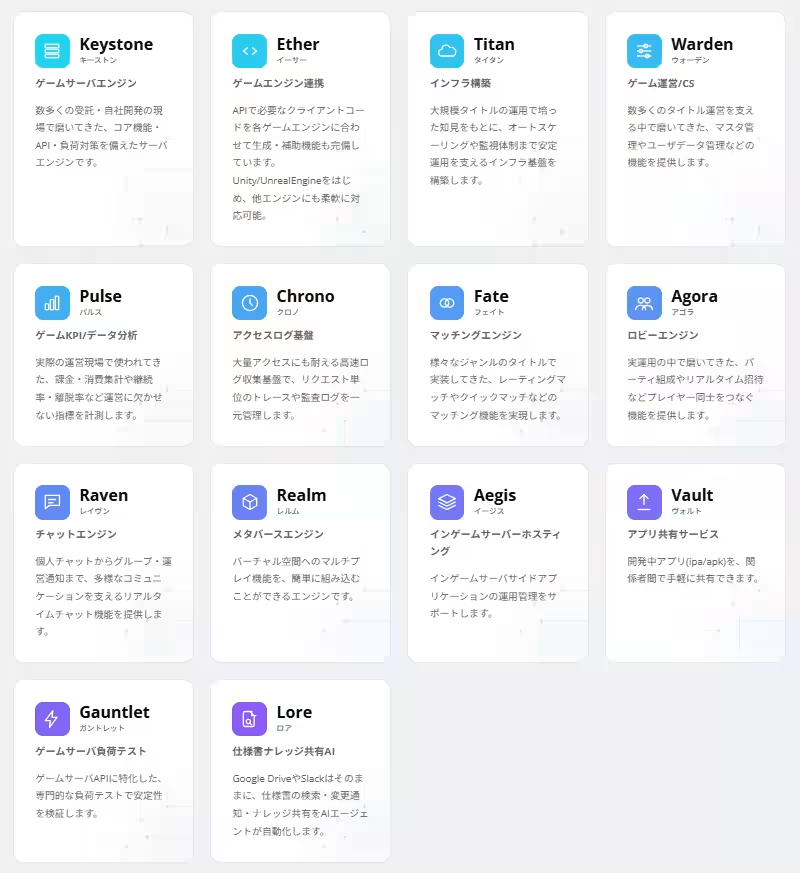
- - Enhanced Integration with Major Game Engines: The SEM Game Server has further improved its compatibility with popular game engines like Unity and Unreal Engine. With expanded SDKs and assets for backend communication, the collaboration between front-end and back-end is more robust than ever.
- - Streamlined Load Testing System: Recognizing that load testing can often be labor-intensive, the new version enhances its load testing system, facilitating faster and easier high-load validation processes.
About the SEM Game Server Engine
Beyond the new features and upgrades, the SEM Game Server Engine has a history of addressing various challenges and needs within the game development realm. From pre-release to post-launch stability, SEM is committed to supporting:
- - A Solid Foundation for Server Development: Drawing from extensive experiences in both contracted and in-house development, the engine offers core functions, APIs, and load management designed to minimize risks related to security and performance.
- - Stable Post-Release Operations: Leveraging knowledge from managing large-scale game operations, SEM builds robust infrastructure suited for high loads, ensuring stable operations following game launches.
- - Smooth Internal Testing and Validation: The platform allows for secure uploads of in-development game apps (.ipa / .apk / .exe files) that can be easily downloaded and installed through a web browser, aiding efficiency in internal testing and validation cycles.
Studio SEM continues to support projects across various scenarios, contributing to the success of developers in game design and operations.
For more information about the SEM Game Server Engine and to explore its features in-depth, visit SEM Game Server Engine.
Support for Implementation and Operations
Studio SEM offers flexible customization based on the unique requirements of each game project. Whether teams wish to collaborate with proprietary tools or tailor functions to specific specifications, SEM is committed to working closely with developers to provide an integrated support experience.
Company Overview
- - Company Name: Studio SEM Inc.
- - Location: 4th Floor, Sanward F Building, 10-2, Minami 2-jo, Nishi 5-chome, Chuo-ku, Sapporo, Hokkaido, Japan
- - CEO: Shinya Otaki
- - Website: Studio SEM
- - Business Scope: Application server development.
Topics Consumer Technology)
【About Using Articles】
You can freely use the title and article content by linking to the page where the article is posted.
※ Images cannot be used.
【About Links】
Links are free to use.