



Breakthrough in Perovskite Solar Cells Utilizing Near-Infrared Light via Hybrid Nanoparticles
Breakthrough in Perovskite Solar Cells Utilizing Near-Infrared Light via Hybrid Nanoparticles
Recent advances in solar technology have led to a significant breakthrough: researchers have developed an upconversion perovskite solar cell capable of generating energy from near-infrared (NIR) light. This new technology is anticipated to dramatically increase the efficiency of solar energy conversion, allowing for broader utilization of the solar spectrum.
Key Features of the Research
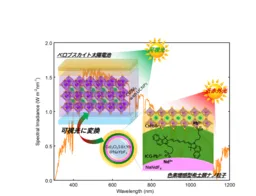
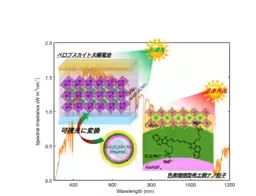
One of the main highlights of this research is the introduction of a novel hybrid approach. This method involves combining organic dyes with rare earth nanoparticles, enabling the conversion of previously unused near-infrared light into visible light that can be effectively utilized by lead-based perovskite solar cells. Traditionally, standard perovskite solar cells have been limited to harnessing visible light, thereby allowing nearly half of the sunlight they receive—specifically the near-infrared portion—to go unused.
Additionally, while existing NIR-sensitive perovskite variants have suffered from low efficiency rates, the newly developed methodology promises a solution. By incorporating organic dyes that absorb weak NIR light into rare-earth nanoparticle matrices, researchers have succeeded in creating a technology capable of converting this light into usable electric energy through an upconversion process.
The Science Behind the Technology
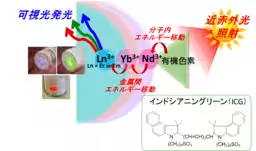
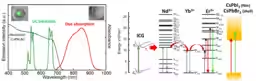
The research group, led by Associate Professor Ayumi Ishii from Waseda University and Specially Appointed Professor Tsutomu Miyasaka from Toin University of Yokohama, focused on the promising properties of rare earth nanoparticles. These nanoparticles are known for their efficacy in converting light across various spectrums, including NIR. By fixing a powerful NIR-absorbing dye, Indocyanine Green (ICG), to the surface of rare-earth nanoparticles, the team was able to harvest and convert low-energy absorbed near-infrared light into high-energy visible light.
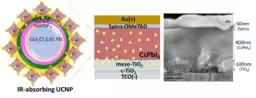
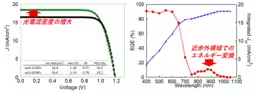
To further enhance the performance, the team coated the surface of these nanoparticles with a layer of perovskite material, effectively creating a seamless energy transfer system between the layers. By maintaining a high open-circuit voltage close to 1.2 V while achieving energy conversion efficiencies exceeding 16%, this new perovskite solar cell model represents a significant step forward in overcoming existing technological limitations.
Practical Implications
The implications of this research are profound. With the theoretical limits of solar energy conversion historically defined by the absorption characteristics of solar cell materials, the integration of NIR harvesting capabilities marks a pivotal turn in solar technology development. Moreover, increased efficiency and broader spectrum utilization could lead to a greater output per surface area of solar panels, catalyzing the widespread adoption of solar energy solutions—particularly critical in urban settings where space is limited.
This technology not only targets large scale solar farms but also promises to integrate within smaller systems, such as residential solar panels and portable electronic devices, thus propelling everyday energy self-sufficiency forward.
Future Directions
While this research has laid the groundwork for utilizing near-infrared light effectively, several challenges remain before practical applications can be widely realized. Key areas needing attention include examining the long-term stability of the combined organic dyes and nanoparticles within the solar cell, as well as looking to develop lead-free materials to reduce environmental impact.
As research progresses in scaling this technology for larger panels and exploring advanced materials, the vision of creating super-efficient solar cells—potentially exceeding previously established limits—may very well become a reality, contributing robustly to a sustainable energy future.
Conclusion
The ability to convert near-infrared light into usable electricity significantly advances solar technology, and this research represents a concrete step toward more effective and sustainable solar energy solutions. In addressing stability and environmental concerns, scientists aim to develop practical, renewable energy sources beneficial for everyday life.
This groundbreaking research, set to be published in Advanced Optical Materials on October 23, 2025, signifies a major milestone in solar energy innovation, promising sustainable solutions for the energy challenges of the future.
Topics Consumer Technology)
【About Using Articles】
You can freely use the title and article content by linking to the page where the article is posted.
※ Images cannot be used.
【About Links】
Links are free to use.