



Huawei Launches Initiatives for High-Quality Data Centers Tailored for the AI Era
Huawei's Commitment to Building AI-Ready Data Centers
On September 20, 2025, Huawei kicked off its highly anticipated Huawei Connect 2025 event in Shanghai, where tech enthusiasts, industry leaders, and partners gathered to discuss the future of digital infrastructure. A highlight of this summit was the Data Center Infrastructure Summit organized by Huawei Digital Power. More than 500 experts convened to delve into new technologies and practices aimed at developing green and carbon-neutral digital architectures suitable for the age of industrial intelligence.
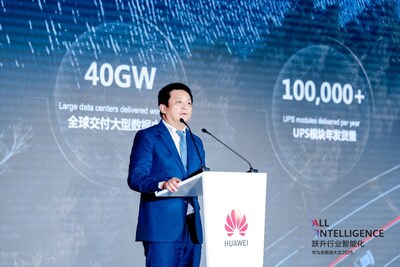
During the summit, Bob He, Vice President of Huawei Digital Power, emphasized the pivotal role of AI data centers in evolving towards "computer factories." As the demand for AI computing power sees exponential growth, a reliable and efficient power transmission system is critical. He highlighted the necessity for simplified conversion links and innovative power supply architecture that can effectively cater to dynamic AI service requirements. This involves leveraging a hybrid architecture for thermal management, adaptable to the varying demands of AI applications.
To prepare for the AI era, future infrastructure must consider AI readiness to replace traditional data center methods with prefabricated AI DC solutions. Huawei pledged to intensify its research and development investments in power supply, thermal management, and infrastructure, offering high-quality products and solutions. The goal is to foster the construction of reliable, flexible, and sustainable AI data centers while capitalizing on the burgeoning era of intelligent computing.
Steve Kim, President of Data Center Facility Critical Power Marketing, Sales and Services at Huawei Digital Power, reinforced the idea that foundational models for AI are accelerating the intelligent transformation across industries. He projected that the scale of new AI data centers is set to reach an astounding 112 GW over the next five years. To address challenges related to security, delivery, IT development, and energy management in this new era, Huawei is launching the RAS guideline.
Furthermore, Huawei's comprehensive AI DC solutions encompass reference designs for a variety of scenarios, ultra-reliable products, and services throughout the entire lifecycle. By employing an extensive global ecosystem, the company is committed to building trustworthy, adaptable, and sustainable intelligent computing infrastructures that empower customers to seize the vast potentials presented by the AI era.
At the event, Huawei unveiled the AIDC Facility Reference Design White Paper, which provides systematic guidelines for the standardization of AI data center design and construction. The document investigates the challenges linked with high-density racks in AI data centers, including cooling, power supply, and distribution, floor height, and load capacity. It also offers design suggestions across four critical areas: architectural structure, power supply and distribution, cooling, and integrated cabling. The white paper includes multiple reference design solutions tailored to various power densities, demonstrating Huawei's innovative green solutions focusing on efficient power consumption, electrification, and low-carbon power generation.
As the landscape of computing infrastructure evolves and technology progresses rapidly, the application scenarios and overall value of AI are shifting from quantitative growth to qualitative transformation. Huawei Digital Power aims to foster a robust foundation for intelligent computing by continuously investing in innovation and integrating digital and power electronics technologies. The company plans to facilitate collaboration across the industry to strive for a better and greener future.
The vision laid out by Huawei at this event reflects its commitment to not just stay ahead technologically, but to also contribute to sustainable development in the digital landscape of the future.
Topics Consumer Technology)
【About Using Articles】
You can freely use the title and article content by linking to the page where the article is posted.
※ Images cannot be used.
【About Links】
Links are free to use.