



Okayama University Sets Sights on Sustainable Helium Recycling Initiative
Okayama University Sets Sights on Sustainable Helium Recycling Initiative
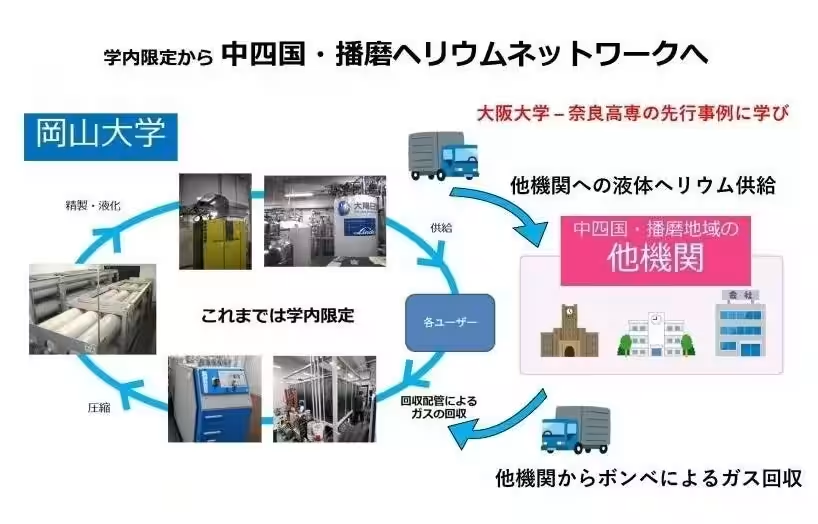
In an effort to enhance its research capabilities and contribute to environmental sustainability, Okayama University, located in Okayama City, has initiated a groundbreaking helium recovery project. This endeavor is part of the larger "Chugoku-Shikoku-Harima Helium Recycling Network" (commonly known as HeReNet), which aims to establish a sustainable system for helium, an essential resource for various scientific applications.
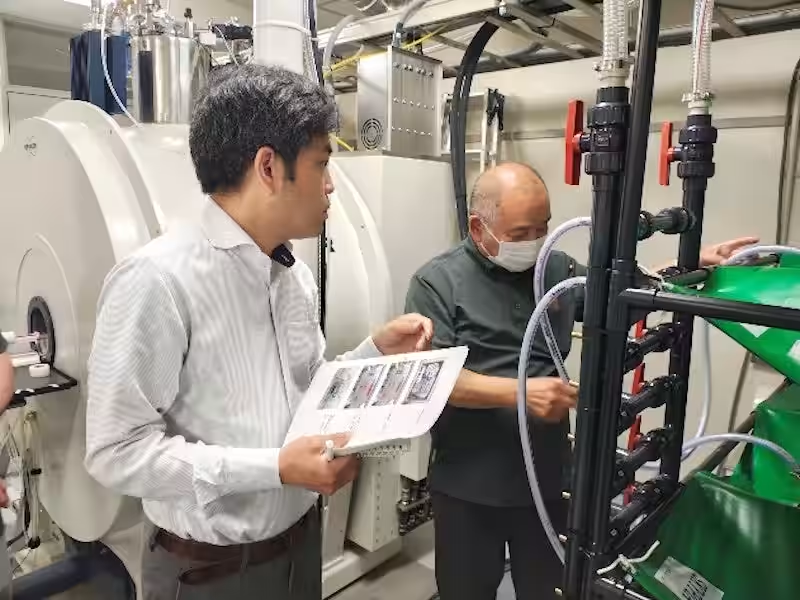
On May 28 and 29, 2026, the university’s Task Force for Strengthening Research Equipment Sharing and Facilities began the first phase of helium recovery from MRI devices that currently lack gas recovery lines. This significant step marks the first helium recovery initiative of its kind within the HeReNet network for MRI equipment, specifically from the School of Pharmacy’s small animal MRI machine.
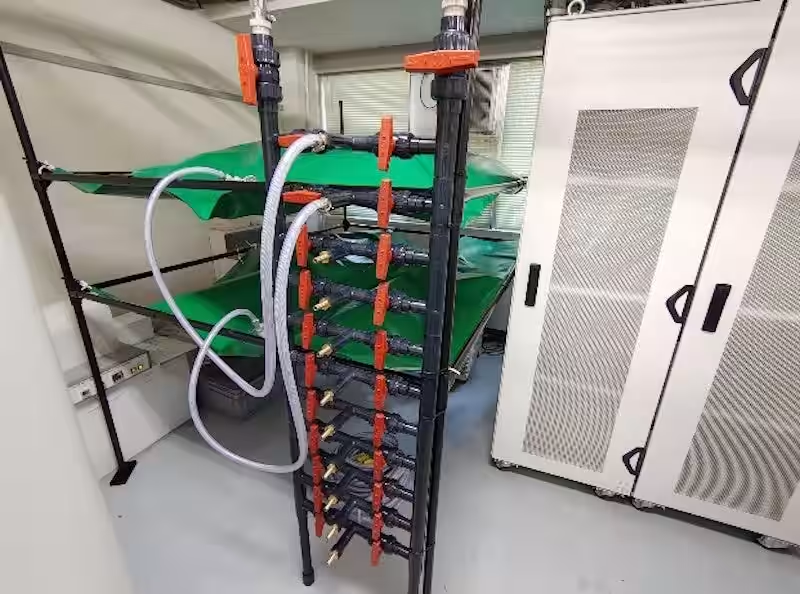
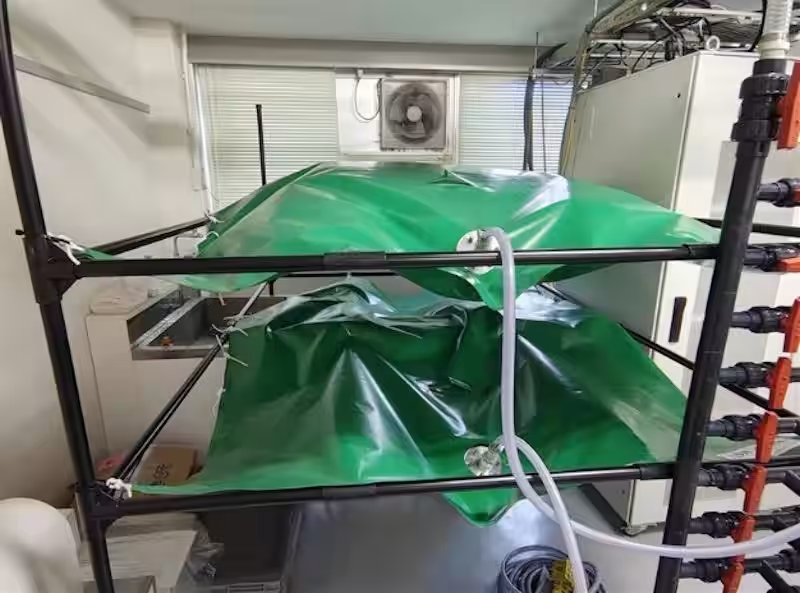
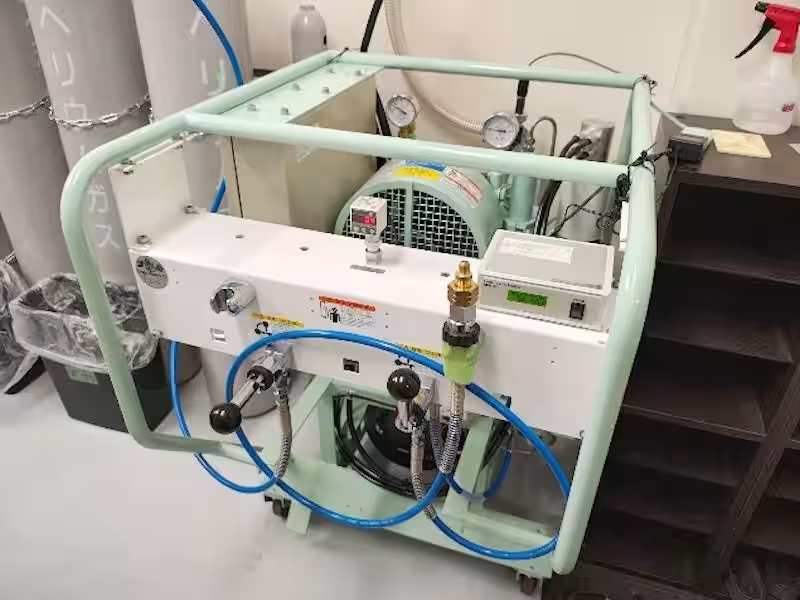
Prominent figures involved in this initiative include Professor Masashi Ueda from the Graduate School of Medicine, Dentistry, and Pharmaceutical Sciences, Co-task Force Leader Koji Hatanaka, and several key technical staff members from various departments. Their collaborative efforts led to the delivery of a helium recovery compressor along with ten gas bags for helium collection.
One innovative aspect of this project is the introduction of a gas bag manifold system designed by technician Hisayuki Urakami. This system allows for the simultaneous connection of ten gas bags, facilitating efficient helium recovery during the refilling of liquid helium into MRI devices. By enabling substantial amounts of helium gas to be collected at once, this system significantly optimizes the recovery process.
The preliminary setup involved connecting the MRI machine to the gas bags with specialized piping and installing the manifold unit. Over the course of approximately 24 hours, helium gas was collected in the bags, followed by a trial run of the recovery compressor, which officially commenced helium recovery (Phase 1).
Looking ahead, the agenda includes the subsequent phases of helium recovery, leading to increased helium supply capabilities. The roadmap outlines Phase 1 as helium collection, Phase 2 as both collection and partial supply, Phase 3 as almost full helium supply, and finally transitioning to full operational capacity.
Professor Ueda expressed enthusiasm about the project, noting that the university’s participation in the J-PEAKS project has strengthened its research foundation. He stated, "Building a recycling system and a stable supply for liquid helium, a limited natural resource that supports our research activities, is indeed a positive development. We aim to contribute to the network’s evolution."
The vision extends beyond Okayama University alone; the initiative is set to enhance collaborations with nearby universities, research institutions, colleges, and industries by providing liquid helium for a broader range of research and development activities. As such, this project represents a significant step toward reducing reliance on imported helium, which currently stands at 100% dependency, posing risks to economic security.
In addition to helium recovery, Okayama University is also actively developing the HeliSET program, aimed at cultivating the next generation of helium users and stabilizing helium prices. This effort, part of the integrated “He3 (Three) Project,” involves HeReNet, HeliGet, and HeliSET as complementary initiatives to bolster research capabilities in the region.
Expectations remain high for Okayama University as it continues to pioneer research and innovation while enhancing Japan’s economic security frameworks. With a commitment to sustainability and resource recycling, the university embarks on a journey toward shaping the future of helium usage and its integral role in scientific exploration and technological advancement.
For ongoing updates and further details about the project, interested parties can visit the following links:
- - Okayama University Research and Innovation Initiatives
- - Core Facility Portal Site
- - Helium Recycling Project Updates
By fostering a collaborative ecosystem of research and innovation, Okayama University demonstrates its resolve as a leading regional research university committed to contributing to global challenges while nurturing local talent and infrastructure.

Topics Other)




【About Using Articles】
You can freely use the title and article content by linking to the page where the article is posted.
※ Images cannot be used.
【About Links】
Links are free to use.